
Last updated October 30, 2026
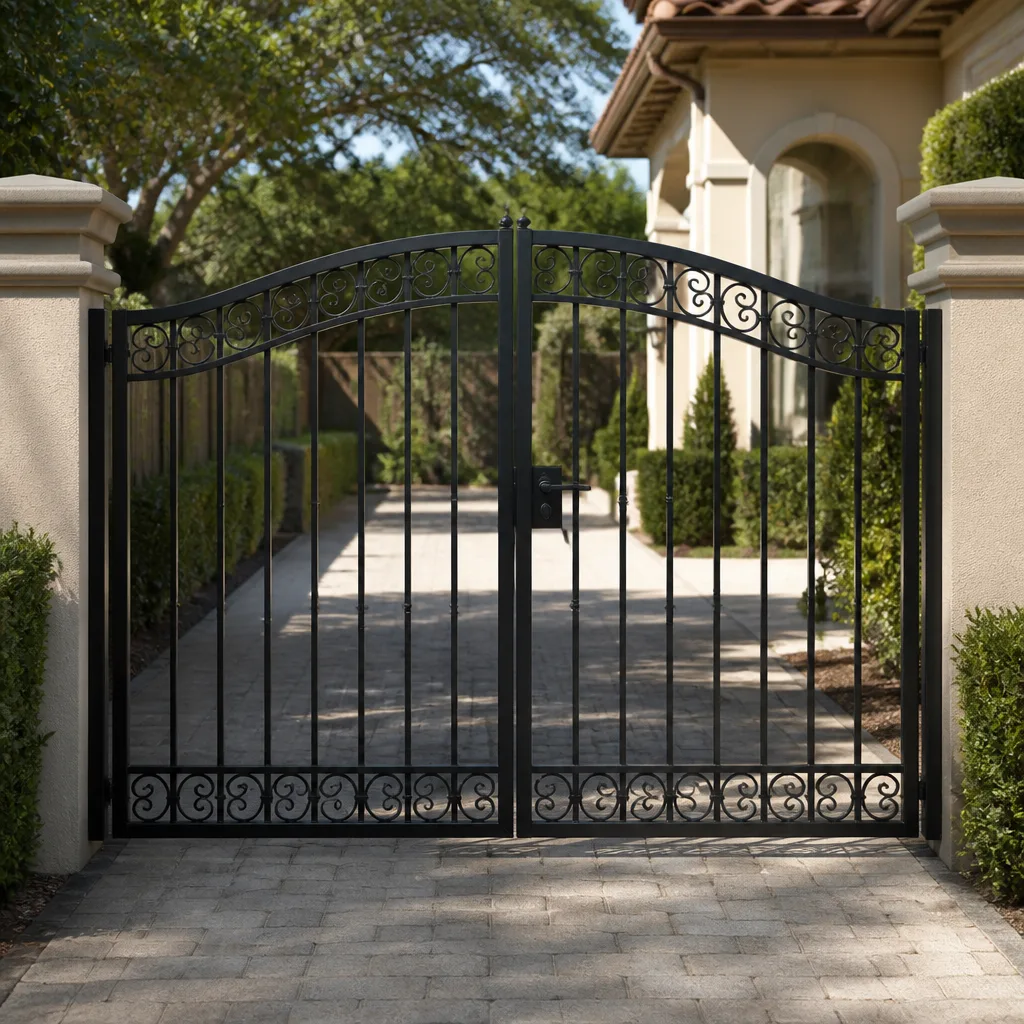 Wrought iron
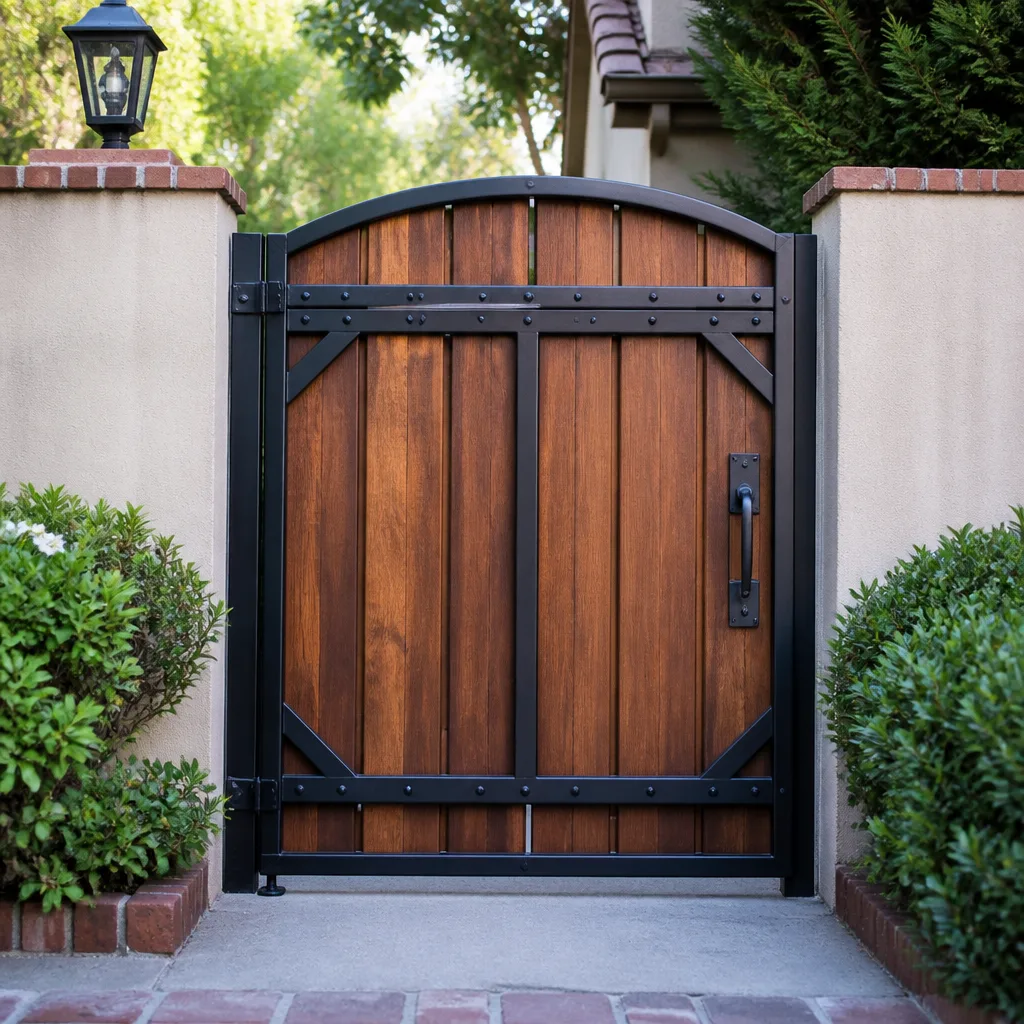 Wood & steel frame
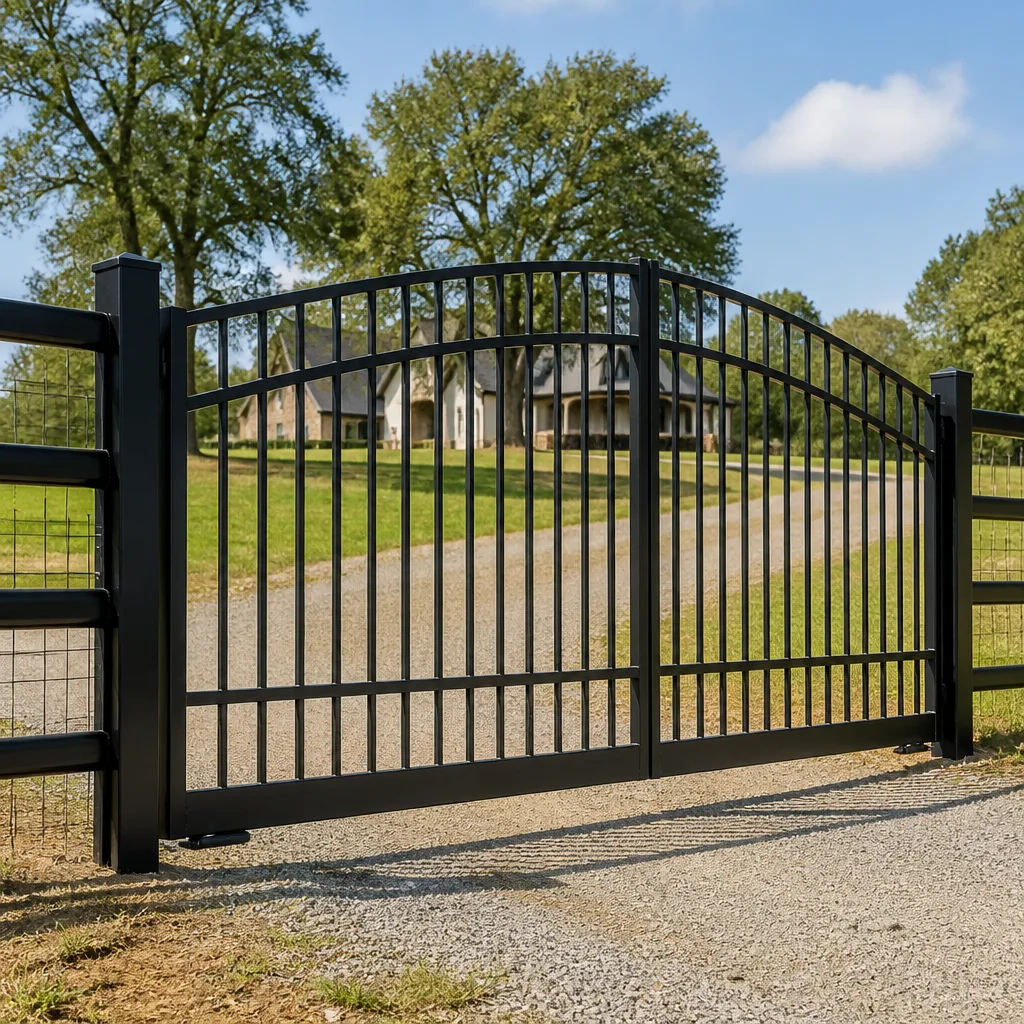 Farm & ranch
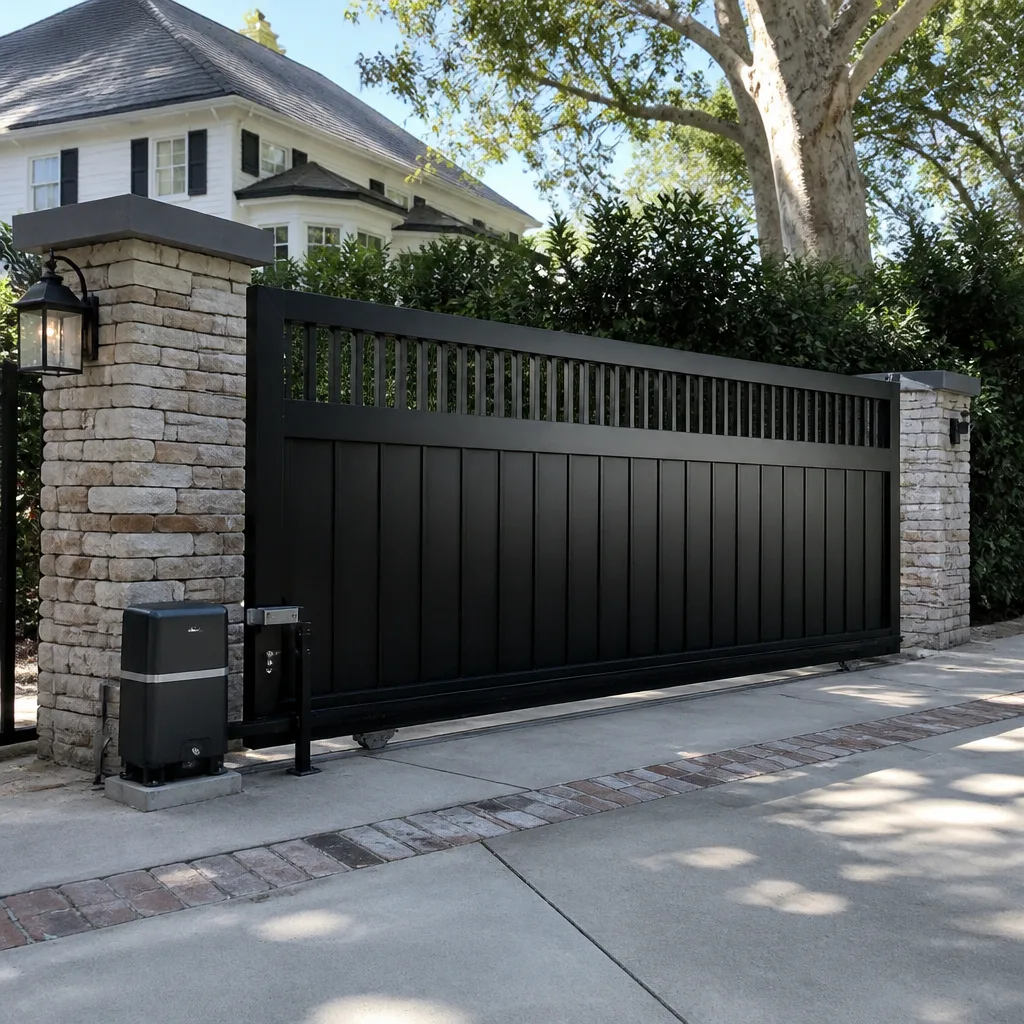 Sliding driveway gates
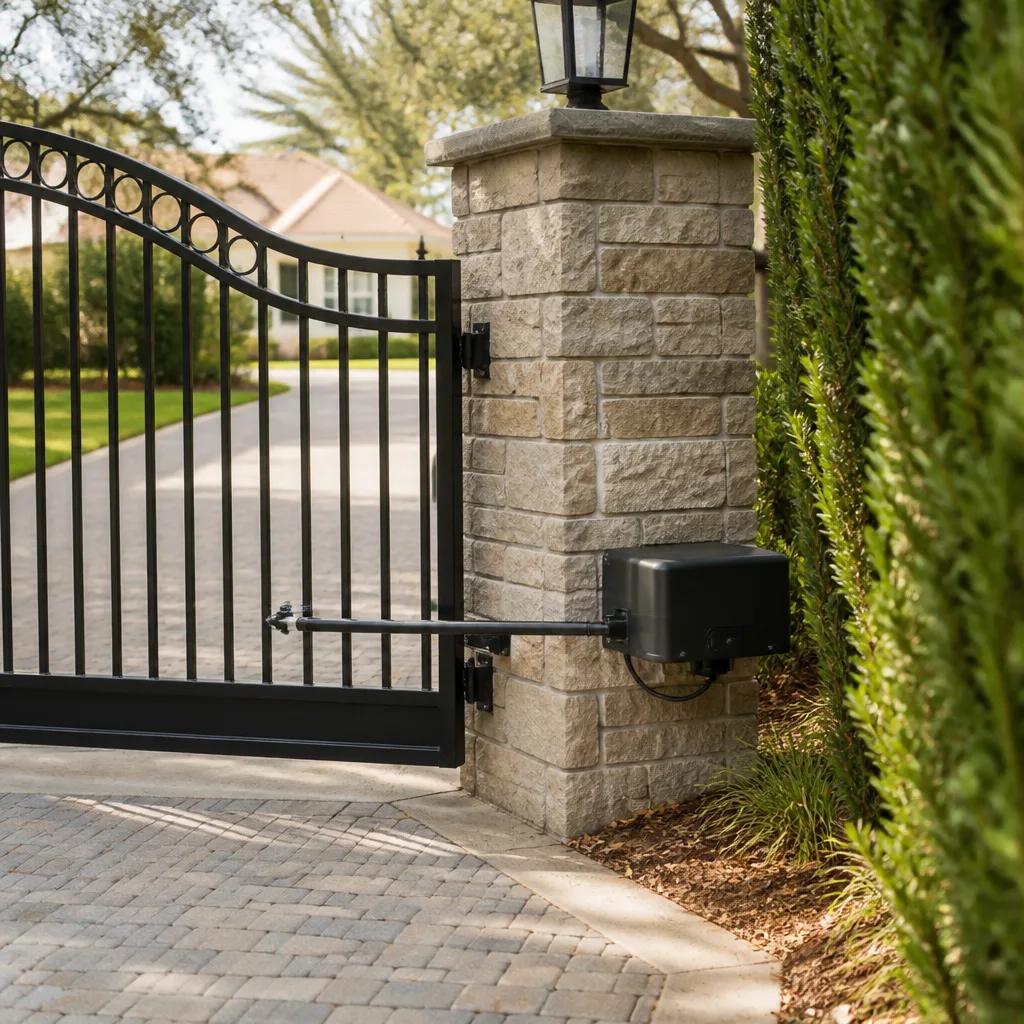 LiftMaster operators
Free on-site gate assessment - hinges, posts, and your LiftMaster or Nice gate operator checked before anything is quoted
The assessment is free and the quote is the invoice.
Get your free estimateDIY vs Professional Gate Repair: The Jacksonville Homeowner’s Decision Guide
Replacing the battery backup in a Mighty Mule opener is a Saturday-morning job most Jacksonville homeowners can handle. Adjusting the limit switches on a 400-pound automated gate is not, not because it’s technically difficult, but because a miscalibrated limit creates a crush-force liability that no YouTube tutorial carries. That distinction, what you can safely touch versus what carries real risk, is what this guide is about. We’ll walk through the exact tasks that make sense as DIY in Jacksonville, the ones that don’t, and the math that often makes hiring a specialist cheaper than the parts you’d ruin learning.
Styles & brands we work with
Quick Answer
Most Jacksonville homeowners can safely handle routine maintenance and simple fixes: cleaning tracks, lubricating hinges, replacing remote batteries, tightening loose hardware, and clearing sensor obstructions. What you should not DIY is any work touching electrical wiring, control boards, power circuits, or the tension and travel limits on a motorized gate, because incorrect repairs there create injury risk and void warranties. The rational line is simple: mechanical cleaning and battery work are DIY territory, anything involving the operator, wiring, or gate weight is a job for a gate specialist.
Table of Contents
- What’s Actually DIY in Jacksonville: The Honest List
- What’s Not DIY: Electrical, Liability, and Florida Code
- The Hidden Cost of DIY: Parts Sourcing in Jacksonville
- The Breakeven Math: When a Specialist Costs Less Than Your DIY Attempt
- Using DIY Inspection Skills Before the Tech Arrives
- Jacksonville Climate and Gate Wear: What Our Humidity and Salt Air Do
- Common Mistakes to Avoid
- When to Call a Professional
- Frequently Asked Questions
- The Bottom Line
What’s Actually DIY in Jacksonville: The Honest List
Let’s start with what you can genuinely do yourself. These tasks require no specialized license in Florida, use tools most homeowners already own, and carry minimal risk when done with basic care. We’re not going to inflate the danger of everything to sell you a service call. A good gate company should tell you what doesn’t need a service call.
Here’s the Jacksonville-specific DIY list:
- Remote and keypad battery replacement. If your gate opener responds intermittently but the motor sounds fine, replace the batteries in the remote and the external keypad first. This fixes more “broken” gates than any other single action. In Jacksonville’s heat, remote batteries die faster than in cooler climates, often within 8 to 12 months.
- Photo-eye sensor cleaning and realignment. Jacksonville’s pollen season in March and April coats sensor lenses with a fine yellow film. A soft cloth and a gentle realignment so the two sensors face each other directly resolves many “gate won’t close” issues. Just don’t adjust the mounting bracket angle aggressively, that changes the safety loop’s detection zone.
- Track and roller cleaning for sliding gates. Sliding gates in Jacksonville collect sand, pine needles, and oak leaves in the track. Clearing that debris with a stiff brush and a shop vacuum is genuinely DIY. Follow with a dry silicone spray on rollers, never grease, which traps grit and accelerates wear in sandy environments like Mandarin or the Beaches.
- Hinge lubrication on swing gates. A can of lithium spray on swing gate hinges every three to four months reduces motor strain and extends operator life. Listen for squeaking, that’s your cue. Heavy rust scaling, however, means the hinge itself is failing, and that’s a replacement job, not a lubrication job.
- Visual inspection of mounting hardware. Walk the gate perimeter monthly. Look for loose bolts on the operator arm, hairline cracks at weld points, and sagging at the outer edge. Tightening a loose bolt is DIY. Welding a cracked joint is not.
- Post-storm debris clearing. After Jacksonville’s summer thunderstorms, branches and yard debris jam against gate tracks and photo-eye paths. Clearing those is routine. If the gate shifted on its posts during the storm, stop and call a specialist, because a misaligned gate under power will destroy its own operator.
Each of these tasks is low-risk because it doesn’t involve the gate’s stored energy, the operator’s electrical circuit, or the automated safety system. That’s the line. When you cross it, the economics and the risk profile change entirely.
What’s Not DIY: Electrical, Liability, and Florida Code
Now the honest other side. There’s a set of gate repair tasks that touch Florida electrical code, the gate’s internal safety logic, or create liability that a homeowner’s insurance policy will not cover if the work was self-performed. We see the aftermath of these decisions regularly, and it’s rarely the repair itself that failed, it’s the follow-on damage.
Here’s what should always go to a licensed gate specialist:
- Any work inside the operator housing. LiftMaster, FAAC, BFT, and Linear operators contain capacitors that retain charge even after power is disconnected. Opening the housing without discharging those capacitors can deliver a serious shock. This is not a handyman-with-a-multimeter job.
- Limit switch adjustments on any automated gate. The limit switches tell the operator when to stop the gate’s travel. Set them wrong and a 400-pound gate keeps pressing at the end of its travel, creating enough force to injure a child or pet. Florida liability law treats this as an attractive nuisance. Your homeowner’s policy expects professional calibration, not a YouTube-guided adjustment.
- Control board replacement or repair. Control boards are brand-specific. A LiftMaster board is not compatible with a FAAC operator, and installing an incorrect or poorly wired board often takes out the transformer too. We’ve replaced boards that homeowners attempted, where the board was fine but the wiring harness was fried from an incorrect connection.
- Any repair to the safety loop or photo-eye wiring at the electrical level. Cleaning sensors is DIY. Rewiring them or bypassing them is not. Bypassing a safety loop to force the gate closed is the single most dangerous thing a homeowner can do, and it’s also the most common shortcut we find after a self-attempt. The gate will work, until it closes on a car or a person.
- Replacing or adjusting the gate spring or counterweight on a swing gate. A heavy swing gate stores tension in its mounting hardware. Releasing that tension incorrectly turns the gate into a 300-pound lever. This is professional work, full stop.
- Running new electrical conduit or wiring from the house to the operator. Florida electrical code requires proper burial depth, conduit type, and GFCI protection for gate power runs. A non-compliant run may work fine until the first heavy rain, when it trips a breaker or energizes the gate frame.
The pattern here: anything that touches electricity, stored mechanical energy, or the safety system belongs with a specialist in electric gate repair. The question isn’t whether you’re handy. The question is whether the cost of being wrong, in injury, liability, or destroyed equipment, exceeds the cost of a service call.
The Hidden Cost of DIY: Parts Sourcing in Jacksonville
Here’s the part most decision guides skip: the actual logistics of getting the right part in Jacksonville when your gate is stuck open. This isn’t about skill. It’s about cash flow, time, and the realities of a gate that won’t secure your property.
When a gate operator fails in Jacksonville, the failure is usually brand-specific. A Mighty Mule control board doesn’t fit a BFT operator. A FAAC gear kit won’t work in a LiftMaster. So the DIY process looks like this:
- Diagnose the fault. This requires either a multimeter and electrical knowledge or a lot of guessing. If you guess wrong, you buy the wrong part.
- Find the part locally. Jacksonville has limited gate-specific parts inventory outside of specialist suppliers and the service trucks that carry common boards, gears, and sensors. Big-box hardware stores stock garage door parts, not gate operator parts. Your odds of walking into a store and finding a LiftMaster gate control board are near zero.
- Order online and wait. Two to five business days, minimum. During that time, your gate is either stuck open, leaving your property unsecured and visible from the street, or stuck closed, which in Jacksonville’s frequent rain means walking out to manually release the operator every time you need to leave.
- Install, discover an error, start over. If the installed part reveals a second fault, or if the first part was the wrong revision, the cycle repeats. Your gate has now been down for a week or more.
- Replacement control board, ordered online: $185 to $320 depending on brand (FAAC and BFT boards run higher than Mighty Mule)
- Overnight or two-day shipping because the gate is down: $30 to $55
- Multimeter and basic electrical tools if not already owned: $40 to $90
- Your time: diagnosis, ordering, installation, troubleshooting: 8 to 15 hours
- Risk-adjusted cost of a wrong diagnosis or install damage: $0 to $600, realistically around $200 averaged across attempts
- Gate unsecured or inoperable for: 3 to 7 days
- On-site diagnosis: Included in most service calls or credited toward repair
- Correct brand-specific board, installed same day: $320 to $580 total for parts and labor depending on brand
- Warranty on part and labor: Included
- Gate restored to operation: Same day in most cases
- Note the exact symptom. “The gate opens halfway then reverses” is far more useful than “the gate is broken.” Write down the symptom in one sentence while it’s happening.
- Check the obvious DIY items first. Remote batteries, photo-eye obstruction, track debris. If you’ve eliminated those, tell the dispatcher you’ve already checked them. That saves the tech from re-running the basic diagnostic and saves you the labor time.
- Note the operator brand and model. The label is on the operator housing. Knowing your home has a BFT Deimos or a LiftMaster LA500 lets the tech arrive with the right parts on the truck. This detail alone can turn a two-visit repair into a one-visit repair.
- Photograph the gate position and any visible damage. A bent track, a cracked weld, a housing that’s pulled away from its mount. Photos sent ahead help the dispatcher route the right technician.
- Know when the problem started. Did the failure begin after a storm? After a power surge? After the gate was hit by a car or debris? The timing often points directly at the failed component.
- Bypassing the safety photo-eyes to force the gate closed. This is the most dangerous shortcut we see in Jacksonville. It disables the safety system that exists to prevent entrapment. A gate that closes on a child, a pet, or a car is a liability no homeowner should carry, and a disabled safety loop will be the first fact an insurer examines after an incident.
- Using WD-40 or grease on gate tracks and rollers. Jacksonville’s sand and pollen mix turns oil-based lubricants into abrasive paste. Use dry silicone spray or graphite on sliding components only.
- Buying a control board based on price alone without verifying the revision. Manufacturers issue multiple revisions of the same board. A rev-A board may not work in an operator designed for rev-C. Buying a cheap board on a marketplace without verifying compatibility is the fastest way to turn a $200 fix into a $600 repair.
- Tightening the limit-switch screws without understanding what they control. Even a quarter-turn change to a limit setting can make a gate over-travel by inches, and inches are enough to create a crush hazard on a heavy gate. If you don’t know exactly which screw adjusts travel versus force, leave it alone.
- Ignoring a grinding sound because the gate still opens. A gate making a grinding noise is a gate destroying its own gearbox. The sound means metal-on-metal contact, and every cycle is shaving material off the gear. A $40 gear replacement caught early becomes a $300 operator replacement if ignored for two months.
- Working on a gate operator without cutting power at the breaker AND disconnecting the operator’s battery backup. Many operators have a battery that keeps the system live even after the breaker is off. We’ve seen homeowners start a “dead” operator repair and find a live DC circuit. Cut power at the breaker, disconnect the battery, and then verify with a non-contact voltage tester.
- Assuming a gate that works manually has a simple fix when it won’t open automatically. The operator, the wiring, the safety loop, the control board, and the remote receiver are all potential failure points. Manual operation doesn’t isolate the fault; it only rules out the mechanical track and hinges.
Compare that to a specialist. When we arrive at a Jacksonville home with a failed operator, we carry common boards, gear kits, sensors, and remotes for the brands we service. The diagnostic happens on site, the failed part is identified by name and revision, and in most cases the replacement is installed the same day. You’re paying for the part plus labor, but you’re not paying for a week of an unsecured property, a second overnight-shipping charge, or a second week of manual gate operation in the rain.
There’s also a warranty angle. Parts purchased from online marketplaces often carry no manufacturer warranty because they’re gray-market or refurbished. A specialist installs current-revision parts with a valid warranty and stands behind the labor. If a board we install fails in 90 days, we replace it. If the board you ordered on a marketplace fails, your remedy is a PayPal dispute.
The Breakeven Math: When a Specialist Costs Less Than Your DIY Attempt
Let’s run the numbers honestly. Most people compare the retail price of a part to the quoted service price. That’s the wrong comparison. The right comparison is the total cost of the DIY attempt versus the total cost of the professional repair, including errors, time, and the value of a working gate.
Here’s a representative scenario for a Jacksonville automated gate with a failed control board:
The DIY Path
Real total: $455 to $1,265 in hard costs plus a week of inconvenience, not counting your time at any hourly rate.
The Specialist Path
Real total: $320 to $580, no error risk, no downtime beyond the service window.
When the part is inexpensive and the diagnosis is certain, like a remote battery or a photo-eye cleaning, DIY wins every time. That’s why we tell you to do those yourself. When the part is electrical, the diagnosis is uncertain, and the gate being down creates a security gap, the professional path is often cheaper than the DIY path once error costs and downtime are factored in. The skill question is secondary. The math question resolves it.
For a broader view of what gate repair in Jacksonville typically involves, including the range of failures we see most often, that page lays out the full service landscape.
Using DIY Inspection Skills Before the Tech Arrives
Here’s a frame most guides miss: you don’t have to choose between pure DIY and pure professional. The smartest Jacksonville homeowners use DIY skills for diagnosis and triage, then hand the actual repair to a specialist with a clear description of what they’ve observed. A well-informed customer gets a faster, cheaper repair because the tech spends less time on discovery.
Before you call a gate company, do this:
Doing this pre-call work doesn’t replace the professional repair. It makes the professional repair faster and more precise. You’re not paying a specialist to discover what you could have told them in 30 seconds. And it positions you to evaluate whether the quote you receive matches the actual fault, because you already know the symptom pattern.
Jacksonville Climate and Gate Wear: What Our Humidity and Salt Air Do
Jacksonville’s climate is not neutral to gate hardware. It actively degrades it, and it does so in predictable patterns that affect the DIY-versus-professional decision. Understanding these patterns helps you know what to watch for and when a problem is environmental rather than mechanical.
The dominant factor is humidity. Jacksonville averages 70 to 80 percent relative humidity through most of the year, with summer months pushing higher. Unsealed electrical connections corrode faster here than in drier inland cities. That means control boards fail from moisture intrusion more often, photo-eye connectors develop oxidation, and wire splices inside operator housings degrade. This is not a brand defect. It’s environmental wear, and it’s why we replace corroded connectors on gates that are only three or four years old.
The second factor is salt air. Homes in Jacksonville Beach, Atlantic Beach, Neptune Beach, and along the Intracoastal get salt-driven corrosion on gate hardware year-round. Hinges pit, powder coating fails early, and exposed steel components rust through faster than the same equipment installed in Mandarin or Orange Park. For coastal properties, galvanized or stainless hardware is worth the premium, and regular corrosion inspection should be monthly, not quarterly.
Third is the afternoon thunderstorm cycle. From June through September, Jacksonville gets near-daily storms with lightning and voltage spikes. Gate operators on circuits without surge protection lose control boards and transformers during these events. A surge protector installed at the operator’s disconnect is a legitimate professional upgrade that costs far less than one board replacement after a lightning strike.
None of this makes DIY impossible. It makes DIY inspection more important. Catching early corrosion on a hinge or a wire splice before it becomes a failed component is the single most valuable thing a Jacksonville homeowner can do for their gate. And when that early corrosion has progressed to an electrical fault, the repair belongs with someone who has the parts and the wiring knowledge to fix it properly, which is central to what Villa Gate Repair’s electric gate work covers.
Common Mistakes to Avoid
When to Call a Professional
Call a gate specialist when the failure is electrical, the gate is heavy and misaligned, the safety system is malfunctioning, or the diagnosis is not obvious after basic checks. Call when the gate gates is stuck open and your property is unsecured. Call when you hear grinding, when the operator hums but doesn’t move the gate, when the keypad stops responding, or when a storm has left the gate shifted on its posts. Each of these points to component-level failure that requires brand-specific parts and calibration. Villa Gate Repair offers free estimates in Jacksonville, call (877) 265-5090 and we’ll tell you honestly whether the fix is something you could handle or something that needs a truck and a specialist.
Frequently Asked Questions
You can fix simple issues like remote batteries, photo-eye cleaning, track debris, and hinge lubrication yourself. You should not open the operator housing, adjust limit switches, or replace wiring or control boards, because those tasks involve stored electrical charge, safety-calibration requirements, and Florida liability exposure. The skill isn’t the issue. The consequence of a mistake is.
Jacksonville gate repair typically ranges from $95 to $180 for diagnostic service calls and simple mechanical fixes, $280 to $580 for component-level repairs like gear kits, sensor replacements, or hinge rebuilds, and $400 to $900 for control board or operator replacement. Brand matters: FAAC and BFT parts trend higher than Mighty Mule. Every job is quoted and agreed before work starts.
Routine gate repair and component replacement generally does not require a permit in Jacksonville. Electrical work that involves running new conduit or significantly altering the power supply may require review depending on scope and property type, and a licensed electrician or gate specialist can confirm. New gate installations may trigger permitting depending on size, height, and location, so check before starting a full replacement.
The most common problem we see in Jacksonville is photo-eye sensor failure caused by humidity-driven corrosion and spring pollen buildup. The second is control board damage from summer lightning storms. Both are repairable, and both benefit from a surge protector and regular sensor cleaning as prevention.
In most cases, yes, for repairs where the failed part is a common component we carry in our service vehicles, including control boards, gear kits, sensors, and remotes for LiftMaster, FAAC, BFT, Linear, and Mighty Mule. Call (877) 265-5090 for a free estimate and we’ll tell you what’s possible on your specific gate.
Repair is usually the better financial decision when the gate structure, hinges, and operator are all in serviceable condition and the failure is a single component. Replacement makes sense when the gate frame is rusted through, the posts are shifting, or the operator is obsolete and parts are no longer manufactured. We’ll give you an honest read on which path costs less over five years. For new gate needs, Villa Gate Repair’s installation service covers the full process from measurement to final programming.
The Bottom Line
The DIY-versus-professional decision for Jacksonville gate repair isn’t about pride or handiness. It’s about which components you’re touching. Batteries, sensors, tracks, and hinges are fair game, and doing that maintenance yourself saves money and extends the life of your equipment. Operator internals, control boards, wiring, safety systems, and anything involving stored gate weight are not DIY territory, and attempting them creates risk that outweighs the labor savings. The smartest approach: handle the inspection and the simple maintenance, call a specialist the moment the fault touches electricity or automation. For that, Villa Gate Repair covers the full spectrum from mechanical gate repair through automated systems and new installation.
Written by the team at Villa Gate Repair, serving Jacksonville since 2012.
See the difference
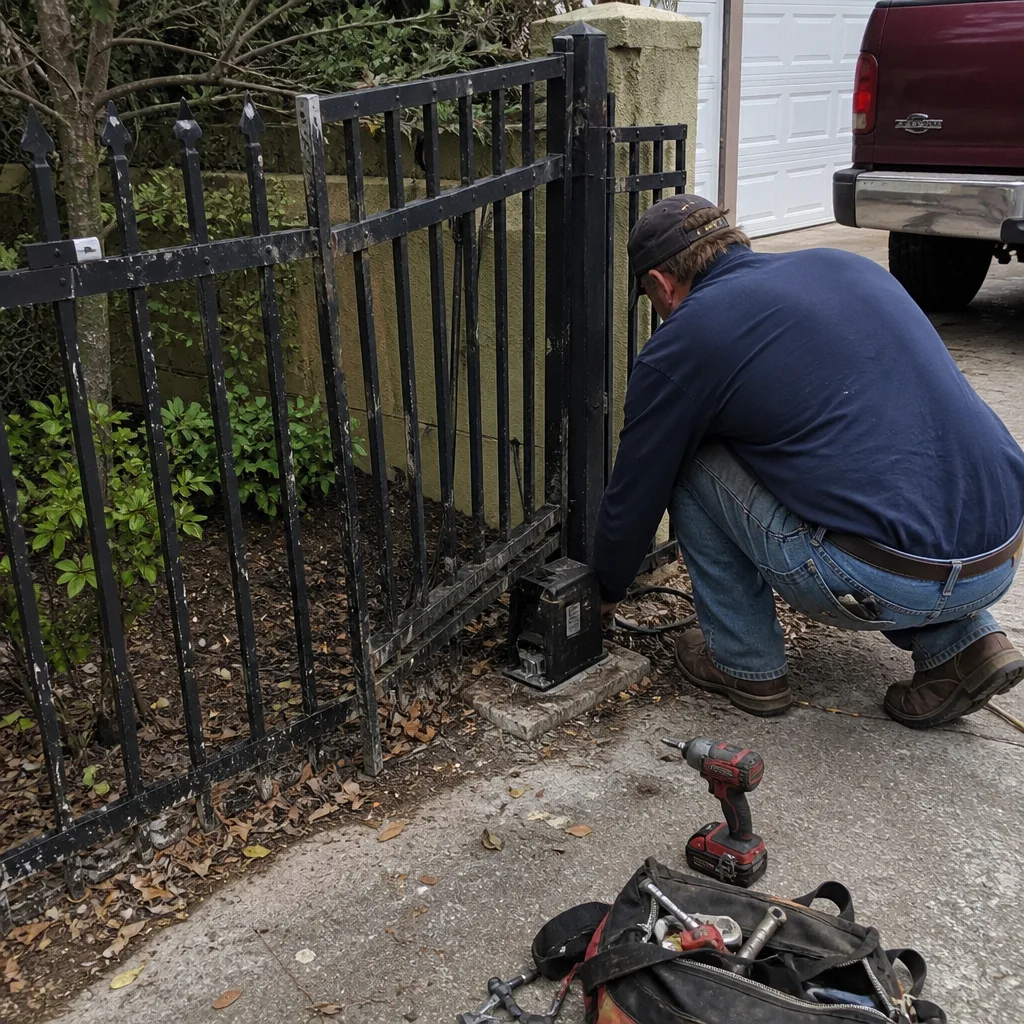 Before
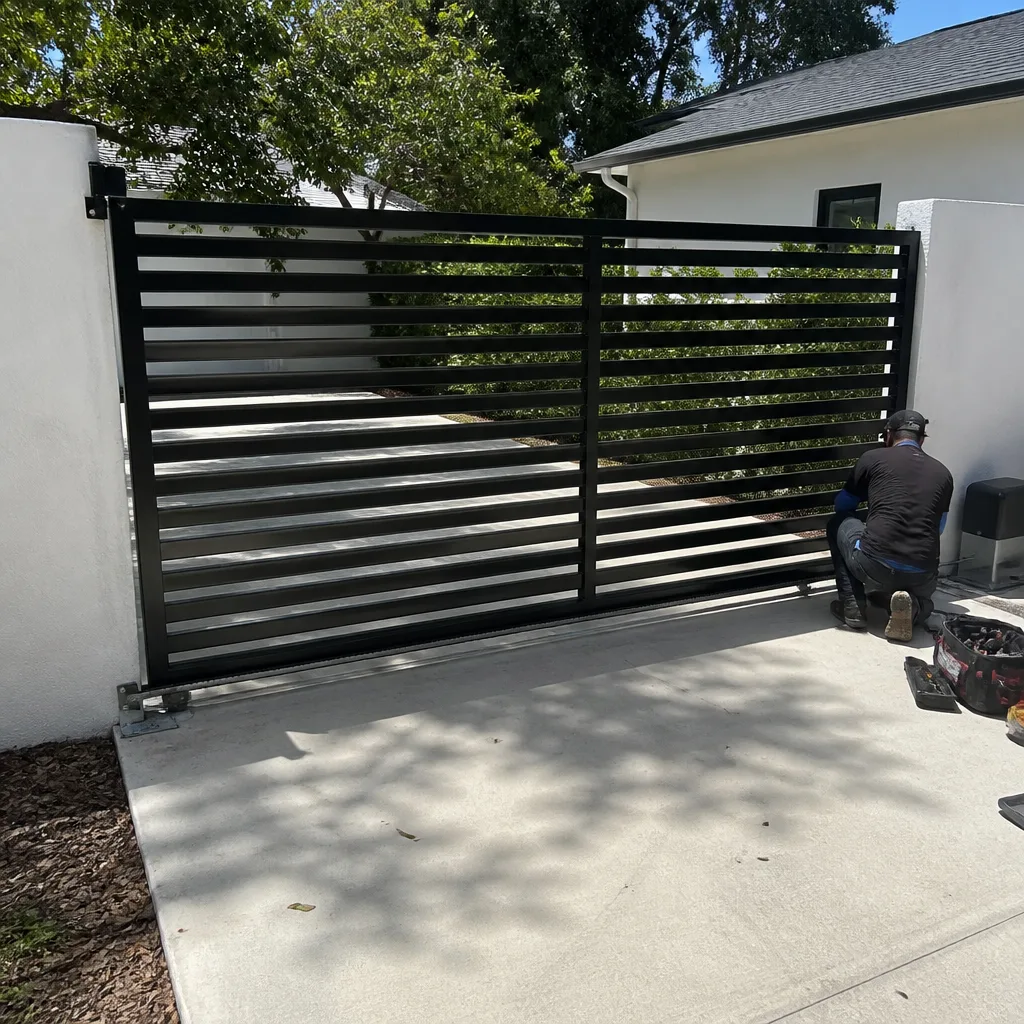 After
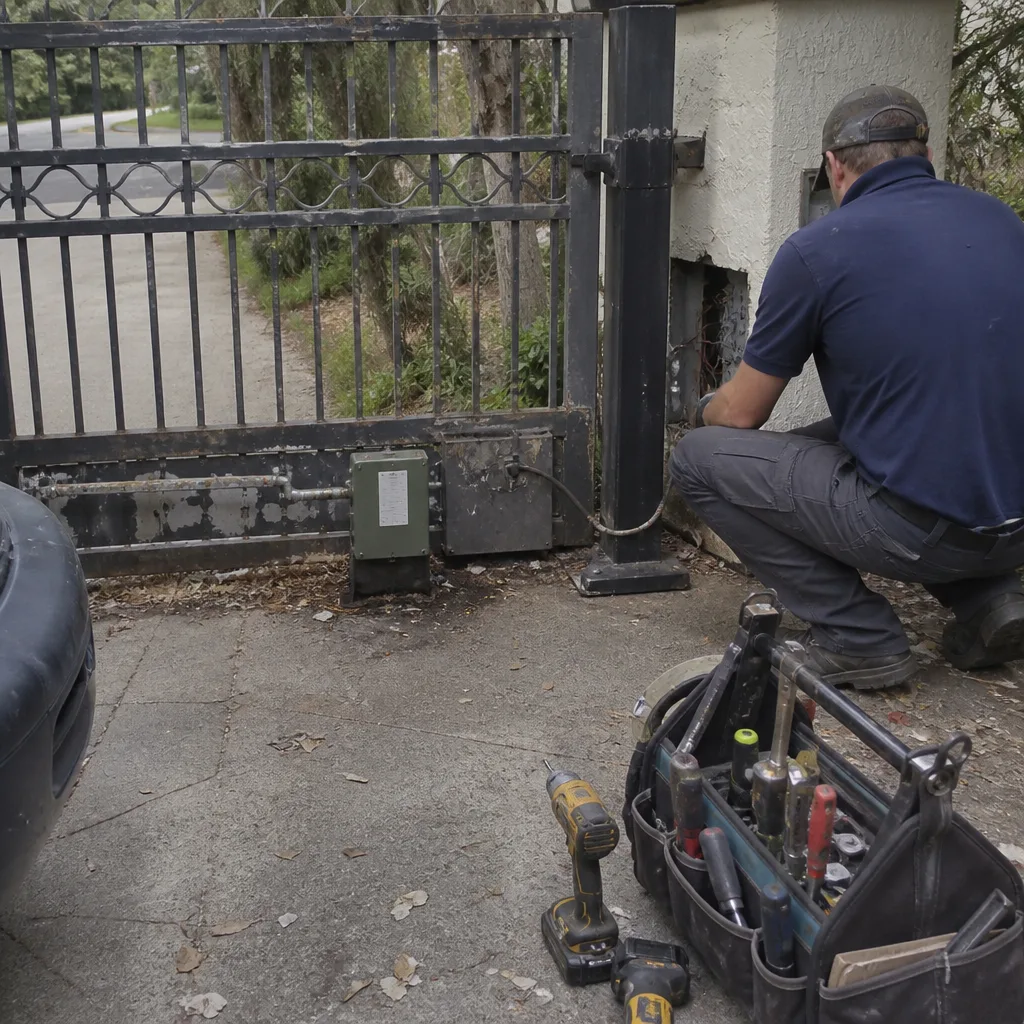 Before
 After
 Before
 After