
Last updated October 30, 2026
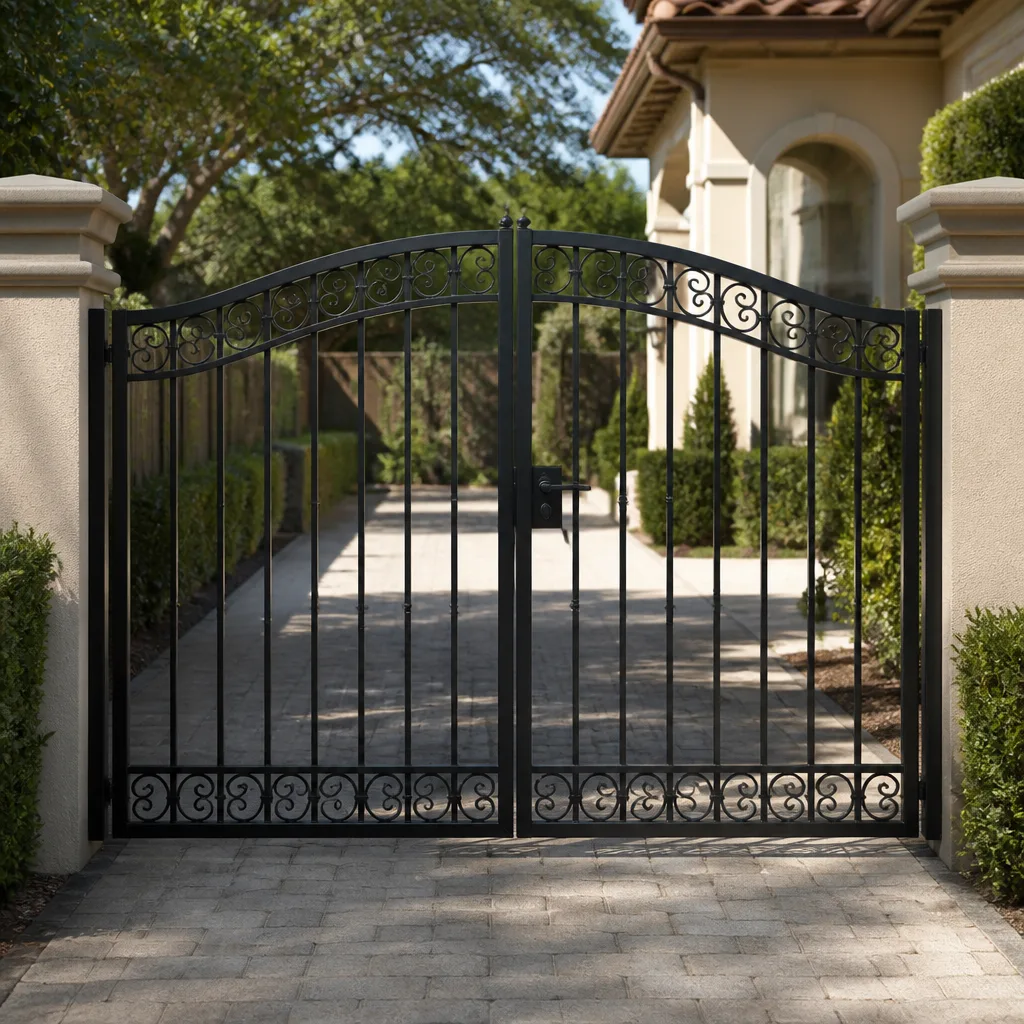 Wrought iron
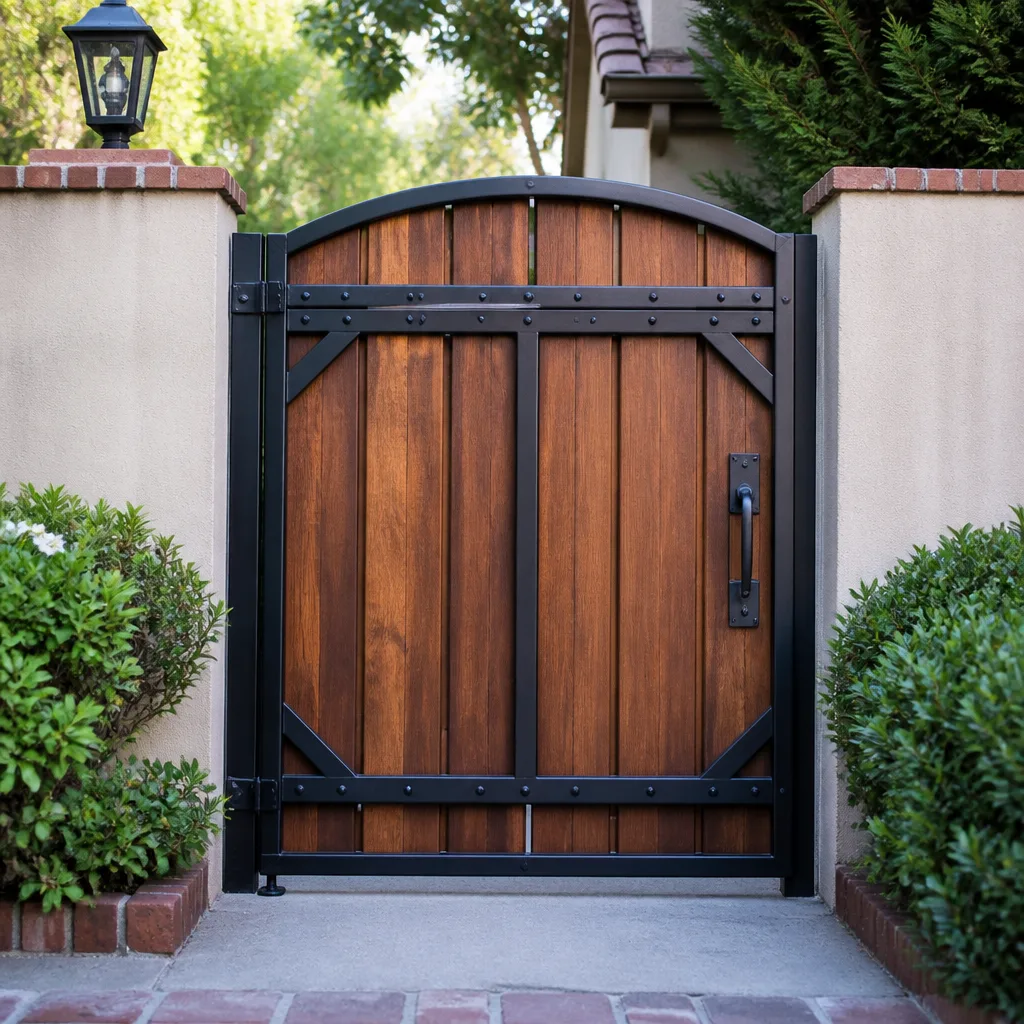 Wood & steel frame
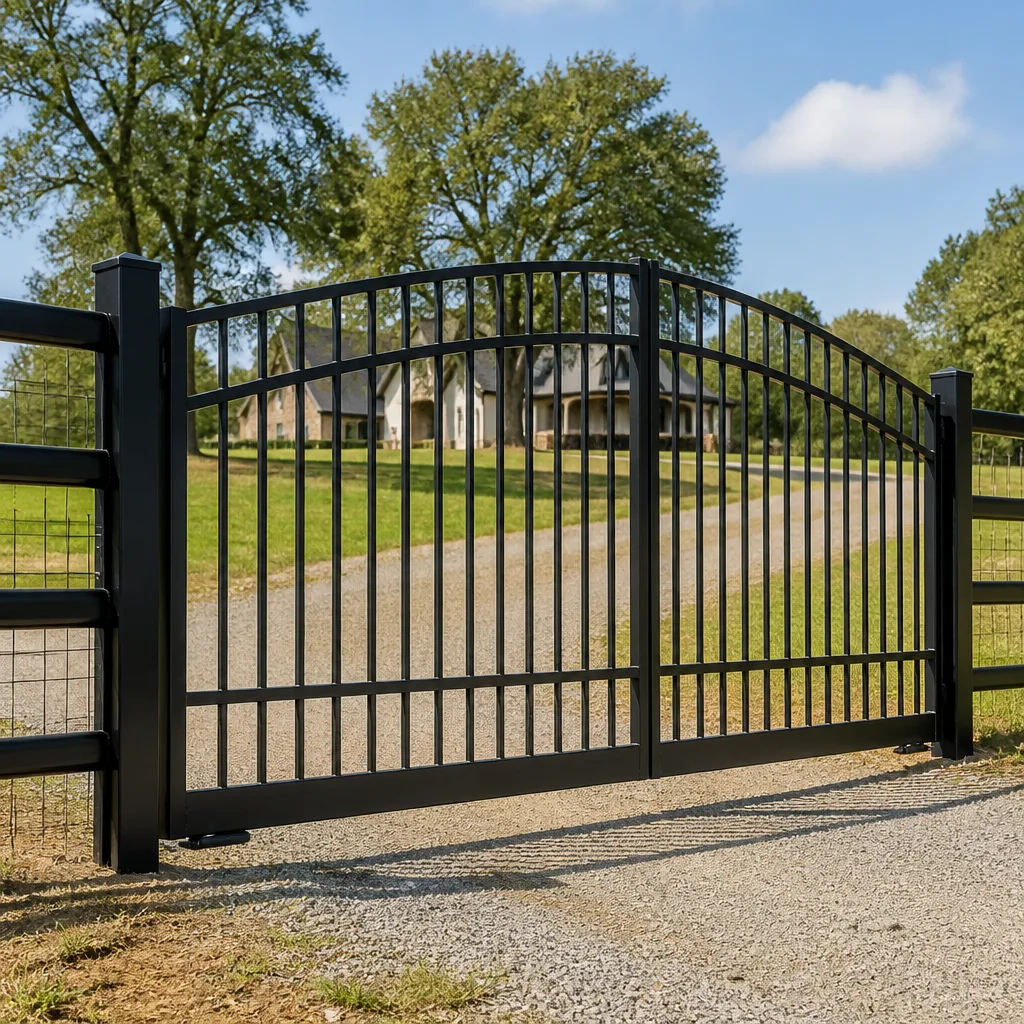 Farm & ranch
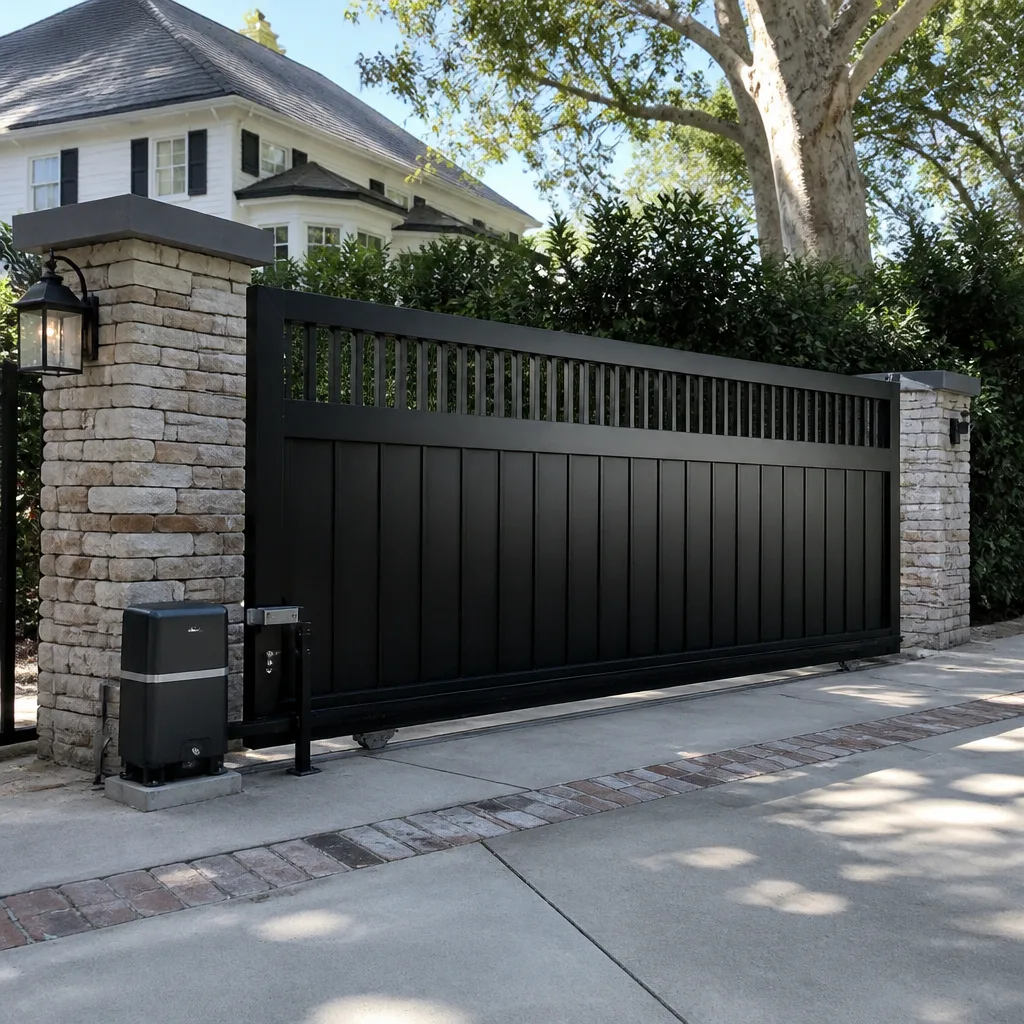 Sliding driveway gates
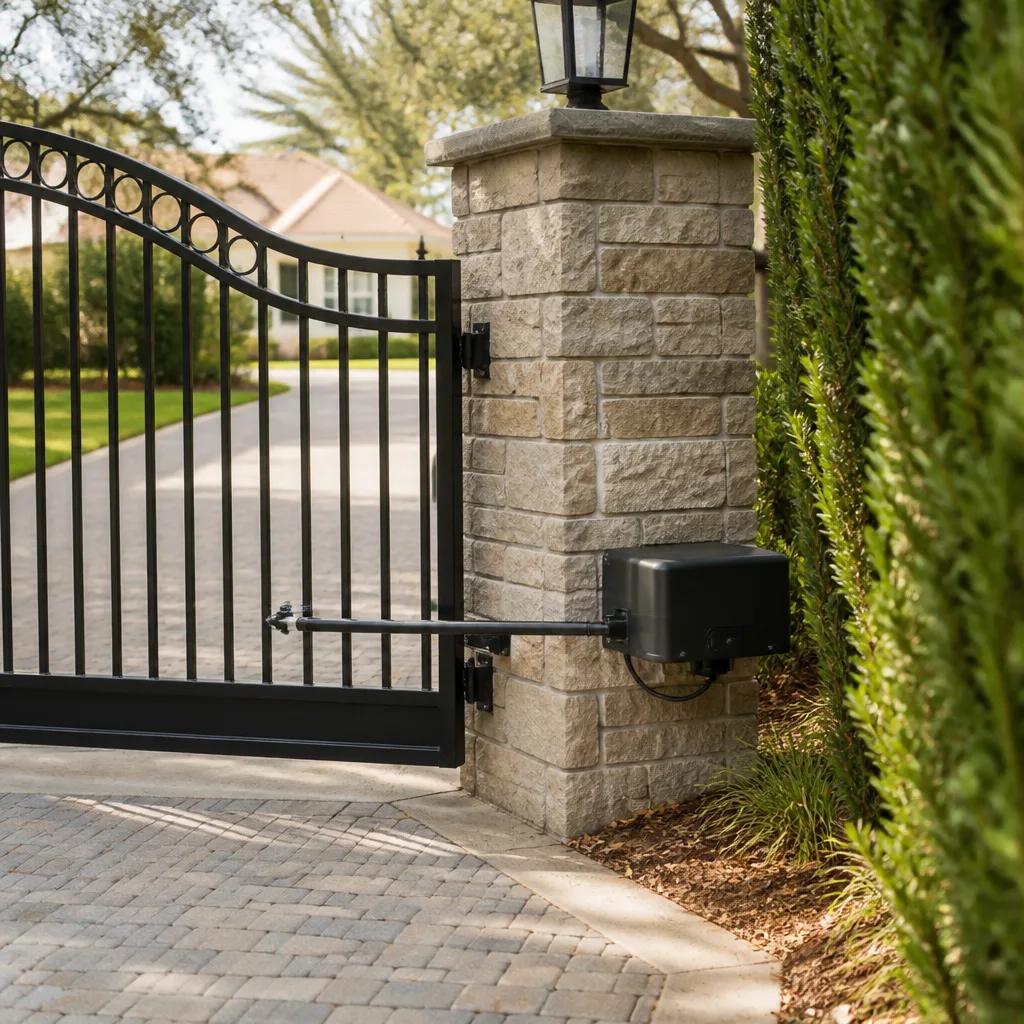 LiftMaster operators
Free on-site gate assessment - hinges, posts, and your LiftMaster or Nice gate operator checked before anything is quoted
The assessment is free and the quote is the invoice.
Get your free estimateGate Repair Maintenance Checklist for Jacksonville Homeowners
Most Jacksonville homeowners assume their gate fails because a motor burns out or a hinge snaps. In our experience, that’s rarely the root cause. The single most skipped maintenance task on residential gates across Jacksonville isn’t lubrication or battery checks. It’s inspecting the ground track after summer thunderstorm runoff. Water carries sand, silt, and small debris into sliding gate tracks. Over weeks, that grit grinds against rollers and forces the gate slightly out of alignment. By the time the gate starts shuddering or stops mid-travel, the damage has compounded. This guide is built around that reality: a Jacksonville gate needs a maintenance rhythm matched to its type and its micro-climate, not a generic calendar. You’ll learn what to check, when to check it, and which findings mean you should stop and call a specialist before a small problem becomes a gate that won’t open at 7 a.m. on a Monday.
Styles & brands we work with
Quick Answer
A Jacksonville gate maintenance checklist should be organized by gate type and local climate zone, not by calendar month. For most residential gates in Jacksonville, the core tasks are: clean and inspect the ground track or hinge area monthly during rainy season, test auto-reverse and safety sensors every 60 days, lubricate pivot points and rollers quarterly, and schedule a professional inspection of the motor, control board, and safety loops once a year. Coastal properties from Atlantic Beach down to Ponte Vedra need corrosion checks every 30 days on exposed metal hardware. If you hear grinding, see rust blooming on welds, or the gate hesitates before moving, stop and call a gate technician in Jacksonville rather than forcing the system.
Table of Contents
- Swing Gate Maintenance Checklist for Jacksonville Properties
- Sliding Gate Maintenance Checklist: Ground Track and Roller Care
- Vertical Pivot Gate Maintenance: The Overlooked Jacksonville Option
- Coastal Corrosion Inspection Points for Jacksonville’s Beach Communities
- Post-Hurricane-Season Checks Most Homeowners Skip
- How to Log Gate Maintenance for Warranties and Insurance
- Red-Flag Findings: Stop and Call a Specialist
- Common Mistakes to Avoid
- When to Call a Professional
- Frequently Asked Questions
- The Bottom Line
Swing Gate Maintenance Checklist for Jacksonville Properties
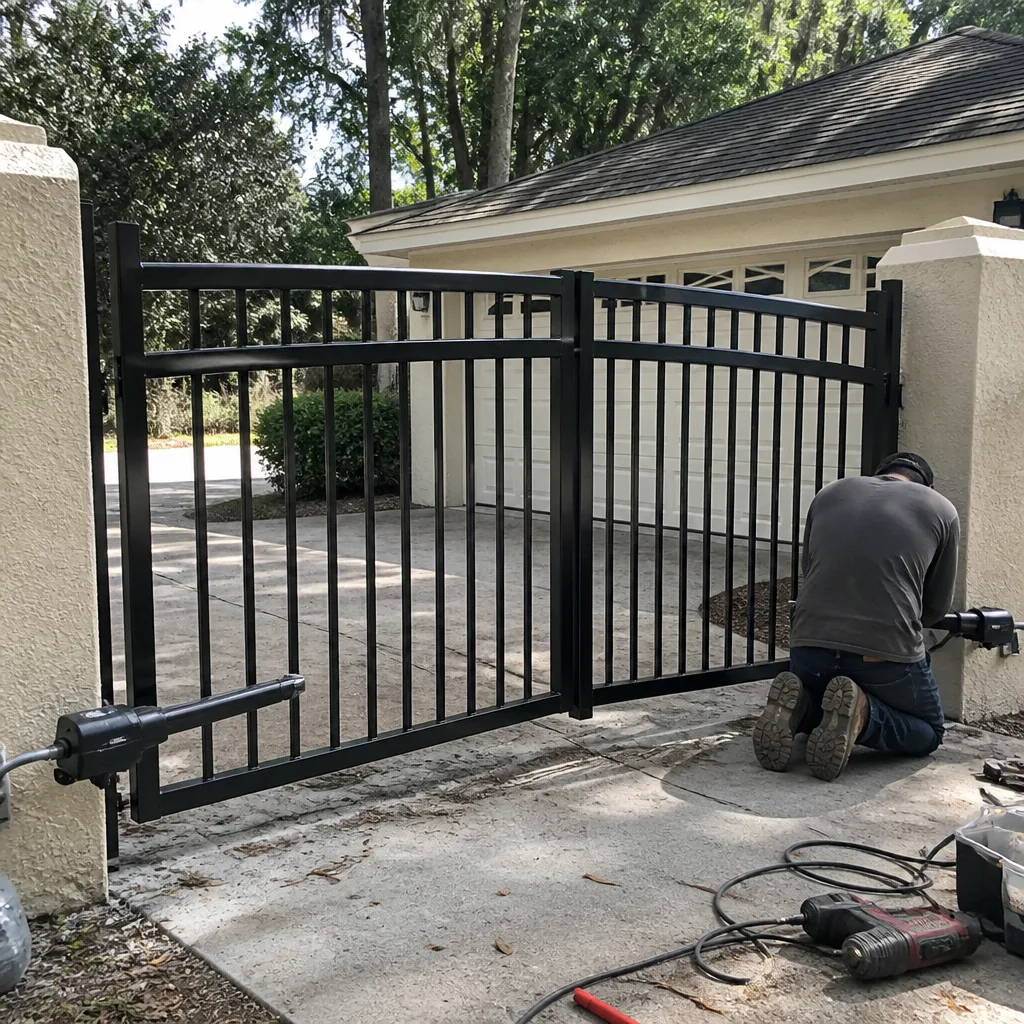
Swing gates dominate Jacksonville’s established neighborhoods: Mandarin, Ortega, San Marco, and Avondale. These are typically dual-leaf ornamental steel or aluminum gates on hinge posts, operated by an arm-style opener from LiftMaster, FAAC, or BFT, or in some older installations, a buried linear actuator. The maintenance logic for a swing gate is simple: every moving part that touches another moving part is a wear point, and every wear point is a failure waiting for a humid summer.
Here is the swing gate checklist we recommend for Jacksonville homeowners:
Monthly During Rainy Season (June through October)
- Inspect hinge welds and bolts. Look for rust bloom, hairline cracks, or bolts that have loosened. A swing gate leaf is heavy. A loose hinge lets the leaf sag, which forces the opener arm to work against gravity.
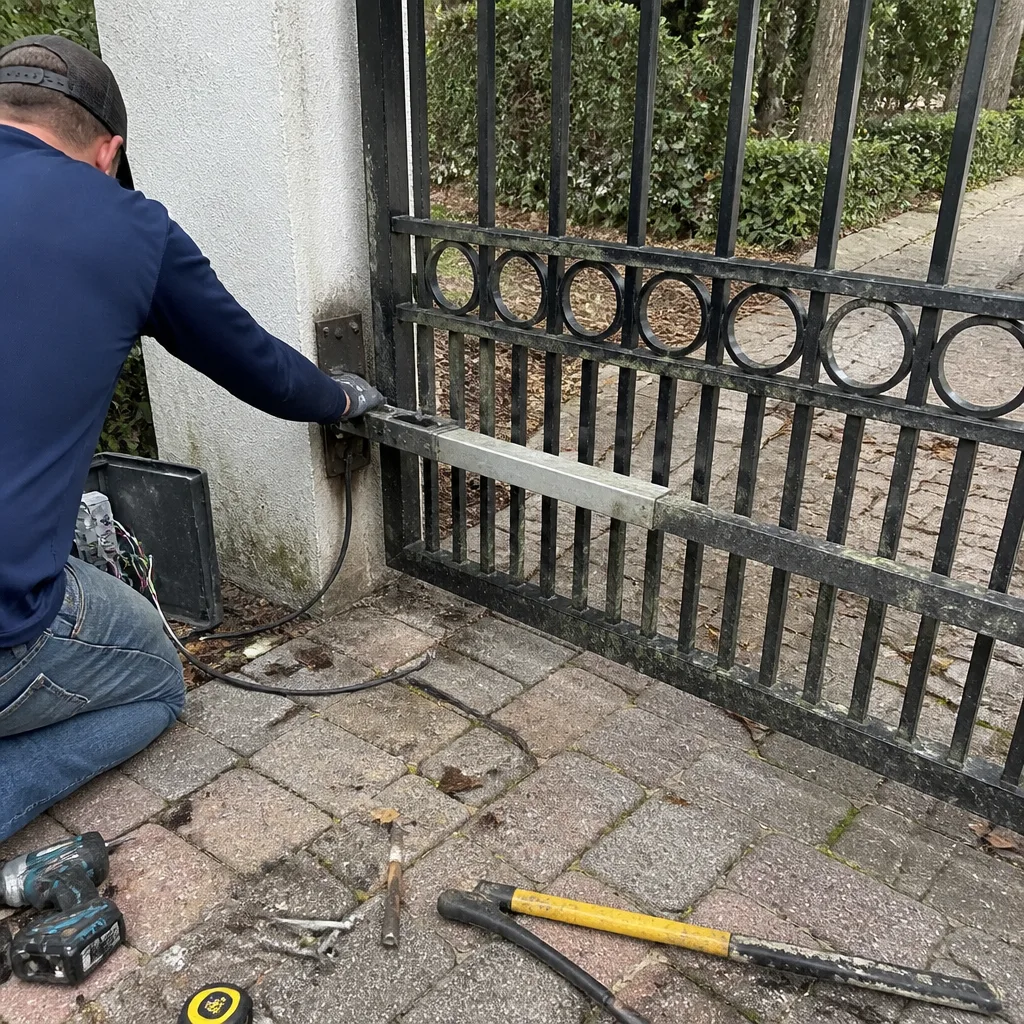
- Check the opener arm attachment points. On arm-style openers, the bracket where the arm connects to the gate leaf and the post takes constant stress. Look for elongated bolt holes or metal dust around the pin.
- Clear leaf litter and pine needles from the gate’s sweep path. Oak trees and pines across Jacksonville drop debris that piles against the closed gate. If the opener has to push through accumulated debris, it strains the motor and strips gears.
- Observe one full open-and-close cycle. Stand near the hinge post and watch. Does the leaf hesitate? Does it stutter at the start of travel? Does it bang into the open stop? Any of these means the opener is working harder than it should.
Quarterly Tasks
- Lubricate hinge pins and pivot points. Use a dry silicone spray or white lithium grease, never WD-40 as a substitute for real lubricant. Garage-style heavy grease attracts sand and creates abrasive paste.
- Test the auto-reverse function. Place a rolled-up towel or a 2×4 in the gate’s path and close the gate. The gate should stop and reverse before crushing the object. If it doesn’t, the force limit is set too high, and that’s a safety hazard, especially with children or pets around.
- Check photo-eye sensor alignment. Jacksonville’s afternoon thunderstorms knock sensors out of alignment with surprising regularity. Clean the lenses with a dry cloth and make sure the small indicator lights are steady, not blinking.
One note for older Jacksonville homes: if your swing gate dates from the 1990s or earlier and still runs on an original Mighty Mule or vintage Linear opener, the control board may not have current-sensing obstruction detection. That means the gate will keep pushing even when something is in the way. We strongly recommend upgrading the control board rather than trying to maintain obsolete safety logic.
For a deeper walk-through of swing gate mechanics and common failure points, see our Gate Repair in Jacksonville page.
Sliding Gate Maintenance Checklist: Ground Track and Roller Care
Sliding gates are common on newer Jacksonville construction, especially in Nocatee, Bartram Park, and gated communities along the Southside. These gates roll on a steel track, supported by guide rollers or a cantilever system. The track is the gate’s spine. When the track is clean and level, the gate glides. When it’s full of sand and the rollers are grinding, the motor strains and the gate starts sounding like a freight train.
Here’s the sliding gate checklist, organized by what actually goes wrong in Jacksonville’s climate:
Every 2 Weeks During Summer Rainy Season
- Clear the ground track. Use a leaf blower or a stiff brush. Remove sand, gravel, twigs, and anything that’s washed into the track channel. Jacksonville thunderstorms move surprising amounts of sand, especially on properties near the Intracoastal or on sandy lots in the Beaches.
- Check for standing water in the track. If water pools in the track after rain, that’s a drainage problem. Standing water accelerates corrosion on steel track sections and rusts roller bearings. Regrade or add a drainage weep hole where water collects.
- Visually inspect the rollers. Look for flat spots, wobble, or rust on the wheel faces. Rollers with sealed bearings fail silently. A gate that’s getting harder to push manually is the first sign of bearing failure.
Monthly Tasks
- Lubricate roller bearings. If the rollers have grease fittings, give them one pump of marine-grade grease. If they’re sealed, leave them alone until replacement. Overgreasing sealed bearings blows the seal and lets Jacksonville humidity in.
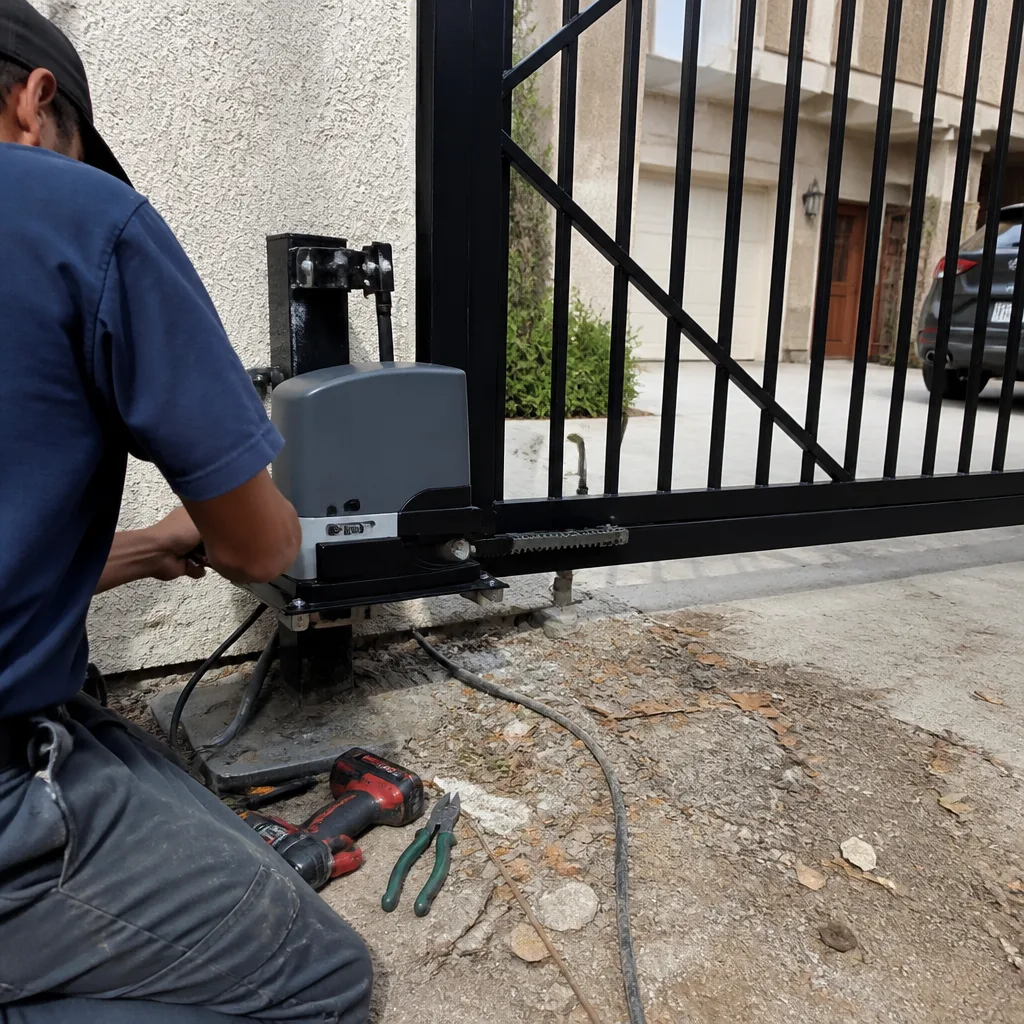
- Check the rack and pinion on automated sliding gates. Look for chipped teeth, misalignment, or debris packed between the rack and the drive gear. A misaligned rack chews through drive gears fast.
- Inspect the end stops and limit switch operation. The gate should stop cleanly at both the open and closed positions without slamming. If it slams, the limit switch is failing or the stop is loose.
- Check the track level. Use a 4-foot level on the track at three points: both ends and the middle. Sliding gate tracks in Jacksonville settle unevenly because our sandy soil shifts with water saturation. A track that’s off by even a quarter inch over 12 feet will cause the gate to bind.
- Inspect the guide rollers at the top of the gate. These keep the gate from leaning. Bent or worn top guides let the gate wobble, which transfers stress to the bottom rollers and the drive motor.
- Check the pivot bearing for play. With the gate closed, grab the end of the panel and try to rock it side to side. More than a quarter inch of movement means the pivot bearing is worn and needs replacement before the gate starts binding.
- Inspect the counterweight and spring system. Vertical pivot gates use heavy springs or counterweights to assist the lifting. If a spring is cracked or a counterweight cable is frayed, the gate becomes dangerously heavy to operate manually.
- Test the manual operation once a month. Disconnect the opener and raise the gate by hand. It should lift smoothly with manageable effort. If it’s unexpectedly heavy, the counterweight system needs attention.
- Check hydraulic fluid levels on hydraulic vertical pivot operators. Some older systems use hydraulic pumps. Low fluid means air in the lines, which causes jerky operation and pump damage.
- Weld joints on steel gate frames. Weld heat changes the grain structure of steel and makes those joints slightly more active electrochemically. Rust starts at welds. Look for orange staining or paint blistering at every weld on the gate frame, hinge brackets, and operator mounting plates.
- Bottom rail of tubular gates. The bottom rail collects moisture from rain splash and salt-laden air. Check for rust pinholes on the underside, which is the last place most homeowners look. If you see rust pinholes, the rail is thinning from the inside.
- Gate hardware: hinges, latch, and lock cylinder. Stainless steel hardware resists corrosion, but if your gate was built with zinc-plated hardware, it’s oxidizing now. A stuck latch or a lock cylinder that won’t turn is an early warning.
- Control board enclosure. Salt air finds its way into the gray plastic box on the operator. Look for white crust on terminal connections, green corrosion on the board traces, or any sign of moisture inside the enclosure. We repair coastal Jacksonville gates where the control board looks like it spent a summer underwater.
- Electrical conduit and fittings. Exposed conduit on a coastal gate should be PVC or stainless. Galvanized steel conduit rusts at the fittings first. If you see rust around conduit joints, the wire inside is probably still fine, but the conduit needs replacement before it fails structurally.
- Check for water intrusion in the operator box. Even if the gate still works, high water or wind-driven rain may have gotten into the electronics. Open the enclosure and look for moisture, condensation, or a white mineral crust on terminals. If you see water, disconnect power and call a Jacksonville gate technician before powering the system back up.
- Re-test the auto-reverse and photo-eye sensors. Storm winds knock sensors out of alignment, and debris like palm fronds and roof shingles ends up wedged in the track and around the gate path.
- Inspect the gate for impact damage. Flying limbs and debris dent gate panels, bend hinges, and knock sliding gates out of their track. Even a small dent in a swing gate leaf changes the balance, and the opener works harder until something fails.
- Check the power supply and surge damage. After a lightning strike nearby, a gate operator may run but behave erratically. Control boards are sensitive to voltage spikes. If the gate opens on its own, won’t respond to remotes, or the keypad acts dead, the board may have taken surge damage.
- Clear drainage channels around the gate. Post-storm debris clogs drainage, which means future rain pools around the track and the operator pad. Get the water moving away from the gate area again.
- Date of inspection. Note whether this was a routine check or a post-storm check.
- Gate type and operator brand. For example: “Dual-leaf swing gate, FAAC 400 operator.”
- What you inspected. List the specific items from this guide that you checked.
- What you found. Note anything unusual, even if you didn’t fix it: “Light rust on hinge bolt,” or “Track had sand buildup after heavy rain.”
- What you did. Lubricated hinges? Cleaned the track? Tested auto-reverse? Write it down.
- Photos. Take three photos per inspection: the hinge area, the track or sweep path, and the operator enclosure. Stored photos are the strongest proof you have.
- The gate reverses on its own when nothing is in the way. This usually points to a failing safety sensor, a misaligned photo-eye, or a control board that’s misreading the current draw. Continuing to run the gate can burn out the motor or damage the board.
- The gate slams into its stops. Limit switch failure. The gate can overtravel and rip the opener arm off its bracket.
- You see exposed or frayed wiring at the operator or hinge area. Low-voltage control wire is not dangerous to touch, but exposed 120V line voltage near a gate operator is a serious electrical hazard. Disconnect the breaker and call a professional.
- A swing gate leaf sags visibly or drags on the ground. Hinge or post failure. The gate is now a falling hazard, and the opener is your last line of defense against it.
- The gate moves, but makes a grinding or squealing noise. Bearing failure in a roller or the opener itself. Lubricating will not fix a failed bearing. Continuing to run the gate guarantee that the failure migrates to other components.
- The keypad or remote works intermittently. This is often the first sign of control board trouble, not a battery issue. Intermittent signals can also mean the receiver antenna is corroded or damaged.
- Using WD-40 as a lubricant. WD-40 is a water displacer and light solvent, not a lubricant. It strips existing grease and leaves metal surfaces dry. Use a proper white lithium grease or dry silicone spray on gate hardware.
- Ignoring the track on a sliding gate until the gate starts sticking. By the time the gate binds, the track and rollers have already suffered accelerated wear. Track cleaning is weekly or biweekly work during Jacksonville’s rainy season, not annual work.
- Assuming the opener is the problem when the gate moves slowly. A sluggish gate usually means mechanical resistance: dry hinges, dirty track, worn rollers, or a sagging leaf. Replacing the opener before fixing the mechanical issue just transfers the problem to the new motor.
- Disabling or bypassing safety sensors because they’re “annoying.” A photo-eye that keeps tripping is telling you something: misalignment, dirt, or a wiring fault. Bypassing it creates a real injury hazard for family members and pets, and exposes you to liability if someone is hurt.
- Skipping the post-storm inspection. Jacksonville homeowners who check their gates after a storm catch small problems early. Those who don’t discover them later as large failures.
- Forcing a gate that’s stuck in the open or closed position. Using the opener to push a gate that’s bound, or using a car to nudge a gate along its track, guarantees damage. Find the obstruction or call a professional.
- Treating a coastal gate like an inland gate. Salt spray in Ponte Vedra or Atlantic Beach demands a more aggressive maintenance schedule. What works in Mandarin will not be enough east of the Intracoastal.
Quarterly Tasks
Sliding gates with Viking or DoorKing operators are often commercial-grade systems installed on larger residential properties. Those operators are built for heavy cycles, but they still need clean tracks and aligned rollers. The operator will not compensate for a neglected track indefinitely.
If your sliding gate is binding, grinding, or hard to push manually, see our Gate Repair in Jacksonville services page for diagnostic information.
Vertical Pivot Gate Maintenance: The Overlooked Jacksonville Option
Vertical pivot gates lift up and over, like a single-arm barrier with a full gate panel. They’re less common in Jacksonville residential areas, but we see them on narrow driveways in Riverside and Avondale, and on commercial properties throughout the city. The advantage is obvious: they don’t need a long horizontal track, so they work on tight lots. The disadvantage is that all the load concentrates into a single pivot bearing and a counterweight system.
Maintenance for a vertical pivot gate in Jacksonville is more about checking for imbalance than lubrication:
Ghost Controls and Elite both make residential-scale swing and sliding opener kits, and we occasionally see their hardware adapted onto custom pivot gates. The same rule applies: the opener is only as reliable as the mechanical system it’s moving.
Coastal Corrosion Inspection Points for Jacksonville’s Beach Communities
If your property sits east of the Intracoastal Waterway, from Mayport down through Atlantic Beach, Neptune Beach, Jacksonville Beach, and Ponte Vedra, you’re in a salt-spray environment. That changes the maintenance math substantially. Steel hardware that lasts 15 years inland may fail in 7 years within a mile of the ocean.
Here are the specific corrosion inspection points for coastal Jacksonville gate owners:
For coastal properties, the maintenance rhythm accelerates. What we recommend for Mandarin every 90 days, we recommend for Jacksonville Beach every 30 days. The salt spray simply never stops. One practical step: rinse the gate hardware and track with fresh water once a month, the same way you rinse a boat trailer. It removes the salt film that catalyzes corrosion.
Post-Hurricane-Season Checks Most Homeowners Skip
Jacksonville hasn’t taken a direct hit from a major hurricane in recent memory, but the city catches tropical-storm-force winds and heavy rain from systems that make landfall elsewhere. The 2017 season with Hurricane Irma was a good example: flooding along the St. Johns River, downed trees across Mandarin and San Jose, and intermittent power everywhere. After any storm event, your gate needs a specific inspection sequence that most homeowners skip until the gate fails weeks later.
What to Check After a Storm
We’ve seen Jacksonville homeowners skip this post-storm sequence, only to have their gate operator fail two months later from corrosion that started during the storm. A 20-minute inspection right after the weather passes prevents a $400 control board replacement later. For wiring and circuit-board issues, see our Electric Gate Repair in Jacksonville page.
How to Log Gate Maintenance for Warranties and Insurance
Gate operator warranties typically require proof of regular maintenance when you file a claim. If your LiftMaster or BFT operator fails under warranty and you have no maintenance records, the manufacturer’s warranty support process gets much harder. Insurance claims for storm damage or gate-related property incidents follow the same pattern: documentation separates an easy claim from a rejected one.
Our recommendation is a simple paper or digital log with six fields:
A log that shows monthly rainy-season inspections and quarterly lubrication reads very differently to a warranty adjuster than a blank stare and “I don’t know, it just stopped working.” If you hire a professional for annual service, ask for a written service report and file it with your log. Villa Gate Repair provides documentation with every service visit in Jacksonville, and we recommend keeping those reports for the life of the gate.
Red-Flag Findings: Stop and Call a Specialist
Some findings on a gate maintenance checklist are informational: you note them and watch them. Others are stop-work signals. These mean the gate is unsafe to operate or continuing to run it will cause more damage:
If you encounter any of these, stop using the gate and call a gate specialist. Forcing a failing gate to operate is the most expensive mistake we see Jacksonville homeowners make. The repair bill triples when a simple sensor replacement becomes a burned motor, stripped gear, and bent gate frame.
Common Mistakes to Avoid
When to Call a Professional
This checklist covers what a Jacksonville homeowner can reasonably inspect and maintain on their own. But some repair tasks require specialist knowledge and tools. Call a professional gate technician when you see rust damage on structural components like hinge posts or the bottom rail of the gate frame. Call when the opener’s control board shows signs of corrosion, water damage, or surge damage. Call when safety features are failing, or when the gate is misaligned enough that the auto-reverse trips inconsistently. And call if you’re unsure whether a noise is normal. A trained ear distinguishes a dry hinge from a failing bearing instantly. Villa Gate Repair offers free estimates in Jacksonville, and we work on LiftMaster, FAAC, BFT, Linear, Viking, Ghost Controls, DoorKing, Elite, and Mighty Mule systems. Call (877) 265-5090 for a diagnostic visit.
Frequently Asked Questions
In Jacksonville, most gates need a basic inspection every 30 days during the rainy season from June through October, and every 90 days during the drier winter months. Coastal properties east of the Intracoastal should inspect every 30 days year-round due to salt spray. Lubrication and safety sensor testing are quarterly tasks. A professional inspection once a year is the minimum for automated systems. Call (877) 265-5090 to schedule an annual check in Jacksonville.
The most common gate problem we see in Jacksonville is sand and debris accumulation in sliding gate tracks, especially after summer thunderstorms. The grit grinds against rollers, forces the gate out of alignment, and makes the opener work harder until something fails. Weekly or biweekly track cleaning during rainy season prevents most of it.
Yes. Gates within a mile of the ocean in Jacksonville Beach, Atlantic Beach, Neptune Beach, and Ponte Vedra need corrosion inspections every 30 days, plus a monthly fresh-water rinse of all metal hardware to remove salt film. Inland gates in Mandarin or Ortega can run on a 90-day inspection cycle with quarterly lubrication.
We don’t recommend it. Gate openers involve line-voltage electrical connections, and different brands like Ghost Controls and DoorKing have different control board logic and safety sensor requirements. An improper installation can create a safety hazard and void the manufacturer’s warranty. Villa Gate Repair offers Gate Installation in Jacksonville with a warranty on the work.
A full installation includes the gate frame and panels, posts, hinges or track system, an operator if it’s automated, the control board and safety sensors, and the electrical connection. Many Jacksonville properties also need concrete work for the operator pad and post footings. See our Gate Installation in Jacksonville page for details, or call (877) 265-5090 for a free site assessment.
A humming opener that doesn’t move usually indicates the motor is getting power but can’t turn, either because of a mechanical bind in the gate or a failed capacitor in the operator. Stop using the gate and call a technician. Continuing to power a stalled motor will burn out the windings. Villa Gate Repair diagnoses gate opener failures in Jacksonville and can tell you whether the motor, capacitor, or control board is at fault.
Gate repair in Jacksonville typically ranges from $150 to $450 for common fixes like sensor alignment, track cleaning, limit switch adjustment, and hinge lubrication. Control board replacement runs higher, and full operator replacement can cost $1,200 to $3,500 depending on the brand and gate size. Every repair we quote is priced and approved before work starts, so there are no surprises on the invoice. Call (877) 265-5090 for an exact quote on your gate.
The Bottom Line
A gate maintenance checklist for Jacksonville has to account for what this city actually throws at gates: summer thunderstorms, sandy soil, salt air east of the Intracoastal, and seasonal storm surge. Match your maintenance rhythm to your gate type and your micro-climate. Keep the track clean, keep the hinges lubricated, test the safety features every 60 days, and log everything. The findings that matter most are the ones you catch early: rust at welds, a track out of level, a sensor that blinks instead of glowing steady. Those are cheap fixes early and expensive failures later. Your gate is the first thing you pass through every day and the last line of defense at night. Treat it accordingly.
Written by the team at Villa Gate Repair, serving Jacksonville since 2012.
See the difference
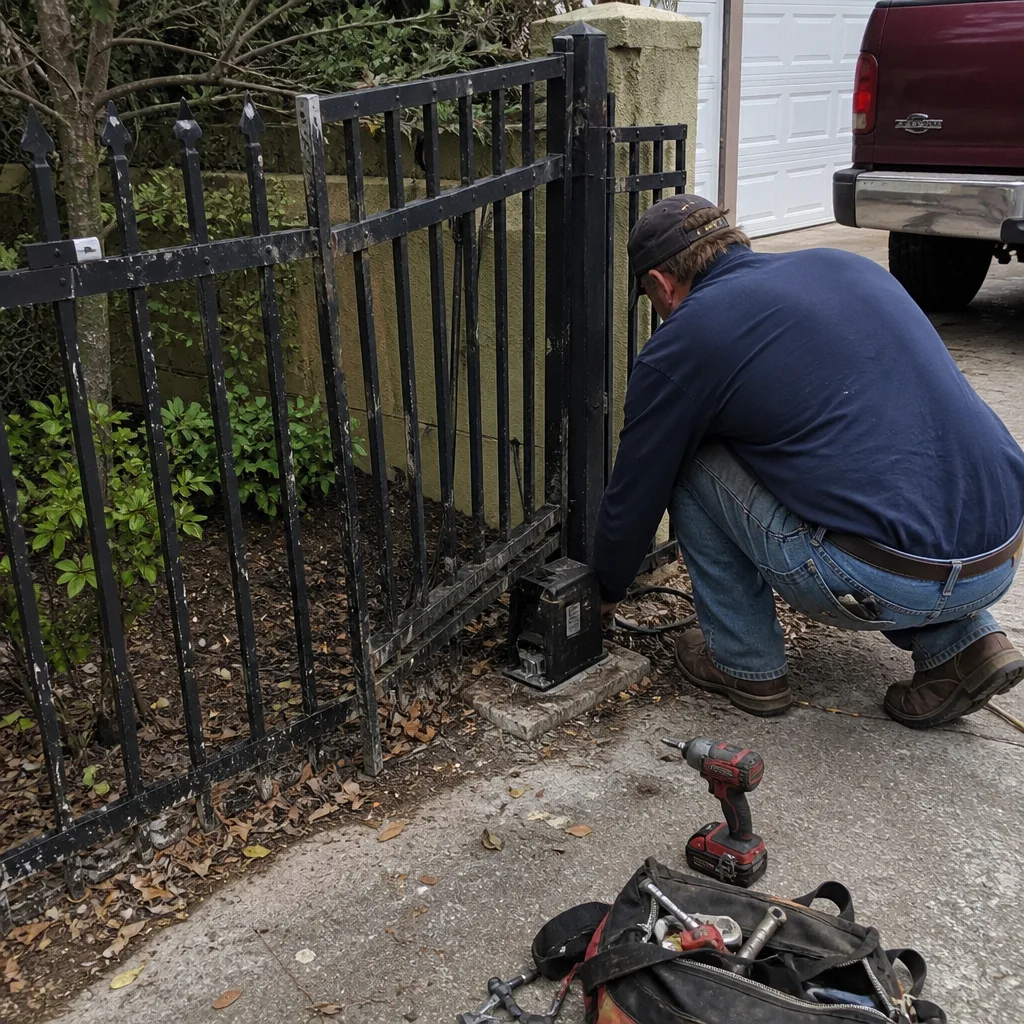 Before
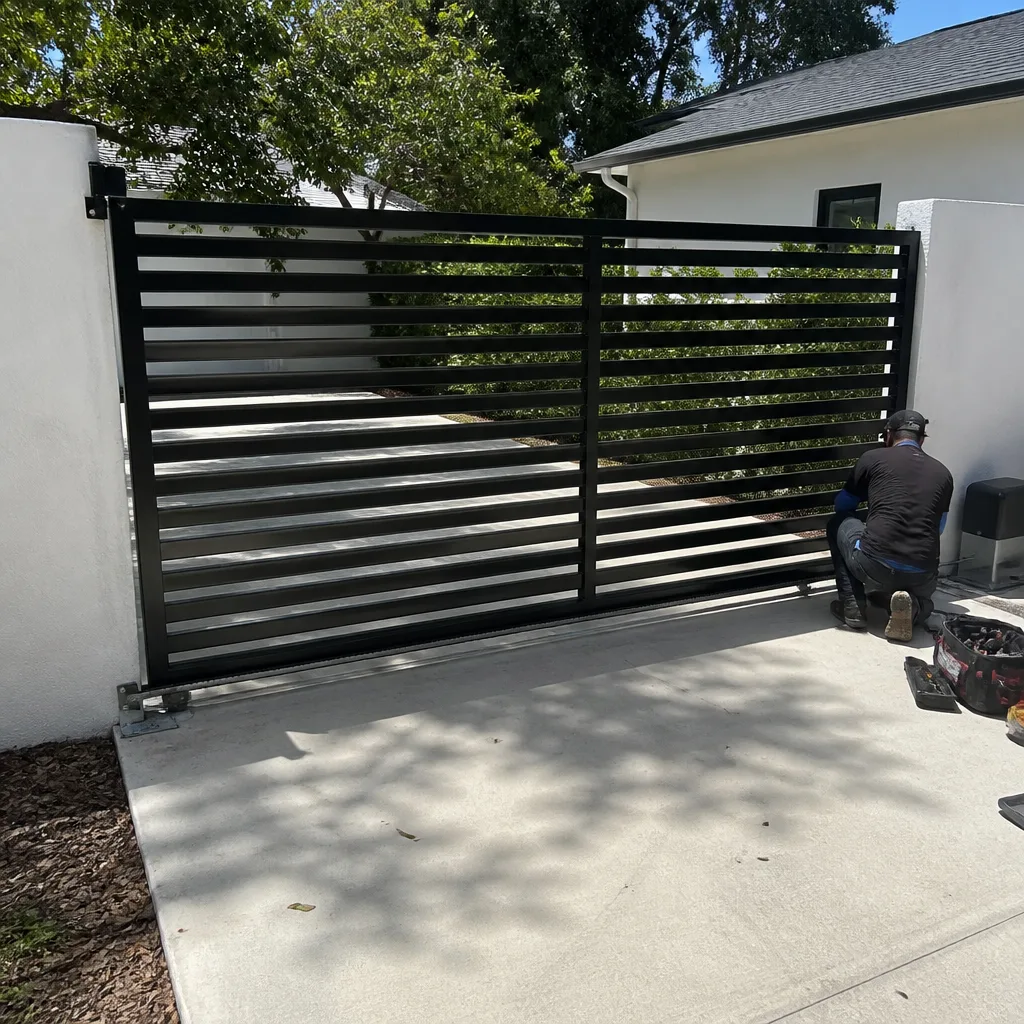 After
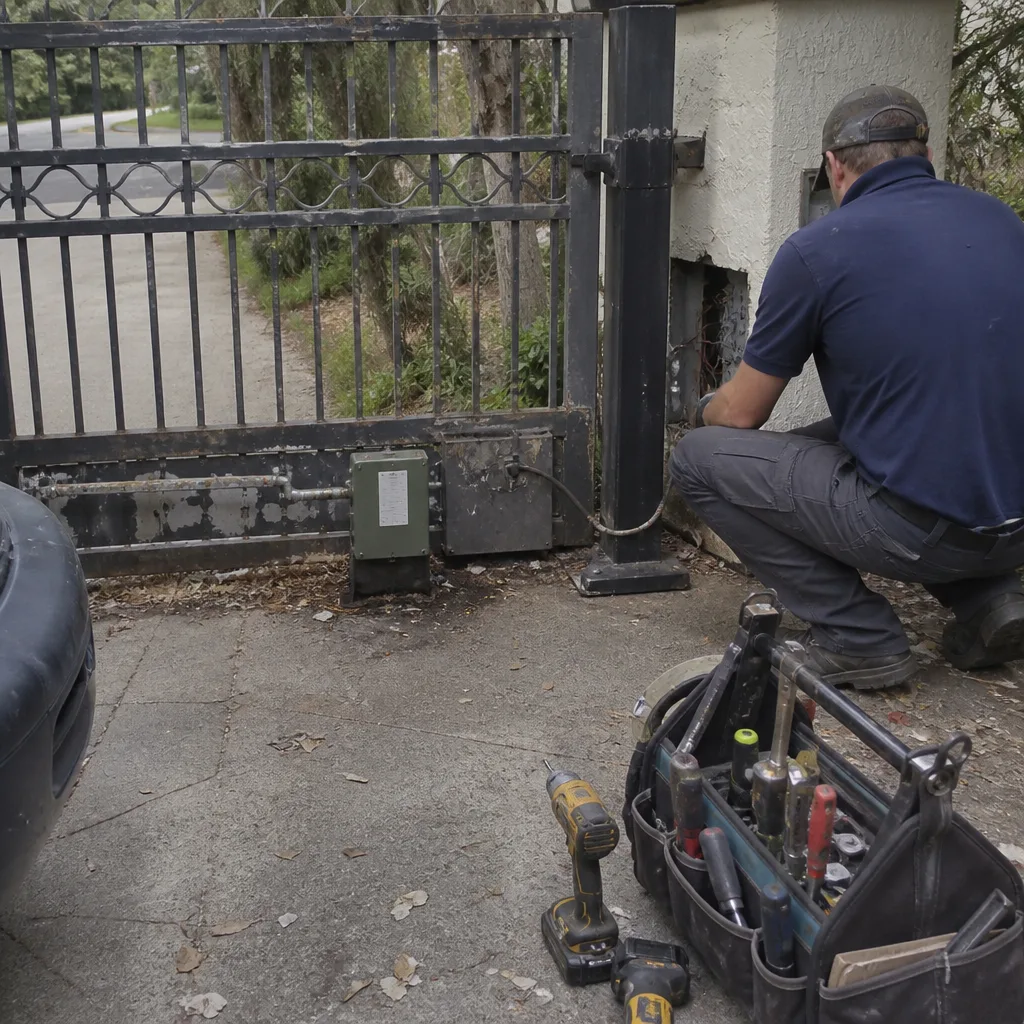 Before
 After
 Before
 After