Last updated October 30, 2026
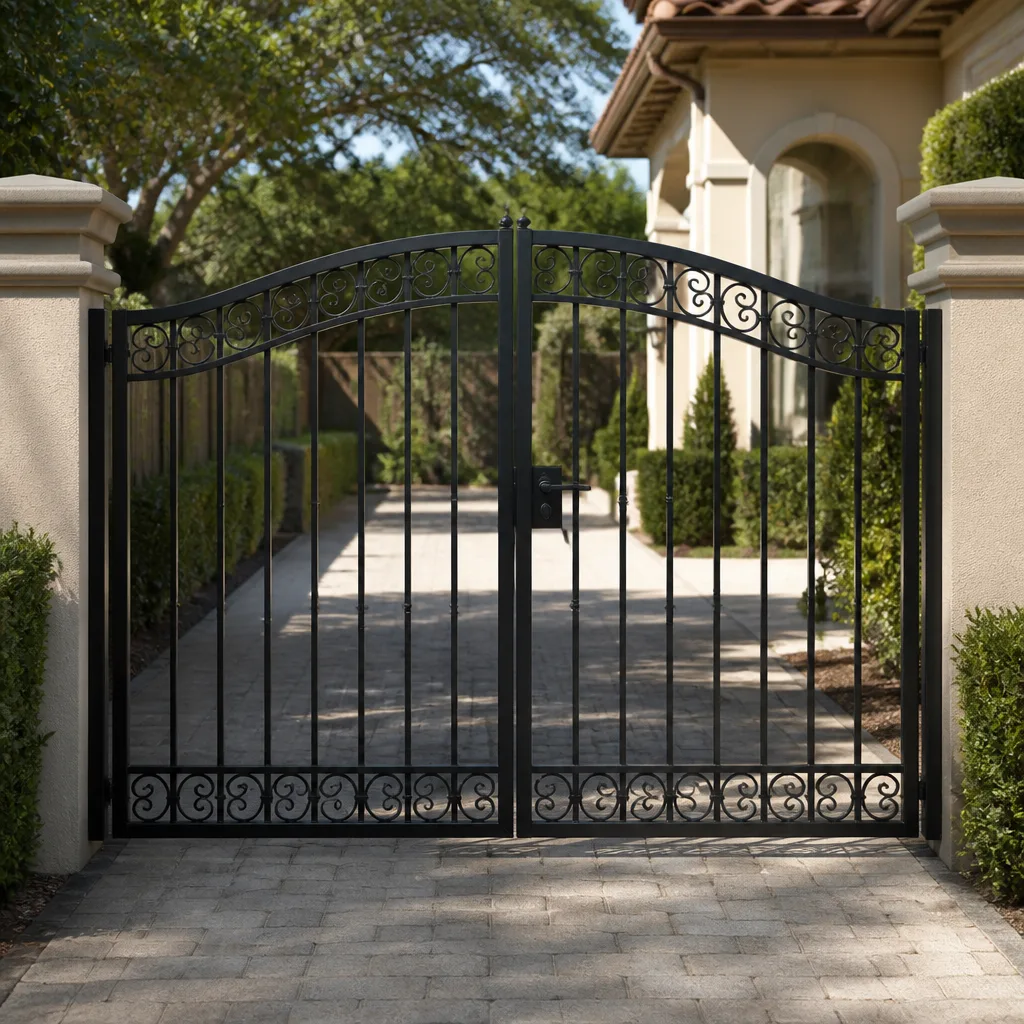 Wrought iron
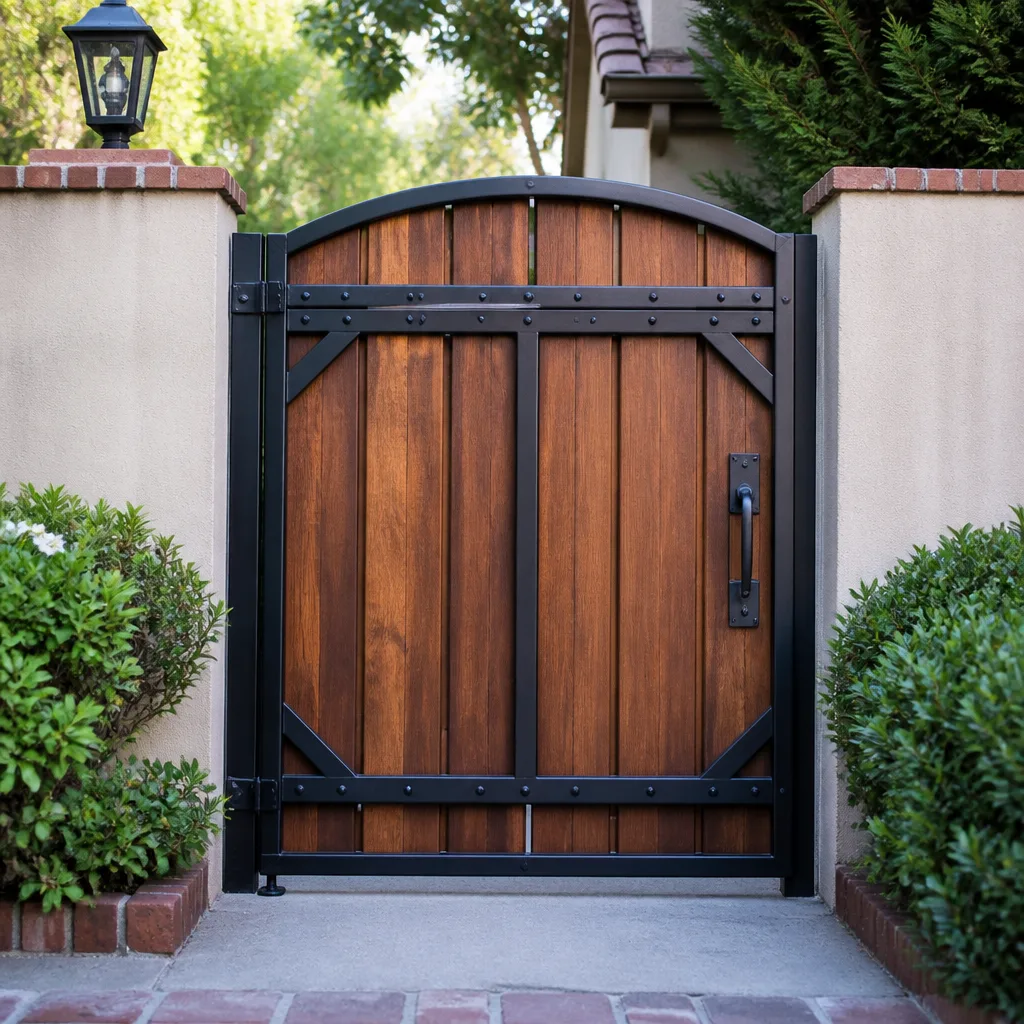 Wood & steel frame
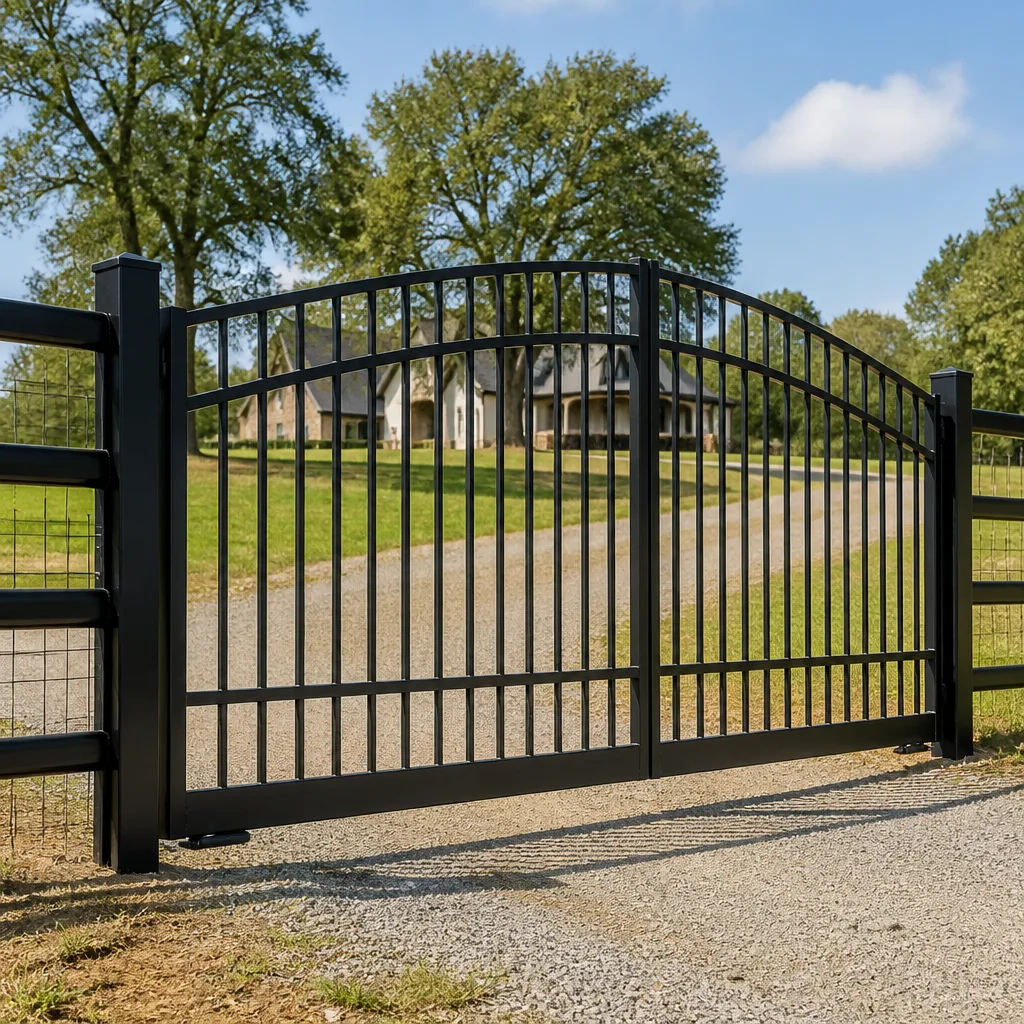 Farm & ranch
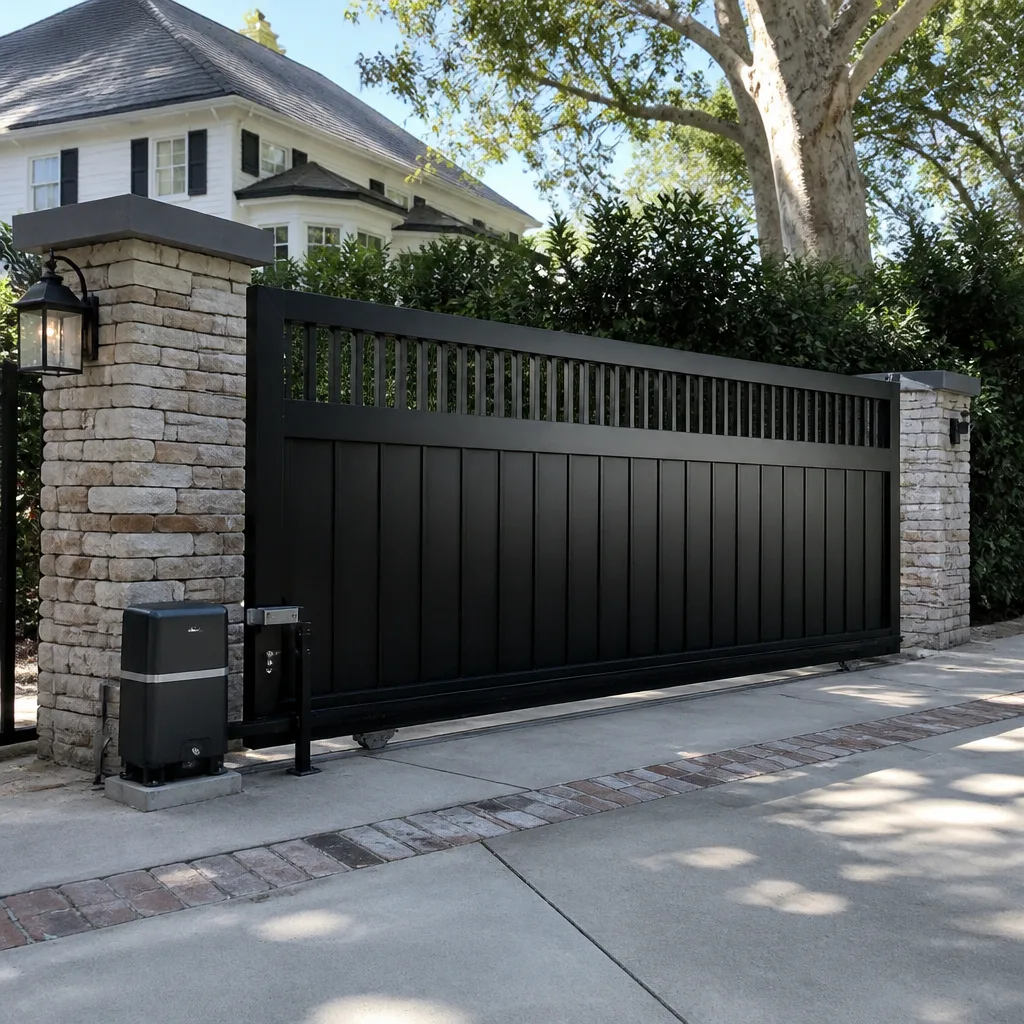 Sliding driveway gates
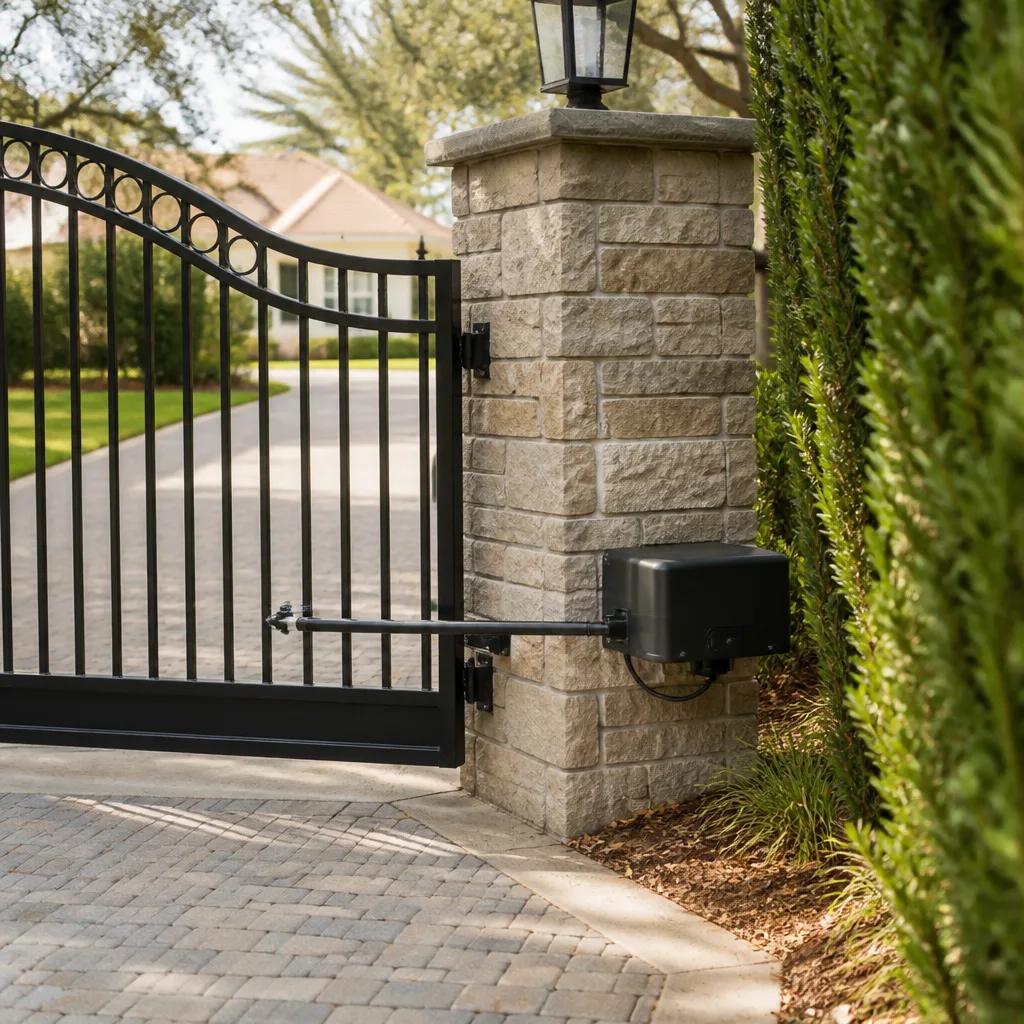 LiftMaster operators
Free on-site gate assessment - hinges, posts, and your LiftMaster or Nice gate operator checked before anything is quoted
The assessment is free and the quote is the invoice.
Get your free estimateThe Complete Guide to Gate Repair in Jacksonville
Most gate repair guides tell you to “lubricate moving parts regularly.” But in Jacksonville’s salt-air humidity, the wrong lubricant attracts grit and sand, forming a grinding paste that accelerates corrosion faster than skipping lubrication entirely. That’s the difference between generic advice and repair knowledge built for this specific climate. This guide maps every major gate failure mode to Jacksonville’s actual environment: coastal humidity, sandy soil, hurricane-season voltage surges, and the particular brands most common in neighborhoods from Ortega to Nocatee. You’ll learn what’s actually breaking, why it breaks here more than inland, what a fair repair looks like, and when a failure is severe enough to call a specialist.
Styles & brands we work with
Quick Answer
Gate repair in Jacksonville typically costs between $150 and $900 depending on whether the failure is mechanical (hinges, wheels, posts) or electrical (control board, motor, sensors), with most common repairs completed in a single visit. Jacksonville’s coastal humidity, sandy soil, and frequent summer lightning create failure patterns – corroded control boards, settled posts, fried circuit boards – that generic repair timelines don’t account for. For an exact quote on your specific gate and brand, call (877) 265-5090.
Table of Contents
- How Jacksonville’s Climate Breaks Gates Differently
- The Gate Brands We See Most in Jacksonville (And Their Known Failure Points)
- Sandy Soil, Settling Posts, and the Operator Failure That Isn’t
- A Six-Month Repair vs. a Lifespan Restoration: How to Tell What You’re Being Sold
- When Gate Failure Is Storm-Damage Eligible Under Homeowner’s Insurance
- What Gate Repair Costs in Jacksonville: A Realistic Price Breakdown
- Common Mistakes to Avoid
- When to Call a Professional
- Frequently Asked Questions
- The Bottom Line
How Jacksonville’s Climate Breaks Gates Differently
A gate in Jacksonville doesn’t age the same way a gate in Dallas or Atlanta does. The difference comes down to three environmental factors working together: salt-laden humidity, abrasive sand, and violent electrical storms.
Salt air is the first and most persistent problem. Jacksonville sits on the Atlantic coast, and prevailing easterly winds carry salt moisture inland for miles. That salt settles on every exposed metal surface: hinge pins, weld joints, control board terminals, motor housings. Over time, it creates a thin, corrosive film that eats through protective coatings. We regularly open control board enclosures in Ponte Vedra Beach and Jacksonville Beach and find green corrosion on terminals that have never been rained on directly. The salt gets in through vent holes and does its work invisibly.
Sand is the second factor. Jacksonville’s soil is largely sandy, especially east of the St. Johns River and along the Intracoastal. Wind blows that sand into track systems, hinge assemblies, and chain drives. Sand acts as an abrasive. It grinds down nylon wheels, scores hinge pins, and accelerates chain stretch. A gate that would run smoothly for a decade in clay soil might need roller replacement in five years here, simply because of what’s in the air.
The third factor is electrical. Northeast Florida has one of the highest lightning-strike densities in the United States. Summer afternoon thunderstorms roll through almost daily from June through September. A nearby strike sends voltage surges through power lines, and automated gates are especially vulnerable because their control boards are connected to both line voltage and low-voltage peripheral wiring (keypads, sensors, loop detectors) that runs through the yard. That peripheral wiring acts like an antenna for transient voltage. We replace more surge-damaged control boards in Jacksonville between June and September than in the other nine months combined.
This combination means a Jacksonville homeowner should expect different things from a gate than someone in Orlando or Gainesville. Regular maintenance looks different. The failure timeline is different. And the repair decisions are different. Understanding that is the first step to not getting sold a generic fix that won’t last.
The Gate Brands We See Most in Jacksonville (And Their Known Failure Points)
Jacksonville’s gate landscape skews toward certain brands because of the area’s mix of older established neighborhoods, newer master-planned communities, and a strong commercial and HOA presence. Knowing the brand tells a technician a lot about what’s likely to fail and how to fix it properly. We work on your brand, not just whatever’s easiest to swap out.
Linear and DoorKing: The Workhorses of Jacksonville HOAs
Linear and DoorKing operators are found throughout Jacksonville’s gated communities and commercial properties. Both brands are known for robust mechanical components and long service lives, but they have distinct personality traits in this climate. Linear operators, especially the common swing-gate models, tend to develop limit switch drift over time in sandy conditions. The internal switches get gummed with fine dust, and gates start opening short or over-traveling. DoorKing units have strong control boards, but their peripheral connections (keypads, phone entry systems) are vulnerable to lightning-induced surges because they’re often installed at the property line with long wire runs back to the operator.
Ghost Controls: The DIY-Friendly Brand with a Climate Catch
Ghost Controls has become popular in Jacksonville’s newer subdivisions because the kits are accessible and reasonably priced. We see many of these in St. Johns County neighborhoods like Durbin Crossing and parts of Mandarin. The catch is that Ghost Controls actuators arrive with a thin factory rust-preventive coating that performs poorly in coastal salt air. Within three to four years, the actuator housings often show surface rust at the seams, and the internal limit assembly can bind if not cleaned and re-greased with the right marine-grade compound. The good news: these units are straightforward to service, and parts are available. The bad news: ignoring early rust signs turns a simple service call into an actuator replacement.
Viking: Commercial-Grade, Climate-Tested
Viking operators appear on heavier commercial gates and some high-end residential estates in Jacksonville, particularly along the riverfront in San Marco and Ortega. Viking builds for industrial environments, so the brand holds up better than most against humidity and salt. What we see fail on Viking units in Jacksonville is usually related to power quality. The internal transformers and relays are durable, but repeated voltage sags and spikes during summer storms eventually degrade the capacitor. Symptoms include slow start, humming without movement, or a gate that opens but won’t close under load. These failures mimic motor failure, but they’re often a $75 capacitor swap.
The point isn’t that one brand is better than another. It’s that each brand fails in predictable ways in Jacksonville’s specific conditions, and a technician who knows those patterns diagnoses faster and fixes correctly the first time. That’s the difference between brand-literate repair and guesswork.
Sandy Soil, Settling Posts, and the Operator Failure That Isn’t
A homeowner calls and says, “My gate operator stopped working.” The gate sags, scrapes the ground, or won’t close fully. The assumption is that the motor or control board failed. In Jacksonville, especially along the St. Johns River corridor and in neighborhoods built on dredged fill, the actual problem is often below ground.
Jacksonville’s sandy soil drains quickly, which sounds like a good thing, but it also compresses under repeated load. Gate posts set in sandy soil without deep concrete footings settle unevenly over time. One post drops a half inch. The gate hangs out of level. The latch no longer aligns. The operator has to work against gravity and friction with every cycle. Within months, a healthy motor burns out – not because it failed, but because it was forced to do twice the work it was designed for.
The misdiagnosis is common. A general repair person sees a dead motor and quotes a motor replacement. Six months later, the new motor fails the same way. The real repair is re-setting the post in a deeper footing with proper drainage, or adding a steel post reinforcement. That’s a different job, a different price, and a different outcome.
Here’s what Jacksonville homeowners should watch for:
- Gate sag at the latch end: A visible drop of a quarter inch or more usually means post movement, not hinge wear.
- Gap changes between gate and post: If the gap at the top is wider than the bottom (or vice versa), the post is leaning.
- Operator strain sounds: A motor that sounds labored only at the end of its travel is often fighting a misaligned gate, not failing internally.
- Cracks in concrete around the post base: These indicate movement over time, especially in sandy fill areas near the river.
If you see these signs, ask any repair company you call a specific question: “Are you checking the posts and footings, or just swapping the operator?” A gate repair in Jacksonville specialist will always check the foundation before condemning the motor. That single question separates a six-month patch from a real fix.
A Six-Month Repair vs. a Lifespan Restoration: How to Tell What You’re Being Sold
Not all gate repairs are equal. The same symptom – say, a gate that opens slowly or stops mid-travel – can be addressed two ways. One approach treats the immediate cause and sends the technician home. The other treats the underlying condition and restores the gate’s expected lifespan. In Jacksonville’s climate, the second approach costs more up front and less over five years.
The distinction matters because homeowners can’t always see it. A technician who replaces a corroded hinge pin has fixed the hinge. A technician who replaces the pin, cleans the hinge barrel, re-greases with a marine-grade compound, and checks the post for settlement has restored the hinge assembly. One of those repairs lasts through the next rainy season. The other lasts through the next decade.
Here’s a practical way to tell the difference while you’re getting a quote:
- Ask what specifically failed, and why. A real answer names the component and the cause. “Your control board has corrosion on the relay terminals from salt air” is a diagnosis. “Your board is bad” is a parts swap.
- Ask what’s being done to prevent recurrence. If the answer is silence or a shrug, you’re being sold the six-month version. If the answer includes specific preventive steps – sealing the enclosure, re-routing wiring, treating the metal – you’re getting restoration.
- Ask about the other side. A gate has two hinges, two posts, two wheels. If one side failed from corrosion or wear, the other side is usually six to twelve months behind. A lifespan restoration addresses both now. A quick fix does one side and schedules the return visit without saying so.
- Ask about the brand-specific weak point. Every brand has one in this climate. Ghost Controls actuators rust at the seams. Linear limit switches gum with sand. Viking capacitors degrade from voltage spikes. If the technician can’t name the weak point for your brand, they’re not doing brand-literate repair.
We take the restoration approach because it’s the only one that makes economic sense for the homeowner. A $200 hinge repair that lasts six months costs $400 a year. A $350 hinge restoration that lasts eight years costs about $44 a year. The math isn’t complicated once you see it.
For homeowners who want a full assessment of their gate’s condition rather than a single-point fix, Villa Gate Repair home explains our approach: diagnose the entire gate, report what’s failing now and what’s next, and let the homeowner decide. That’s how a specialist works.
When Gate Failure Is Storm-Damage Eligible Under Homeowner’s Insurance
Jacksonville homeowners sometimes pay for gate repairs that their insurance policy would have covered. The trigger is usually a named storm or a documented lightning event, and the key is acting before repairs begin.
Homeowner’s insurance policies in Florida typically cover gate damage from three causes: wind (a falling branch, hurricane-force gusts), lightning (direct or surge-related), and falling objects. The catch is that the damage must be documented as sudden and accidental, not gradual wear and tear. A gate that slowly corroded over five years is a maintenance issue. A gate that worked fine Tuesday and was dead after Wednesday’s storm is a claim.
Here’s the sequence that works:
- Document before touching anything. Take photos of the gate, the operator, the control board, the surrounding area. Note the date and time. If there was a storm that night, note the weather conditions.
- File the claim before authorizing permanent repairs. Your insurer may want to send an adjuster. Getting the claim number first protects you.
- Get a written diagnosis that ties the failure to the event. A repair company that says “control board has burn marks consistent with a lightning surge” gives your adjuster something concrete. A diagnosis that says “board is bad” doesn’t.
- Ask about code upgrades. Florida building codes have changed over the years. If your gate needs work to meet current code as part of a covered repair, some policies cover that difference.
One Jacksonville-specific note: flood damage from the St. Johns River or the Intracoastal is usually covered under flood insurance, not homeowner’s insurance. If your gate operator was submerged during a flood event, that’s a different claim process entirely.
If your gate failed after a storm and you’re not sure whether you have a claim or a repair, call first. A diagnostic visit, before anything is touched, preserves your options. Electric gate repair in Jacksonville after storm events is something we handle regularly from May through October.
What Gate Repair Costs in Jacksonville: A Realistic Price Breakdown
Gate repair pricing in Jacksonville varies by component, brand, and whether the work is mechanical or electrical. Here’s what we see across the market in 2025, based on typical residential and light commercial gates:
- Hinge pin replacement (single gate): $120 to $260. Includes pin, bushing if needed, and alignment check. Coastal homes near the Intracoastal may need marine-grade hardware at the higher end.
- Caster or wheel replacement (sliding gate): $90 to $220 per wheel assembly, depending on gate weight and track condition.
- Post re-setting (sandy soil settling): $350 to $900 per post, including excavation, new concrete footing, and re-hanging the gate. This is the fix that often gets missed.
- Control board replacement: $250 to $750, depending on brand (Linear and DoorKing boards run higher than Ghost Controls) and whether the board is in stock locally.
- Motor or actuator replacement: $400 to $1,200 for residential operators, including labor and adjustment. Commercial Viking units run higher.
- Sensor or safety loop repair: $150 to $450, including diagnosis and re-termination of wire runs.
- Full diagnostic service call (no parts): $75 to $150. Some companies waive this if you proceed with the repair same visit.
These are realistic ranges for the Jacksonville market. Every quote should be given and agreed before any work starts. If a company won’t give you a written price before touching the gate, that’s your cue to call someone else.
One thing worth understanding: the brand on your gate affects parts cost, and parts cost is most of the variation you’ll see between quotes. Ghost Controls and Mighty Mule parts are widely available and inexpensive. Linear and DoorKing parts cost more but are engineered for heavier use. Viking parts are commercial-grade and priced accordingly. A technician who knows your brand can often source the exact part quickly and explain why a generic substitute isn’t worth the savings in Jacksonville’s climate.
For homeowners considering whether to repair or replace, the honest answer is that most gates under 15 years old are worth repairing, and most gates over 25 years old with multiple simultaneous failures are not. The middle ground – 15 to 25 years old in coastal conditions – depends on the condition of the structure. If the frame is solid and the posts are stable, repair makes sense. If the frame is rusting through at the welds, you’re buying time, not a solution. Our gate installation in Jacksonville guide covers the replacement path in detail.
Common Mistakes to Avoid
- Using WD-40 or general-purpose spray lubricant on hinges and chains. In Jacksonville’s sandy air, light oils attract grit and form an abrasive paste. Use marine-grade grease on hinges and dry lubricant on chains, applied sparingly.
- Ignoring a gate that starts moving slower than usual. Slower operation is usually the first sign of a failing capacitor, a straining motor, or a settled post. Waiting until it stops completely turns a $150 repair into an $800 replacement.
- Replacing the operator without checking the posts. We covered this above, but it bears repeating: a motor that died from fighting a sagging gate will be followed by another dead motor if the post isn’t fixed. Always check the foundation.
- Power-washing the gate and control box. Jacksonville’s heat and humidity mean control board enclosures already fight moisture. Forcing water into seals and vents accelerates corrosion. Wash the gate, but keep water away from the electrical components.
- Skipping the safety sensor check after a storm. Lightning strikes nearby can partially damage safety sensors without completely disabling them. A sensor that’s intermittent might let the gate close on a car or person. If your gate behaves erratically after a storm, have the safety systems tested before regular use.
- Buying the cheapest replacement part online and expecting a technician to install it. Online parts are often no-name clones with different tolerances. A $40 knockoff hinge pin that fails in eight months costs more than the $95 part we’d install, once you pay for another service call.
- Assuming a gate under warranty will be fixed for free without checking the fine print. Most manufacturer warranties cover defects in materials, not damage from lightning, salt corrosion, or improper installation. Reading the warranty before the failure happens saves a lot of frustration.
When to Call a Professional
Some gate issues are safe to inspect yourself: a visible obstruction in the track, a loose handle, a tripped breaker that resets normally. Others require a trained technician, and pushing through a DIY fix can make the problem worse or create a safety hazard.
Call a professional when the gate won’t hold position, when the operator hums without moving, when the gate reverses unexpectedly, when you see burn marks or smell electrical burning near the control board, or when the gate has come off its track entirely. Automated gates involve heavy moving steel, high-tension springs on some models, and line-voltage electrical components. The force involved can cause serious injury if something releases unexpectedly.
Also call if your gate has failed after a storm and you’re considering an insurance claim. A documented professional diagnosis before any repairs begin is one of the strongest things you can hand your adjuster. Villa Gate Repair offers free estimates in Jacksonville – call (877) 265-5090 for a diagnostic visit and a written price before anything is touched.
Frequently Asked Questions
Most gate repairs in Jacksonville run between $150 and $900 depending on the component, with hinge replacements starting around $120 and full motor replacements reaching $1,200 for some brands. The brand on your gate, the extent of corrosion, and whether post work is needed all affect the final price. Call (877) 265-5090 for a free estimate on your specific gate.
Many common repairs – hinge pins, wheel replacements, capacitor swaps, sensor adjustments – can be completed same day if parts are in stock. For less common brand-specific parts, we order them locally or from manufacturer distributors, which may take one to three business days. If you’re locked in or locked out, call (877) 265-5090 and we’ll tell you honestly what’s possible today.
Lightning strikes, even a block away, send voltage surges through power lines that can damage control boards, capacitors, and sensors on automated gates. Jacksonville’s summer thunderstorm season produces this failure constantly from June through September. The repair usually involves replacing the surge-damaged component and, if this is a recurring problem, adding surge protection to the operator circuit.
If your gate is under 15 years old and the frame and posts are structurally sound, repair almost always makes more economic sense. If the gate is over 25 years old with corrosion at the weld joints and multiple failing components, replacement may be the better long-term investment. A diagnostic visit can tell you which side of that line your gate falls on.
In Florida, homeowner’s insurance typically covers gate damage caused by wind, lightning, or falling objects during a named storm or documented weather event, but not gradual corrosion or normal wear. The key is filing the claim and documenting the damage before starting permanent repairs. If your gate failed after a storm, get a diagnosis that ties the failure to the event.
We service LiftMaster, FAAC, BFT, Linear, Viking, Ghost Controls, DoorKing, Elite, and Mighty Mule – the brands most common in Jacksonville’s residential neighborhoods, gated communities, and commercial properties. Brand-specific knowledge means we diagnose by your gate’s actual design and known failure points, not by guesswork. Call (877) 265-5090 and tell us what’s on your gate; we’ll tell you what we know about it.
The Bottom Line
Jacksonville gates fail in predictable ways because Jacksonville’s environment is predictable: salt air corrodes, sand abrades, lightning surges, and sandy soil settles. A homeowner who understands these patterns can avoid the two most expensive mistakes in gate ownership – paying for repairs that don’t address the underlying cause, and replacing equipment that still had years of life left. The right questions to ask are: what specifically failed, what caused it, and what’s being done to keep it from happening again. If the answer doesn’t reference your gate’s brand and Jacksonville’s conditions, you’re probably not getting the full picture.
If you have a gate that’s acting up, slowing down, or failed entirely, we’ll diagnose it honestly and give you a written price before any work begins. Gate repair in Jacksonville, electric gate repair, and new gate installation – from repair to installation, that’s all we do. Call (877) 265-5090 for a free estimate.
Written by the team at Villa Gate Repair, serving Jacksonville since 2012.
See the difference
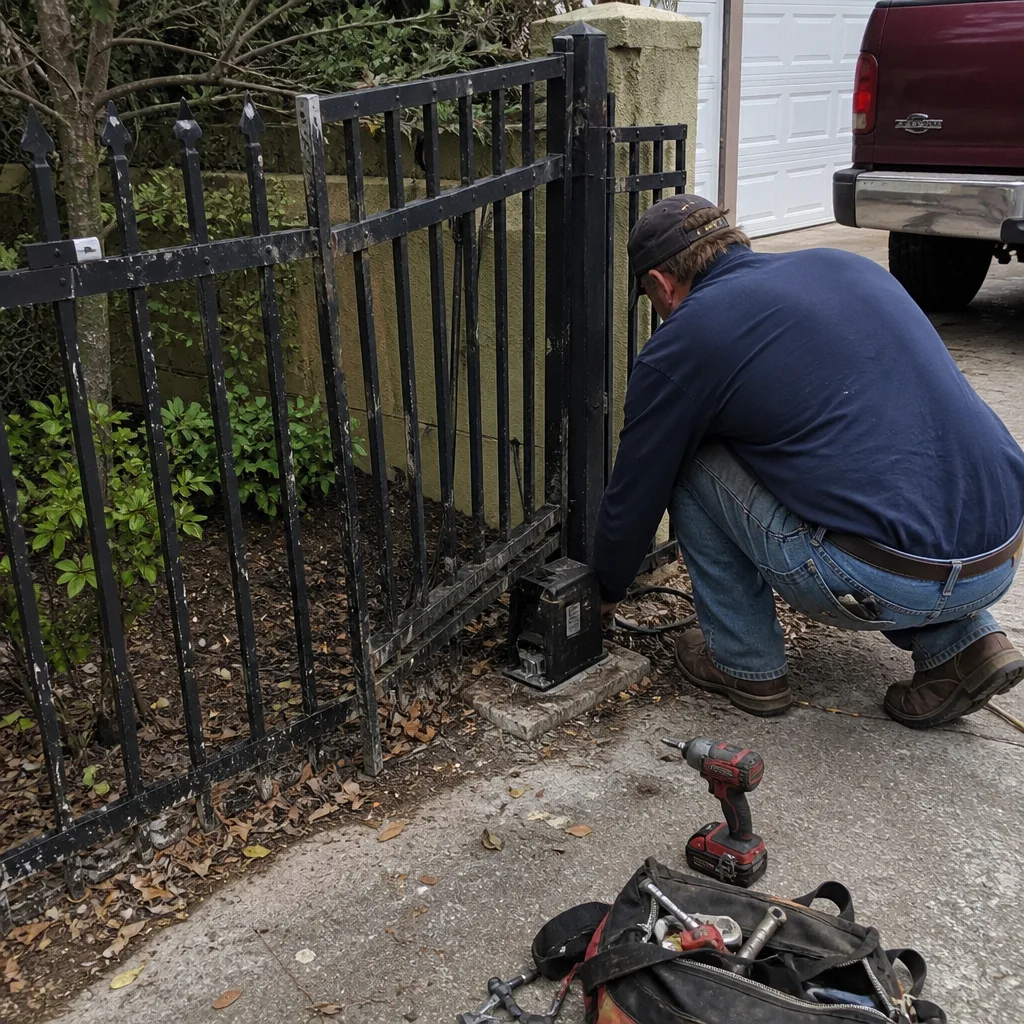 Before
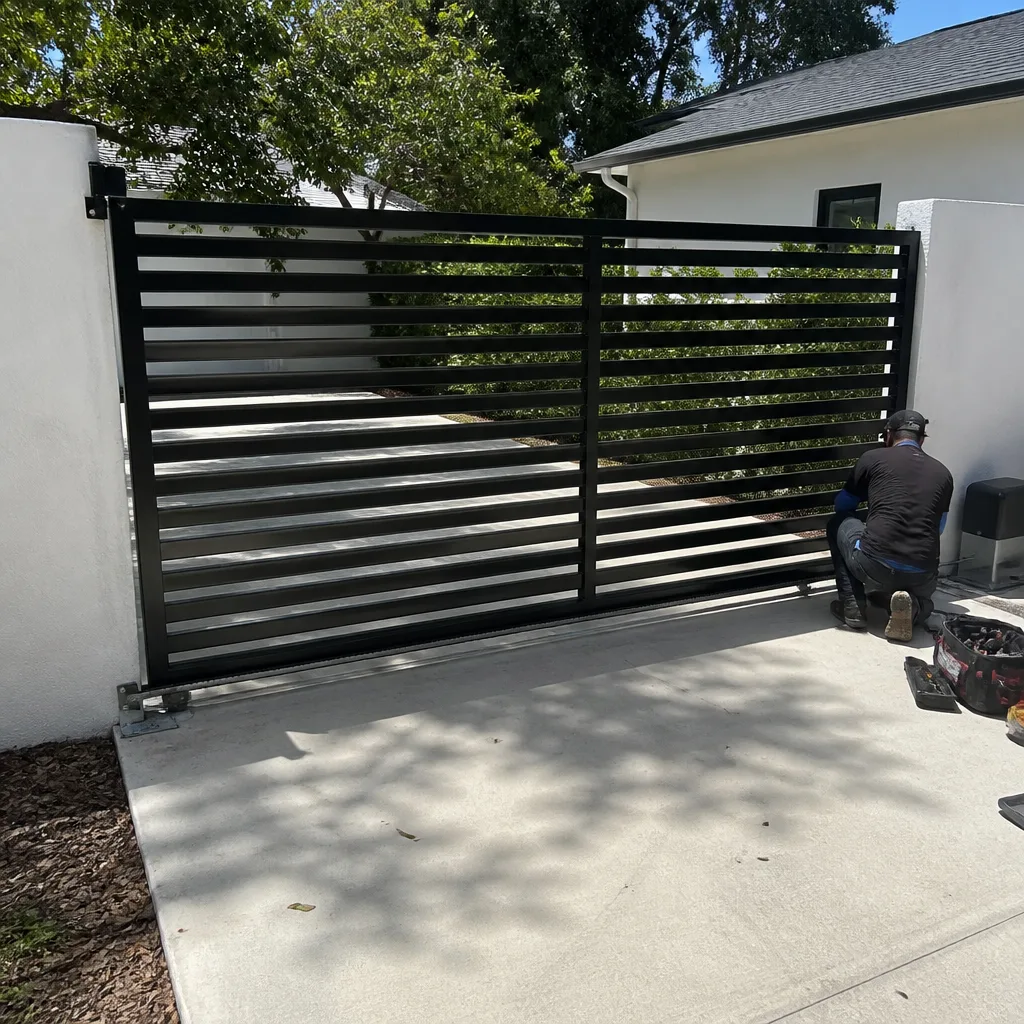 After
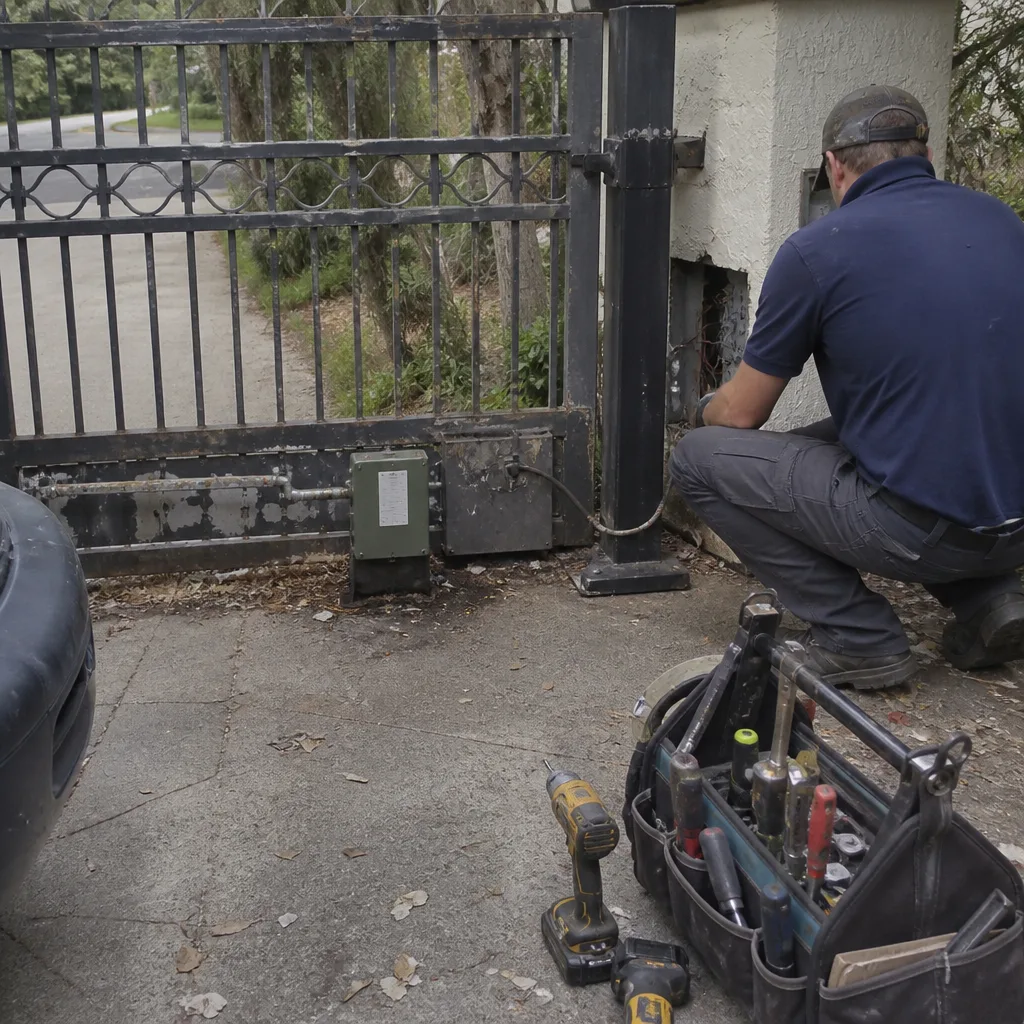 Before
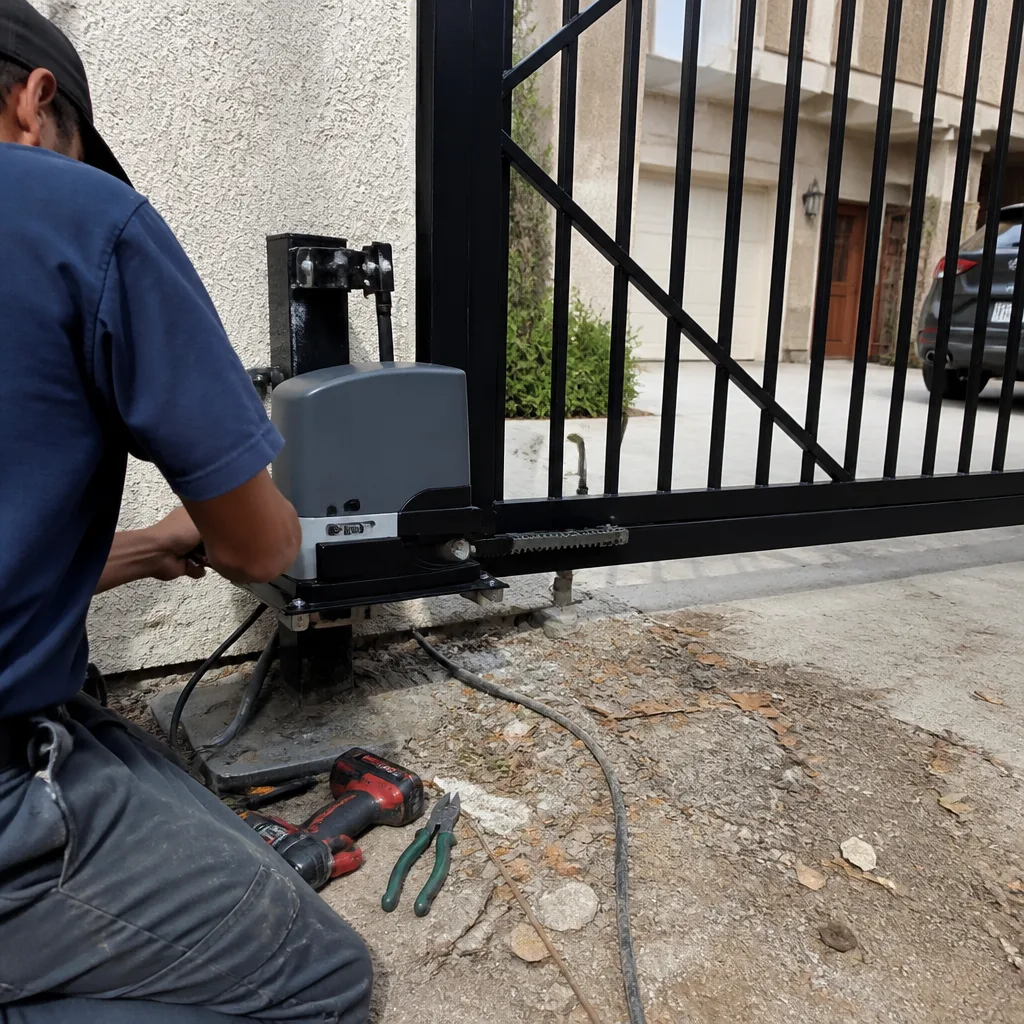 After
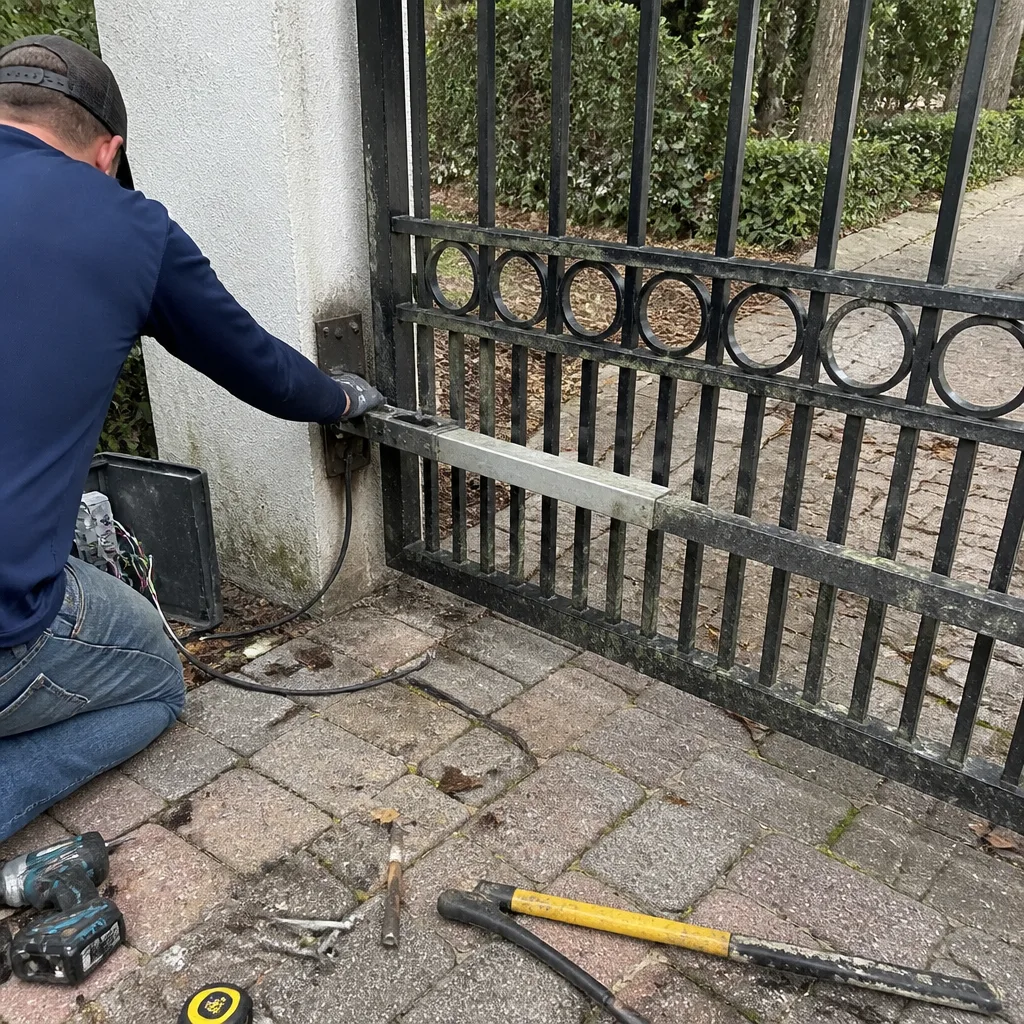 Before
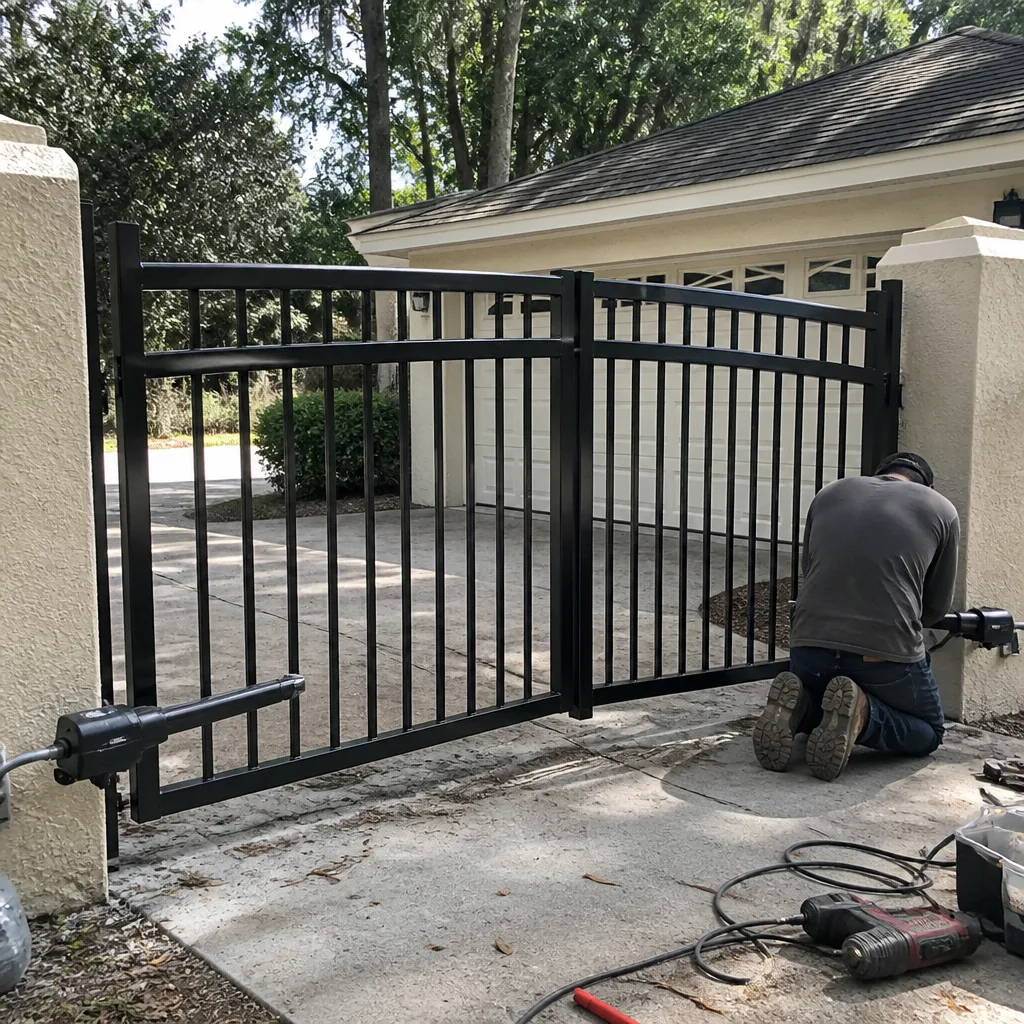 After