
Last updated October 30, 2026
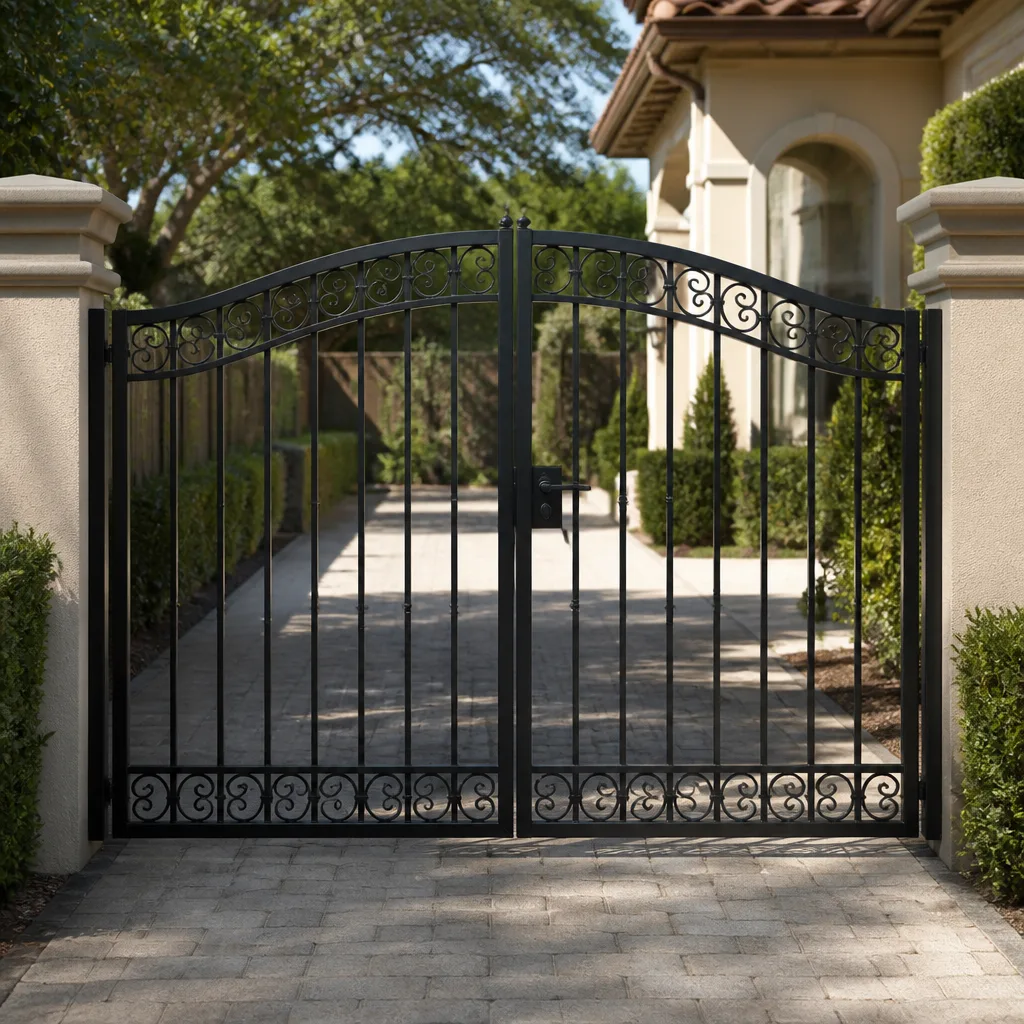 Wrought iron
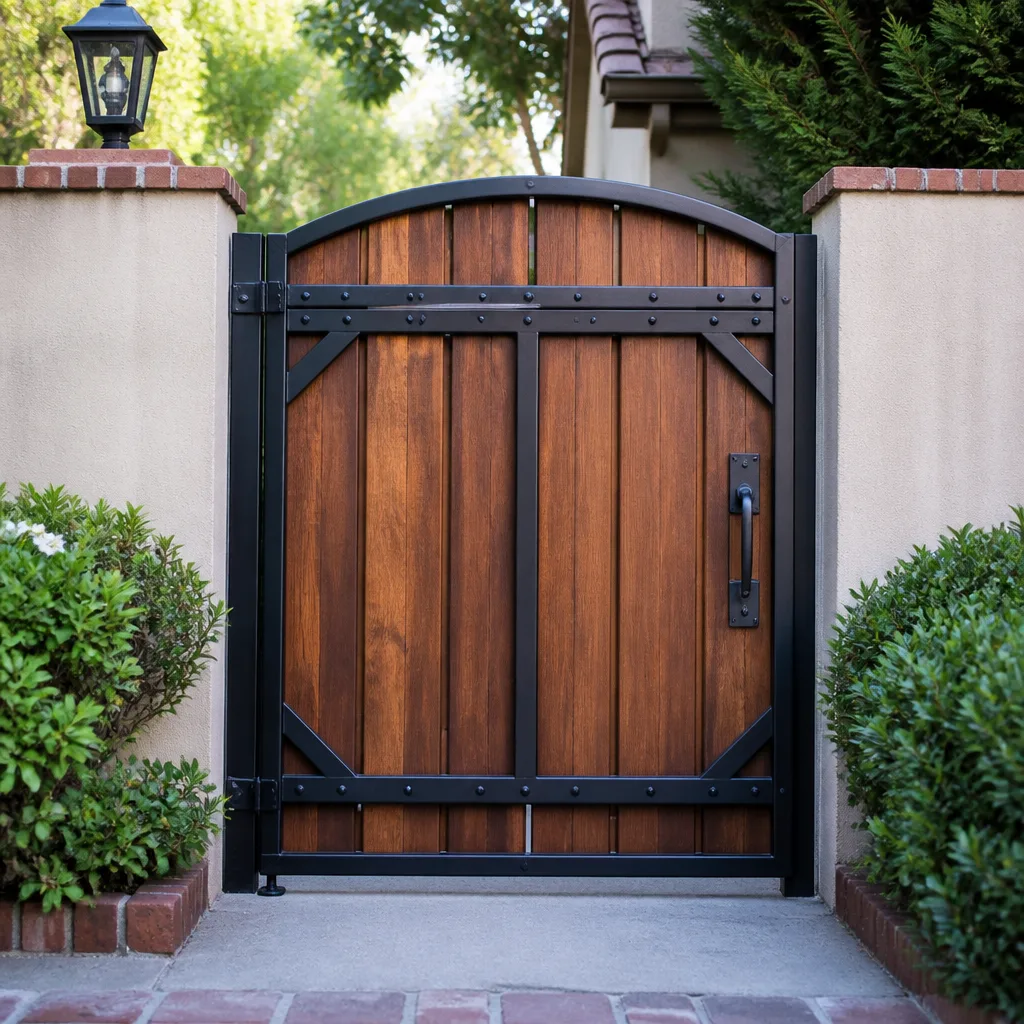 Wood & steel frame
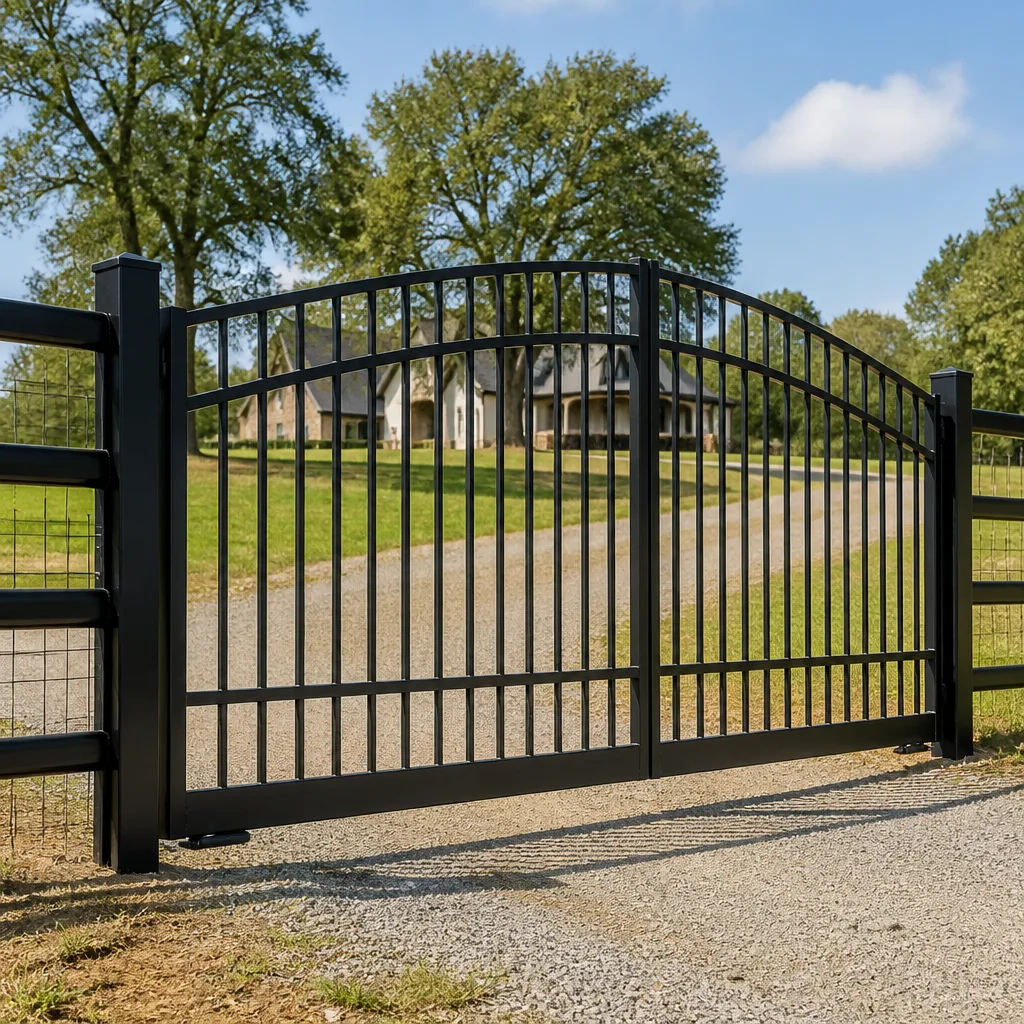 Farm & ranch
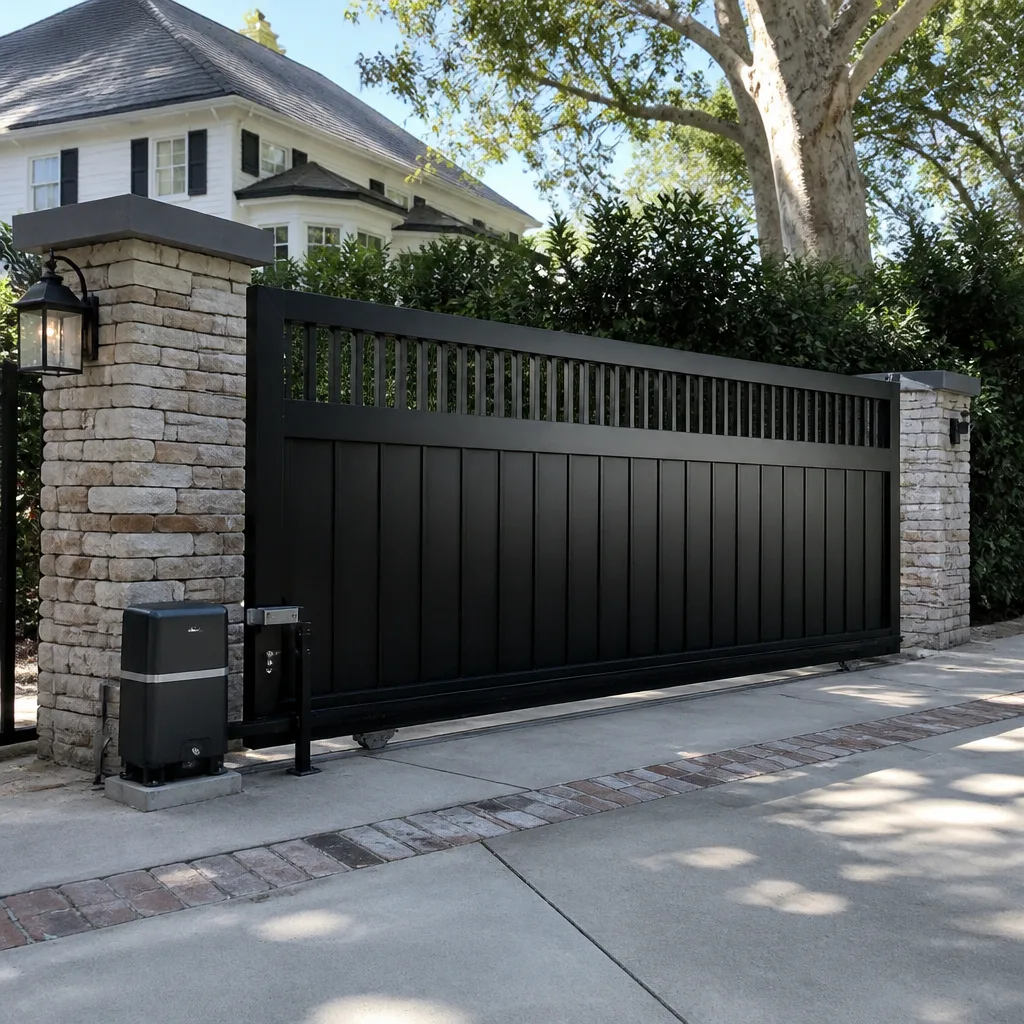 Sliding driveway gates
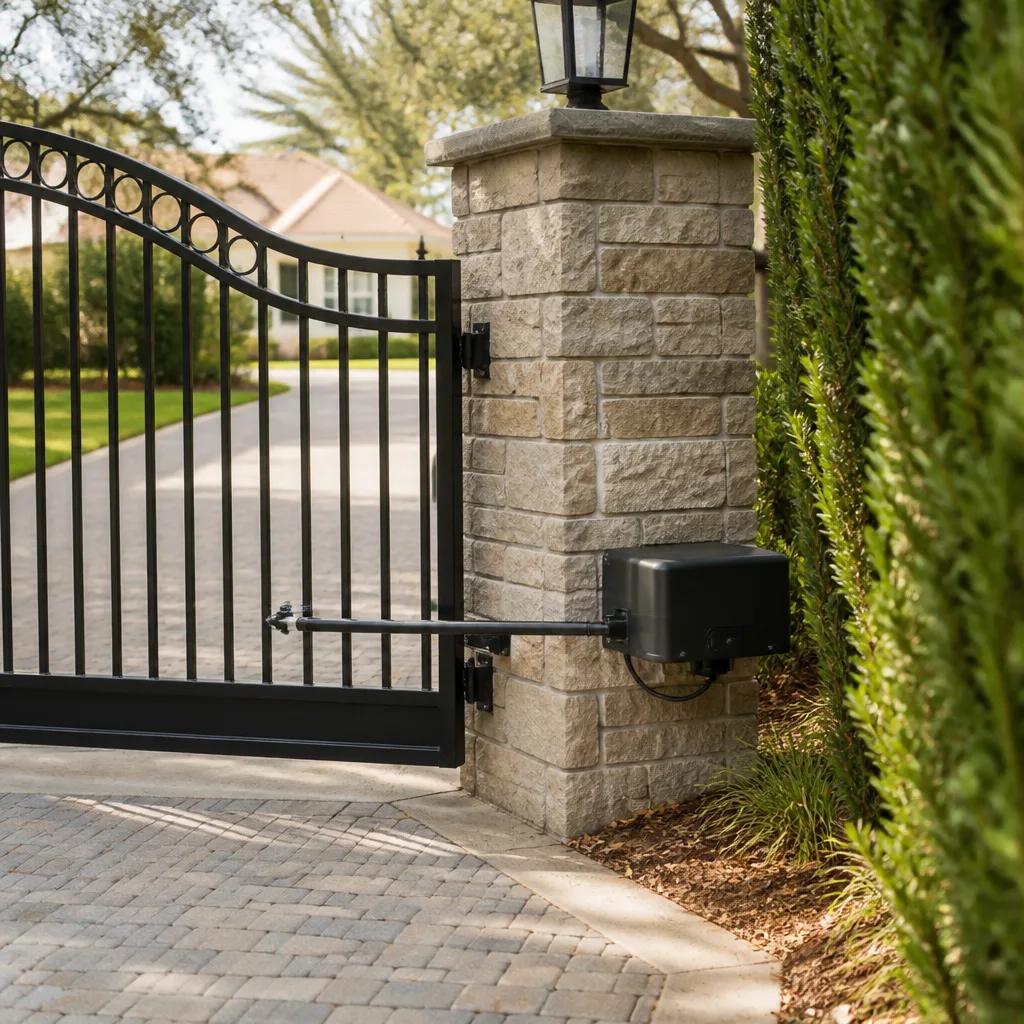 LiftMaster operators
Free on-site gate assessment - hinges, posts, and your LiftMaster or Nice gate operator checked before anything is quoted
The assessment is free and the quote is the invoice.
Get your free estimateGate Repair Troubleshooting: Common Problems and How to Fix Them
A gate that reverses before closing looks exactly the same whether the problem is a misaligned safety sensor, a dying battery in the remote, or a failing logic board, and each one requires a completely different fix. Most troubleshooting guides hand homeowners a generic symptom checklist. This one works backwards from the actual fault. By the time you finish reading, you’ll know how to distinguish between mechanical, electrical, and control-system failures that share identical surface symptoms, which checks are safe to do yourself, and which ones belong in the hands of a technician who works on your specific brand. We’ve applied this same three-layer framework to hundreds of our Gate Repair services calls across Jacksonville, from Ortega swing gates to Arlington sliding drives.
Styles & brands we work with
Quick Answer
Gate repair troubleshooting starts by identifying which of three layers has failed: mechanical (physical obstruction, hinge wear, track damage), electrical (power supply, wiring, capacitor), or control-system (receiver board, sensors, remote frequency). A motor that hums but doesn’t move points to mechanical failure. No hum at all points to electrical failure. Intermittent operation points to control-system failure. Safe homeowner checks include clearing the track, testing the remote battery, and confirming power at the outlet. Anything involving high-tension springs, capacitor discharge, or control board replacement should go to a licensed technician.
Table of Contents
- The Three-Layer Diagnostic Framework
- Mechanical Failures: When the Gate Fights Back
- Electrical Failures: When the Gate Goes Silent
- Control-System Failures: When the Gate Acts Confused
- Brand-Specific Fault Behaviors: Reading the Codes
- Five Homeowner-Safe Checks You Can Do Without Tools
- Six Repairs That Require a Licensed Technician
- How to Document the Fault So You Don’t Pay for a Diagnostic Twice
- Common Mistakes to Avoid
- When to Call a Professional
- Frequently Asked Questions
- The Bottom Line
The Three-Layer Diagnostic Framework
Every automated gate failure, no matter how strange it looks, traces back to one of three layers. Misdiagnosing which layer is broken is why DIY gate repair so often makes things worse. A homeowner replaces a $200 control board when the real problem is a $15 capacitor. Or they spend an afternoon adjusting hinges when the actual fault is a corroded wire connector. Understanding the layers before touching anything saves time, money, and frustration.
Layer one is mechanical. This covers everything physical: hinges, rollers, tracks, chains, arms, wheels, and the gate leaf itself. Mechanical failures announce themselves through friction. You’ll hear grinding, scraping, or squealing. The gate may move partway and stop. The motor may hum because it’s trying to move a gate that’s physically stuck.
Layer two is electrical. This covers power delivery: the outlet, the wiring run, fuses, capacitors, transformers, and the motor windings themselves. Electrical failures announce themselves through silence. No hum, no movement, no response at all, or a motor that trips a breaker the moment it tries to start. In Jacksonville’s humidity, we see more electrical failures from corroded underground wire splices than anywhere else in the system.
Layer three is control-system. This covers the brain and the senses: the control board, safety sensors, remote receivers, keypads, loop detectors, and limit switches. Control-system failures announce themselves through inconsistency. The gate works fine for three days, then refuses to close. The remote works from 20 feet but not from 40. The gate opens but won’t close, or closes but won’t open. Intermittent behavior is the signature of a control problem.
Here’s the diagnostic shortcut we teach every new technician at Villa Gate Repair: hum means mechanical, silence means electrical, inconsistency means control. That single sentence resolves about 70% of the gate troubleshooting calls we field in Jacksonville before we even arrive.
Mechanical Failures: When the Gate Fights Back
Mechanical failures are the most common gate problems in Jacksonville, and the salt air near the St. Johns River accelerates them. Hinges corrode faster in Riverside and San Marco than they do in inland neighborhoods like Mandarin. A steel gate installed near the Intracoastal will start showing hinge wear within three to five years, sometimes less if the gate faces east and takes direct salt spray during hurricane season.
The telltale sign of a mechanical failure is the motor humming without movement. That hum is the motor straining against physical resistance. If you hear it, stop operating the gate immediately. Continued attempts will burn out the motor, which turns a $200 hinge repair into a $900 motor replacement.
Common mechanical faults we see in Jacksonville
- Worn hinge bushings: The gate sags on one side, dragging on the ground or catching on the latch post. You’ll see a visible tilt when the gate is half open.
- Track buildup: Sliding gates in Jacksonville collect sand, leaves, and pine needles in the V-track, especially after nor’easters. The gate shudders or stalls halfway.
- Bent gate wheels: A wheel hit by a car or forced by wind will flat-spot. The gate rolls unevenly and jerks at the same spot every cycle.
- Chain tension loss: Chain-drive gates develop slack over time. The chain sags visibly, and the gate hesitates before moving.
- Wind damage: Jacksonville’s summer thunderstorms push solid-panel gates hard enough to bend the frame. A gate that was fine before a storm and binding after one usually has wind-related frame damage.
The good news is that most mechanical repairs are straightforward for a technician. Hinges get replaced, tracks get cleaned and realigned, wheels get swapped. The bad news is that mechanical neglect cascades. A sagging gate puts uneven load on the motor, which shortens its life, which eventually becomes an electrical failure. Fixing mechanical issues early is the cheapest money you’ll spend on your gate.
If you’re in Jacksonville and your gate is scraping, grinding, or humming, gate repair in Jacksonville starts with a mechanical inspection before anyone touches the electronics. That’s the correct order of operations, and it’s the order we follow on every call.
Electrical Failures: When the Gate Goes Silent
An electrical failure means the gate isn’t receiving power, or the power isn’t making it from the outlet to the motor. The defining symptom is total silence. You press the remote, you hear the receiver click, but the gate does not move. No hum, no strain, nothing. Or worse, the gate tripped its breaker and won’t reset.
In Jacksonville, electrical failures cluster around two causes: power surges and moisture intrusion. Summer lightning storms are brutal on gate control boards, even with surge protection. And the high water table in low-lying areas like the Southside means underground conduit can sit in water for weeks after heavy rain. Corroded wire splices inside flooded junction boxes are a Jacksonville specialty, particularly in older neighborhoods where gate wiring was installed without waterproof splice kits.
Electrical failure checklist, in order of likelihood
- Power outage or tripped breaker: Check the dedicated circuit breaker for the gate. Jacksonville gates are often on their own circuit, and a nearby lightning strike will trip it.
- GFCI outlet tripped: If the gate plugs into a GFCI outlet, test and reset it. Humidity alone can trip a sensitive GFCI.
- Blown fuse on the control board: Most boards have a small glass or blade fuse. A power surge blows this fuse before it damages the board.
- Failed capacitor: The capacitor gives the motor its starting jolt. When it fails, the motor won’t start even though power is present. We replace more capacitors on LiftMaster and Linear operators in Jacksonville than any other single electrical component.
- Corroded wire connection: Moisture gets into a splice or terminal block and eats the connection. The gate works after it’s dry, fails after it rains. This intermittent pattern is worth noting because it masquerades as a control-system problem.
The capacitor deserves special attention because it’s the component most often misdiagnosed by homeowners. A failed capacitor produces the same “dead gate” symptom as a failed control board, but the repair costs a fraction as much. If your gate operator clicks but the motor won’t turn, ask the technician to test the capacitor before replacing anything else. A reputable Jacksonville gate specialist will do this as standard practice.
Control-System Failures: When the Gate Acts Confused
Control-system failures are the hardest to diagnose because they’re intermittent and unpredictable. The gate works perfectly when you test it, then fails again two hours later. This unpredictability is the signature. Mechanical failures are consistent. Electrical failures are permanent. Control-system failures are random.
The control system includes the main logic board, the remote receiver, safety sensors, keypads, vehicle loop detectors, and limit switches. When any one of these components degrades, the gate behaves erratically. A gate that opens but won’t close is the classic control-system symptom. So is a gate that reverses for no visible reason, a remote that works only at short range, or a gate that opens on its own at 3 a.m.
Control-system faults we diagnose most often
- Misaligned safety sensors: The photo eyes on either side of the gate opening get bumped, shifted, or covered with Jacksonville pollen. The gate reverses because it thinks something is in the way.
- Remote frequency interference: New wireless devices interfere with older 318 MHz and 390 MHz gate receivers. We’ve seen garage door openers, baby monitors, and even a neighbor’s new LED landscape transformer knock a gate remote offline in Jacksonville Beach.
- Failing limit switches: The gate doesn’t know where to stop. It slams at the end of travel or stops short every time.
- Dying logic board: Components on the board degrade from heat, humidity, and power surges. Symptoms start intermittent and get progressively worse until the board fails entirely.
- Loop detector failure: The in-ground loop that detects vehicles stops sensing. The gate won’t open automatically for cars, but the remote still works.
Here’s a Jacksonville-specific note: our summer heat is hard on control boards. Boards installed in direct sunlight inside metal operator housings can reach 140 degrees in July and August. Heat accelerates capacitor aging and solder joint failure. If your gate starts acting strangely during the hottest months and behaves better in winter, that’s a heat-related control-system degradation pattern, and it’s worth mentioning when you schedule service.
Brand-Specific Fault Behaviors: Reading the Codes
Every gate brand fails in its own way. Knowing your brand’s failure signature shortens the diagnostic time from hours to minutes. At Villa Gate Repair, our technicians work on nine major brands including Linear, DoorKing, Viking, and Ghost Controls, and each one has quirks we’ve learned to recognize immediately.
Linear operators, common on Jacksonville residential gates, use a diagnostic LED on the control board that blinks in patterns. Two blinks indicate an obstruction. Three blinks indicate a sensor fault. Five blinks indicate a motor overload. The blinking pattern is the single most useful piece of information you can report when you call for service. If you see the LED blinking, count the blinks and write the number down.
DoorKing operators, which dominate commercial and high-end residential installations in Jacksonville, are built like tanks but they’re sensitive to voltage drops. A DoorKing that works fine all winter and starts failing in summer is often suffering from low voltage at the board caused by a long wire run or an aging transformer. DoorKing boards also have a “mag lock” feature that can confuse owners: when the gate fails, the mag lock may stay engaged, making the gate feel mechanically seized when the real problem is electrical.
Viking operators are heavily commercial and use an LCD display on their newer models that shows fault codes in plain text. Viking’s most common Jacksonville failure is the “entrapment sensor” fault, which is usually a dirty or misaligned photo eye rather than a genuine entrapment event. Before calling for Viking service, wipe the sensor lenses with a dry cloth.
Ghost Controls makes popular DIY-friendly openers with a reputation for remote control range issues. Their single-button remotes are simple, but the receiver is sensitive to mounting position. A Ghost Controls gate that opens from 10 feet but not from 30 feet usually needs the receiver antenna repositioned. That’s a control-system fix, not a remote battery fix.
The point of knowing these patterns isn’t to fix them yourself. It’s to understand your gate well enough to avoid paying a technician to spend two hours diagnosing a problem that a brand specialist can spot in five minutes. When you call electric gate repair in Jacksonville, mention your gate’s brand and the exact behavior. The technician who answers should know your brand by name. If they don’t, find one who does.
Five Homeowner-Safe Checks You Can Do Without Tools
Before calling a technician, there are five checks any homeowner can perform safely. These require no tools, no electrical exposure, and no risk of injury. Run through these in order, and document what you find. You’ll either solve the problem yourself or give your technician a head start that saves you money.
- Clear the track and gate path. Walk the full length of the gate’s travel path. Remove rocks, branches, sand buildup in the V-track, and anything that could obstruct movement. Jacksonville oak trees drop limbs constantly, and a single branch in the track will stop a sliding gate cold.
- Test the remote battery. Replace the battery in your remote even if it “seems fine.” Weak remote batteries cause intermittent operation that looks exactly like a control board failure. This is the cheapest fix in gate repair, and it solves more problems than most homeowners expect.
- Check the power source. Confirm the gate operator has power. Reset the dedicated circuit breaker if tripped. Reset the GFCI outlet if present. If the outlet has no power, check your home’s main panel. No gate repair can happen without power at the outlet.
- Inspect the safety sensors. Look at the photo eyes on both sides of the gate opening. Are they aligned? Are the lenses clean? Jacksonville pollen and dust coat sensor lenses quickly, and a dirty lens causes false obstruction signals. Wipe with a dry cloth.
- Document the symptom pattern. Write down exactly what the gate does and when it does it. Does it fail in the morning but work in the afternoon? After rain? Only on Tuesdays when the landscapers come? Patterns are diagnostic gold. A technician who receives a documented symptom pattern can often diagnose the problem over the phone before dispatching.
These five checks are safe because they involve no electrical exposure, no spring tension, and no moving parts. If none of them reveals the problem, the fault is deeper in the mechanical, electrical, or control system, and that’s where professional territory begins.
Six Repairs That Require a Licensed Technician
Some gate repairs are dangerous. Others will void your warranty. A few are both. Here are six situations where the correct action is to stop, step away from the gate, and call a professional, as outlined in our How to Hire a Gate Repair Contractor in Jacksonville: A Step-by-Step Guide. The cost of a technician visit is always less than the cost of an emergency room visit or a voided $3,000 operator warranty.
- Any spring under tension. Some gate operators, particularly older mechanical models, use counterbalance springs. These springs store enormous energy. A spring that releases while you’re working on it can cause severe injury. Do not attempt spring replacement or adjustment yourself.
- Capacitor replacement. Capacitors store electrical charge even after power is disconnected. Touching the terminals of a charged capacitor delivers a painful and potentially dangerous shock. Capacitors are inexpensive parts, but discharging and replacing them is technician work.
- Control board replacement. Modern gate control boards are static-sensitive and brand-specific. Installing the wrong board, or installing the right board incorrectly, can damage the operator. Most manufacturers also require professional installation to maintain warranty coverage.
- Any repair involving the motor windings. If the motor has burned out or seized, the operator must be opened and the motor removed. This involves electrical disconnection and often requires specialized pullers. It’s also the point where most warranties require authorized service.
- Underground wire repair. Jacksonville’s water table means underground gate wiring often sits in saturated soil. Locating the break, excavating the wire, and splicing it correctly with waterproof connectors requires a wire locator and proper splice kits. A failed underground splice is also a shock hazard if not handled properly.
- Safety system recalibration. After any repair, the gate’s safety systems including entrapment protection, reverse sensitivity, and photo eye alignment must be recalibrated to manufacturer specifications. This isn’t optional. A gate that doesn’t reverse properly can injure a child or pet, and you’re liable if it happens on your property.
We’ve had Jacksonville homeowners call us after attempting control board replacements they saw on YouTube. The result is usually a fried board, a voided warranty, and a repair bill that’s higher than the original quote would have been. The training threshold for safe gate repair is real, and no video tutorial replaces it. For automated gate repair that protects your warranty and your safety, call a specialist.
How to Document the Fault So You Don’t Pay for a Diagnostic Twice
Every minute a technician spends diagnosing is a minute you pay for. The better you document the fault before the service call, the faster the repair goes and the less you spend. Here’s the documentation system we recommend to every Jacksonville homeowner before they call us.
First, record the brand and model of your gate operator. The model number is on a sticker inside the operator housing or on the control board. Second, note when the problem started and whether anything changed around that time: a power outage, a storm, new landscaping, a neighbor’s new wireless equipment. Third, write down the exact sequence of events. Does the gate open but not close? Close but not open? Open halfway and reverse? Hum but not move? Be specific. “The gate is broken” tells a technician nothing. “The gate opens fully but reverses after six inches when closing, and it only does this after sunset” tells a technician almost everything.
Fourth, check the diagnostic LEDs and count the blinks. Linear and Viking operators both use blink codes. Write the number down. Fifth, note the weather conditions when the gate fails. Jacksonville gates that fail only during rain have wiring problems. Gates that fail only during the heat of the day have control board problems. Gates that fail regardless of weather have mechanical or motor problems.
This documentation takes five minutes and it saves real money. When you call Villa Gate Repair with a documented symptom pattern, our technician often arrives with the correct part already on the truck. That’s the difference between a one-visit repair and a two-visit repair with a diagnostic fee attached to the first visit.
Common Mistakes to Avoid
- Replacing the remote battery and stopping there. A new battery fixes a dead remote, but it doesn’t fix a gate that moves and stops. If the gate still fails after a battery swap, the problem is elsewhere. Don’t assume the cheapest fix solved it just because the remote light comes on.
- Forcing the gate manually. Every gate has a manual release, but forcing a gate that’s mechanically bound can bend the frame or damage the operator. If the manual release doesn’t let the gate move freely, stop pushing and call a technician.
- Adjusting the limit switches without understanding them. Limit switches control where the gate stops. Adjusting them wrong can cause the gate to overshoot its travel and damage the operator or the gate itself. Limit switches are calibration-sensitive, and the settings are different for every brand.
- Ignoring a gate that’s getting slower. A gate that gradually slows down over weeks is telling you something. The motor is working harder, the hinges are wearing, or the capacitor is degrading. Ignoring it turns a maintenance repair into a replacement. Jacksonville’s humidity accelerates this decay.
- Using a pressure washer on the operator housing. Gate operators are not waterproof. Pressure washing around the operator forces water past the gaskets and into the control board. After a pressure wash, corrosion starts. Hand-wash around the operator with a damp cloth instead.
- Assuming the gate just needs replacement. Most gates don’t need replacement. They need a specific component that costs a fraction of a new gate. A homeowner who replaces a gate because the control board failed spent $4,000 to fix a $400 problem. Always get a diagnostic before deciding to replace.
- Calling a general handyman for an automated gate. Automated gates have safety systems that must be recalibrated to manufacturer specs. A handyman who doesn’t know your brand’s safety requirements can leave your gate dangerous. Call a gate specialist who knows your brand by name.
When to Call a Professional
Call a professional when the gate hums but won’t move, when the gate is silent and the breaker isn’t tripped, when the gate behaves intermittently, or when you’ve completed the five safe checks and the problem persists. For a full breakdown of these warning signals, see our Gate Repair Warning Signs: A Jacksonville Homeowner’s Reference Guide. Also call immediately if the gate slams at the end of travel, reverses unpredictably, or fails to stop when it hits an obstruction. These are safety failures, not just convenience failures, and they need same-day attention.
In Jacksonville, a gate that won’t close is a security issue, and a gate that won’t open is a life-safety issue for fire access. Neither should wait. Villa Gate Repair offers free estimates in Jacksonville, and our technicians arrive with brand-specific knowledge for Linear, DoorKing, Viking, Ghost Controls, LiftMaster, FAAC, BFT, Elite, and Mighty Mule. Call (877) 265-5090 and tell us what your gate is doing. We’ll tell you what layer it’s in before we even roll the truck.
Frequently Asked Questions
Gate repair in Jacksonville typically costs between $150 and $450 for most common faults including hinge replacement, sensor realignment, capacitor replacement, and limit switch adjustment, while control board replacement runs $350 to $700 depending on brand and model. The final cost depends on which of the three layers has failed, and the price is quoted and agreed before any work starts. Call (877) 265-5090 for an exact quote, estimates are free.
In most cases, yes, especially for safety failures like a gate that won’t close or a gate that reverses unpredictably. We prioritize security and safety issues in Jacksonville and typically dispatch same-day for urgent repairs. Call (877) 265-5090 in the morning and we’ll give you a realistic arrival window.
A full gate installation includes site measurement, gate fabrication or selection, post setting, hinge installation, operator mounting, electrical wiring, safety sensor installation, and final calibration of entrapment protection and limit switches. For Jacksonville properties, we also account for wind load requirements and salt-air corrosion resistance in material selection. See gate installation in Jacksonville for the complete breakdown.
Yes, electrical power runs and safety edge installation are part of our standard installation and repair scope. The power run includes trenching, conduit, waterproof splicing, and a dedicated circuit where required by Jacksonville code. Safety edges are installed and calibrated to manufacturer specifications, which is what keeps the gate from closing on a child or pet.
That pattern points to a control-system failure, specifically the remote receiver or the remote itself. The wall button bypasses the receiver, which is why it still works. Start by replacing the remote battery. If that doesn’t fix it, the receiver antenna or the receiver board itself has failed. This is a common Ghost Controls and Linear issue in Jacksonville, and it’s usually a same-visit repair.
Ghost openings are usually caused by remote frequency interference, a failing receiver board, or a short circuit in the open command wiring. Jacksonville’s dense neighborhoods mean new wireless devices from neighbors can interfere with older 318 MHz receivers. A technician can retune or replace the receiver to eliminate the interference. This is a control-system repair, not a mechanical one.
A quality gate operator like a DoorKing, Viking, or Linear unit typically lasts 8 to 12 years in Jacksonville when properly maintained, though coastal exposure can shorten that to 5 to 8 years without routine corrosion protection. The control board usually fails before the motor, and replacing the board often extends the operator’s life by several more years at a fraction of replacement cost.
The Bottom Line
The difference between a cheap gate repair and an expensive one is almost always diagnostic accuracy. A hum means mechanical. Silence means electrical. Inconsistency means control. Master that three-layer framework, document your gate’s behavior before you call, complete the five safe checks, and leave the dangerous or warranty-sensitive work to a technician who knows your brand by name. Gate repair in Jacksonville doesn’t have to be a guessing game. With the right framework and the right specialist, your gate goes back on track quickly and stays there. If you need help, we’re here, and you can explore more guides & resources on our blog. Call (877) 265-5090 for a free estimate and a straight answer about which layer has failed.
Written by the team at Villa Gate Repair, serving Jacksonville since 2012.
See the difference
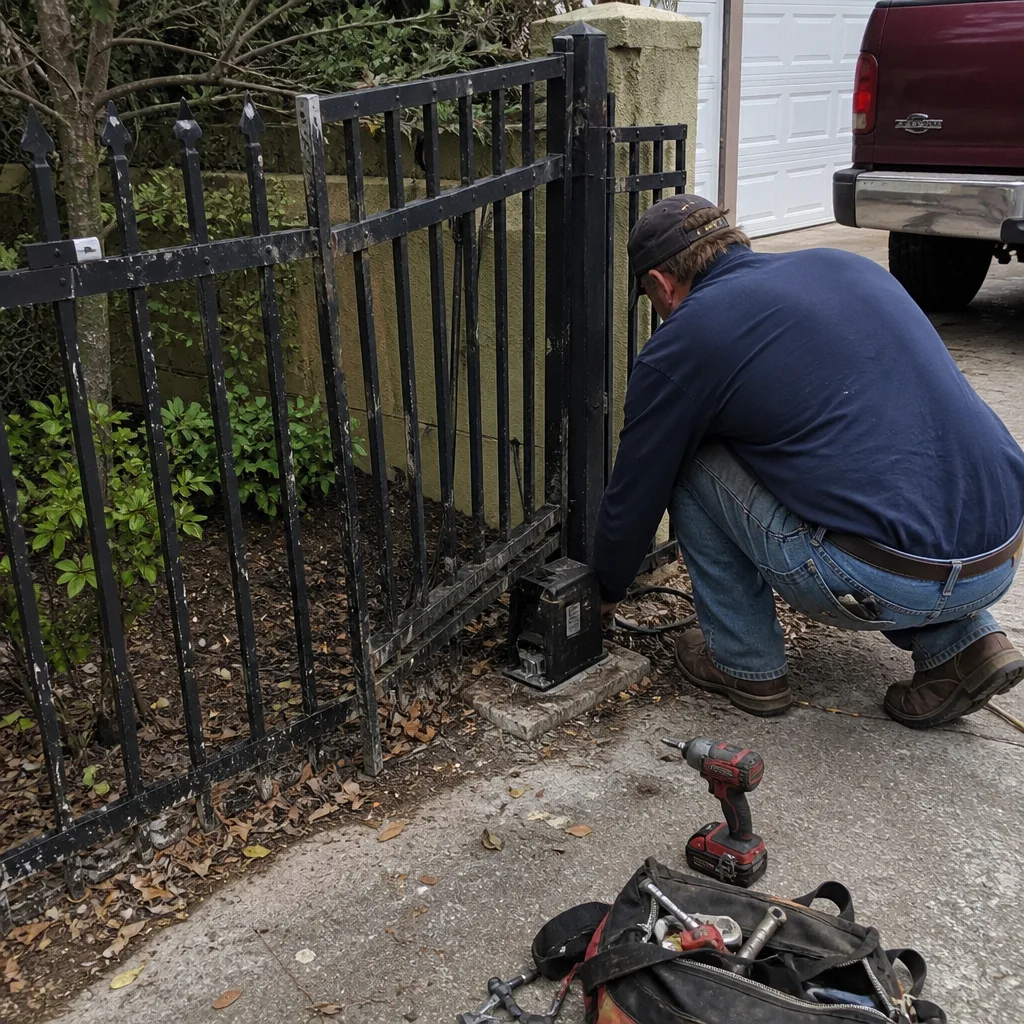 Before
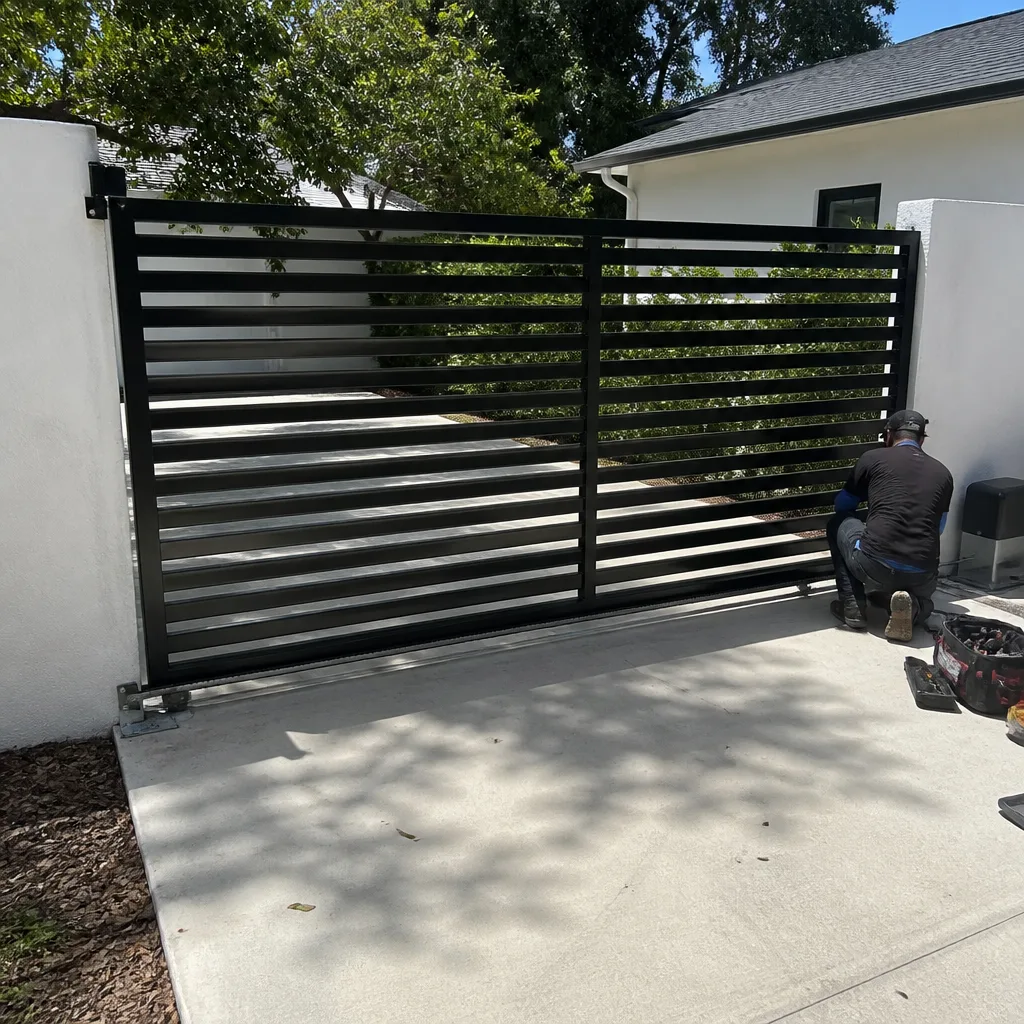 After
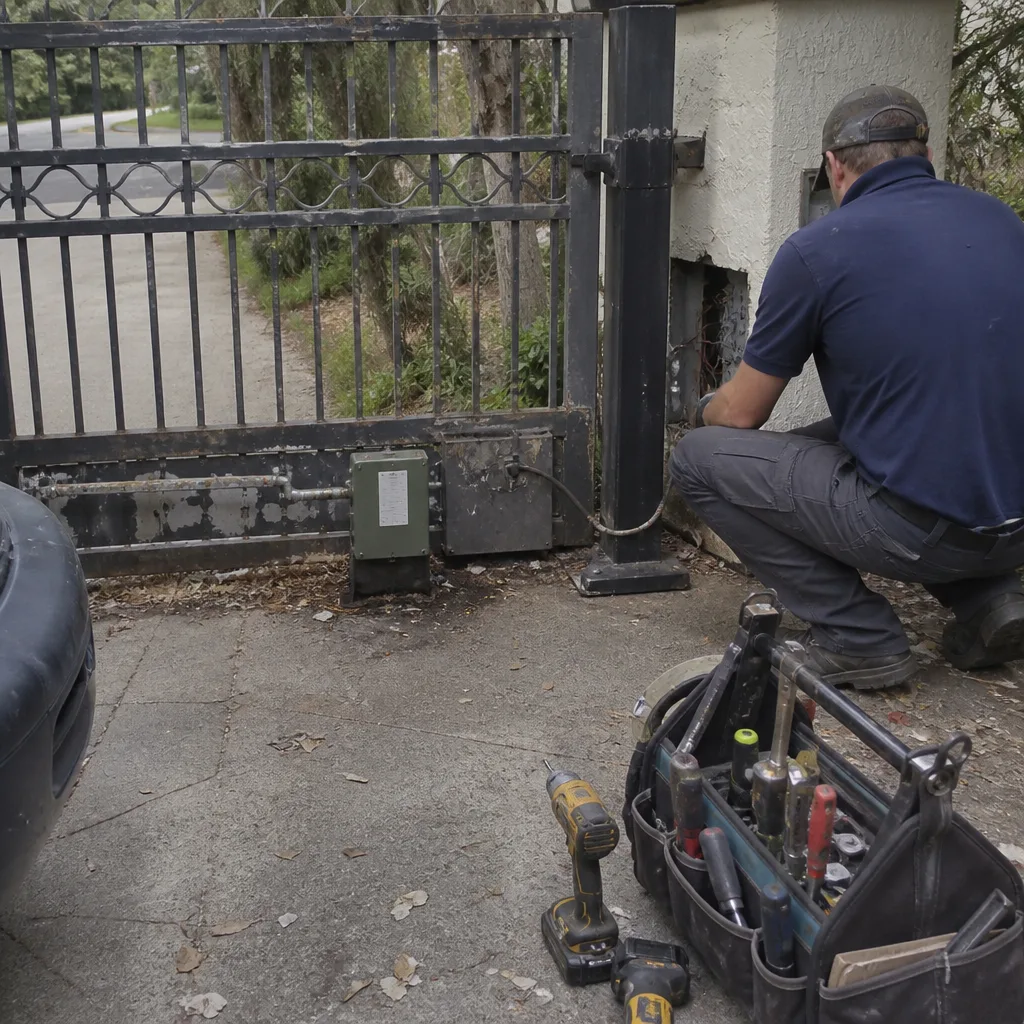 Before
 After
 Before
 After