Last updated October 30, 2026
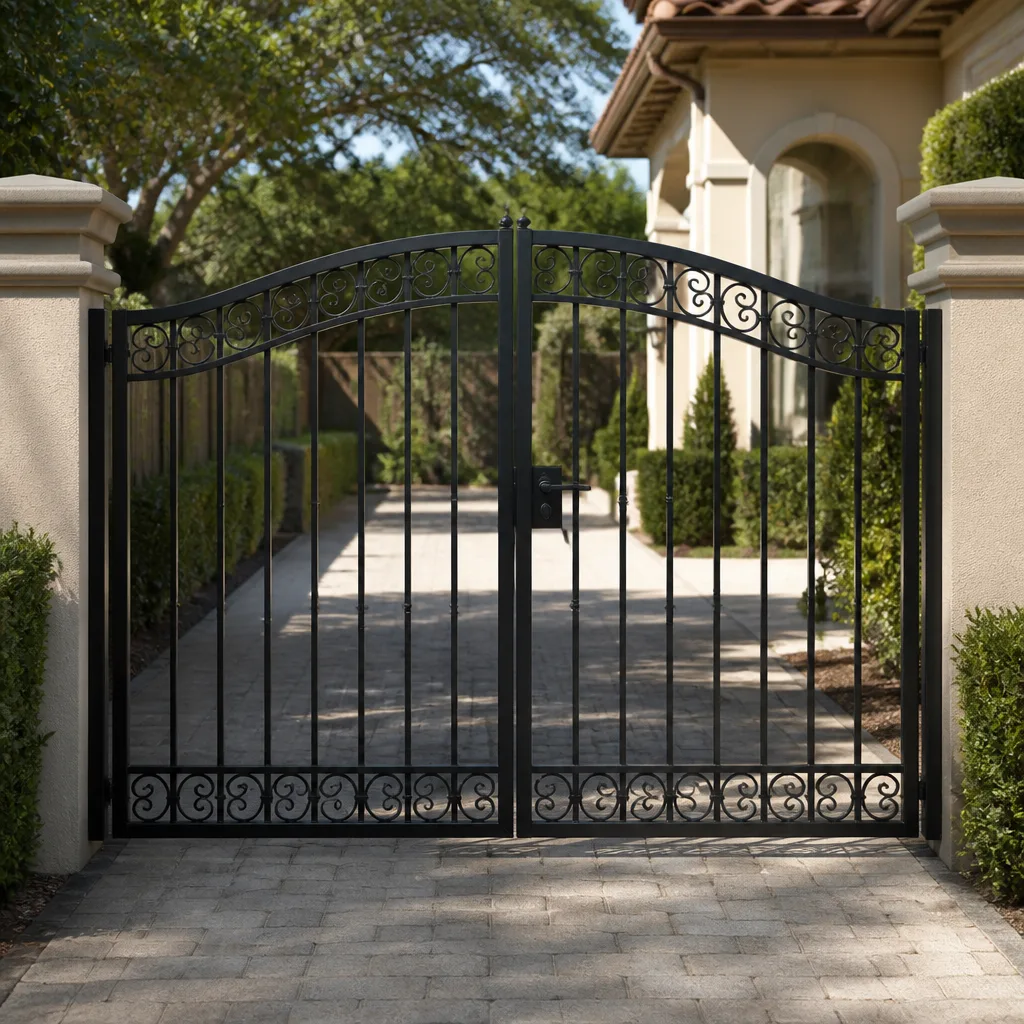 Wrought iron
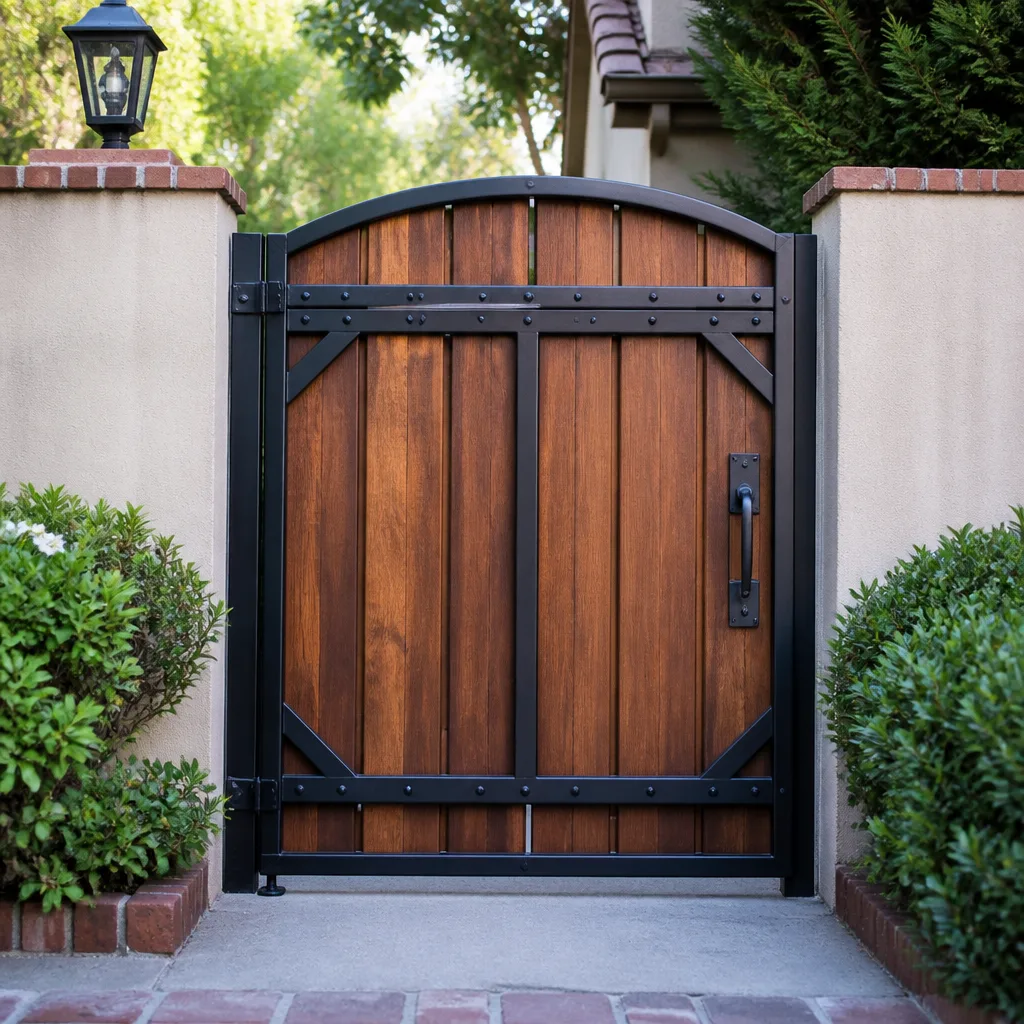 Wood & steel frame
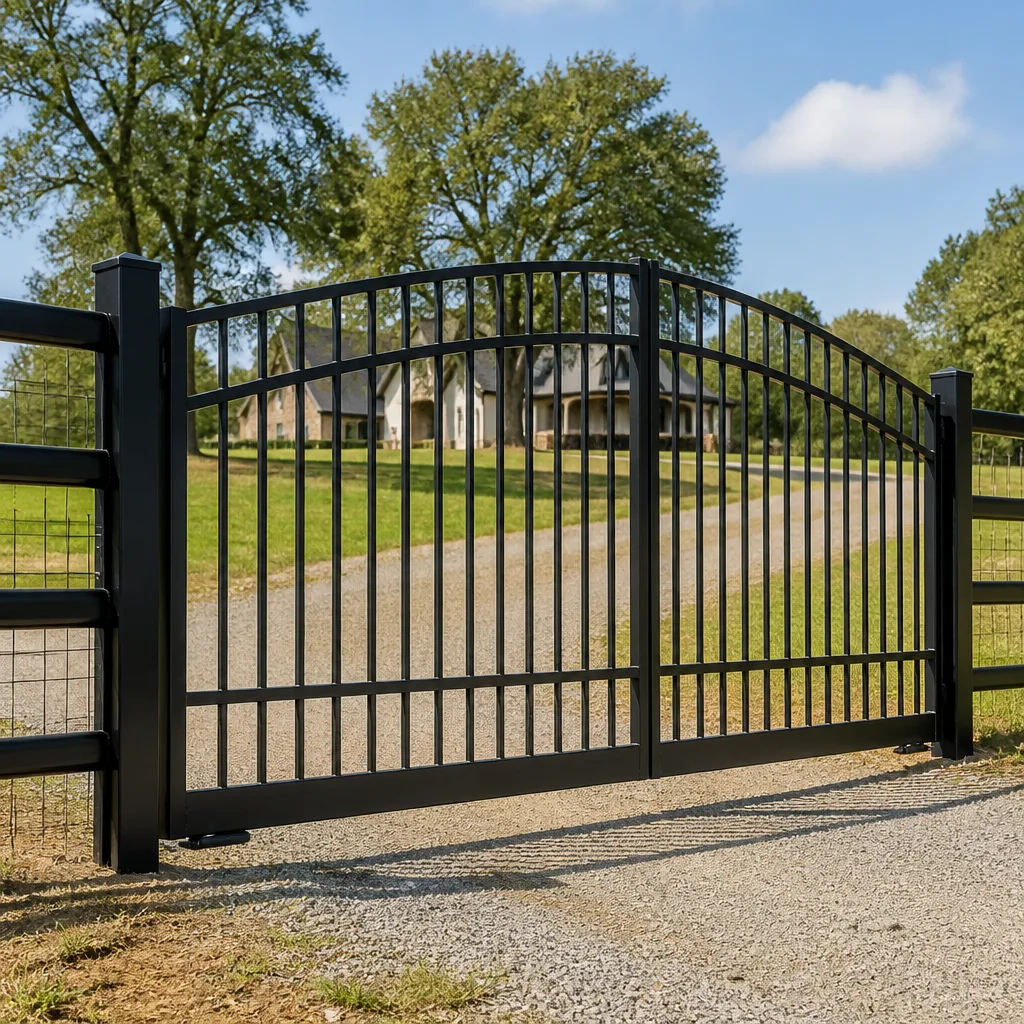 Farm & ranch
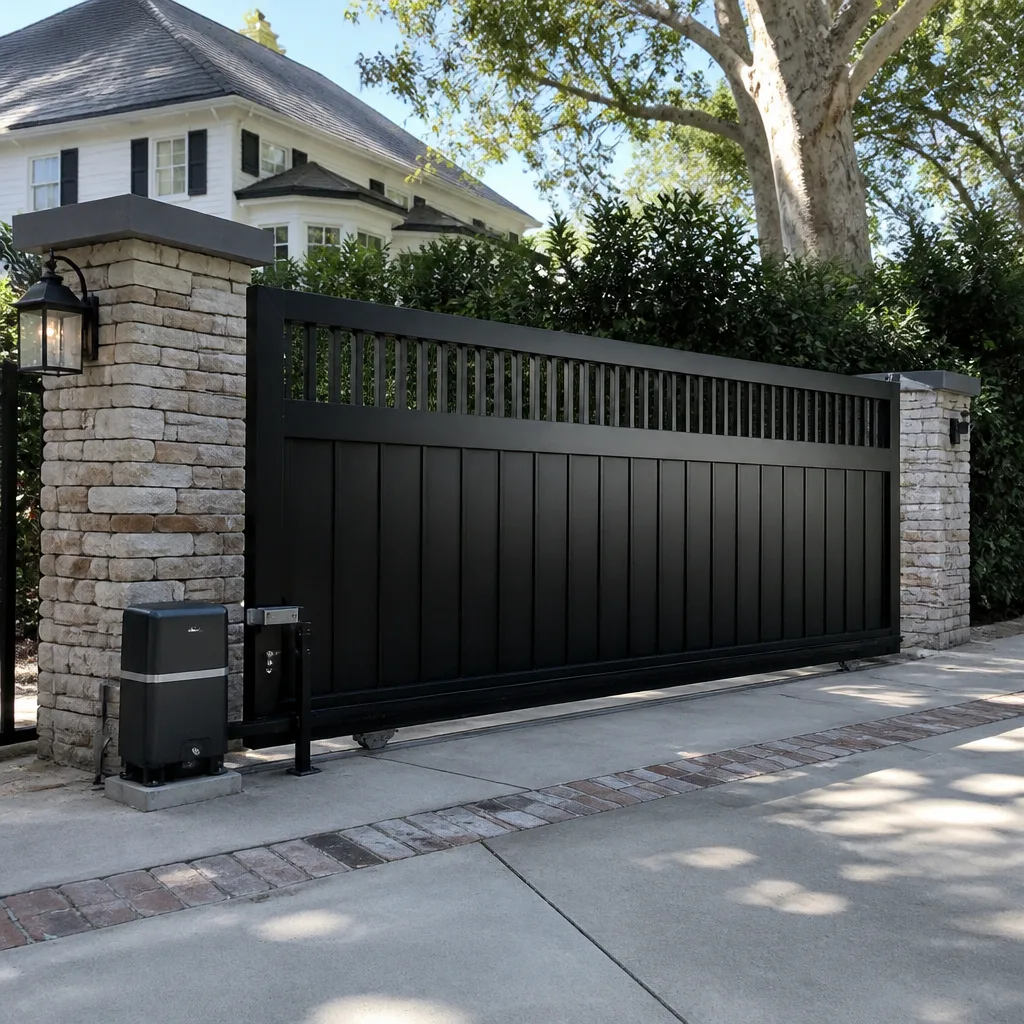 Sliding driveway gates
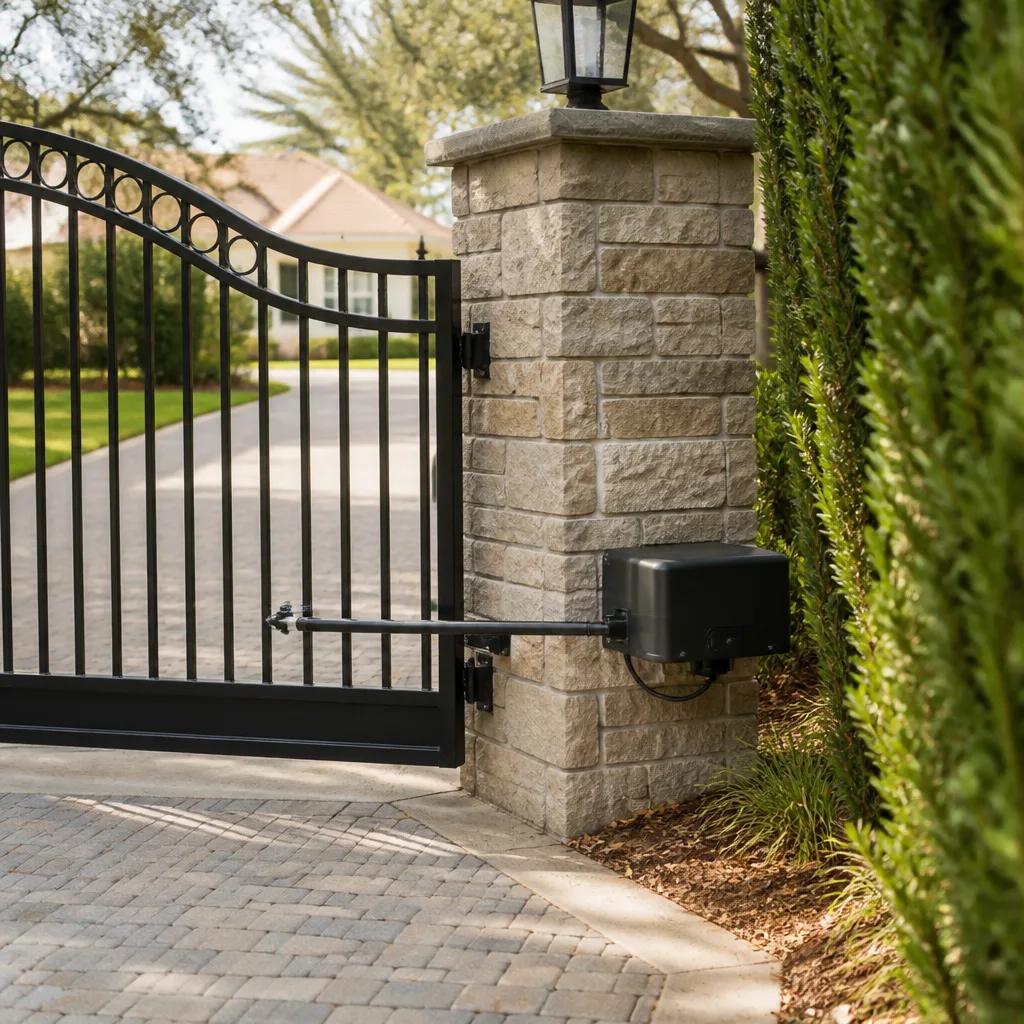 LiftMaster operators
Free on-site gate assessment - hinges, posts, and your LiftMaster or Nice gate operator checked before anything is quoted
The assessment is free and the quote is the invoice.
Get your free estimateThe Complete Gate Repair Guide for Jacksonville Homeowners
Most Jacksonville gate failures don’t start at the motor. They start at the hinge post, six months earlier, when salt air begins eating through the weld seam nobody thought to seal. By the time the gate groans, sags, or refuses to open at 7 a.m. on a workday, that corrosion has already traveled through the mechanical system and begun straining the electronics. This guide explains the failure sequence specific to Jacksonville’s coastal climate, what each symptom means, which repairs actually save you money, and when a replacement is the smarter investment than a patch. You’ll learn how soil settlement in neighborhoods like Nocatee and Deerwood affects gate alignment, which materials survive Northeast Florida humidity, and what Jacksonville permit rules actually require.
Quick Answer
Gate repair in Jacksonville typically costs between $180 for minor hinge adjustments and $1,800 for full motor and control board replacement, with most repairs falling between $250 and $650. Jacksonville’s coastal humidity and sandy soil accelerate corrosion at hinges and ground anchors, which means early mechanical repair prevents the more expensive electrical failures that follow. Acting at the first sign of sagging or sticking saves Jacksonville homeowners an average of $400 versus waiting for complete system failure.
Styles & brands we work with
Table of Contents
- How Jacksonville’s Climate Attacks Your Gate
- The Local Failure Sequence: What Breaks First, Second, and Third
- Signs Your Gate Needs Repair: A Symptom-by-Symptom Breakdown
- Gate Materials That Survive in Northeast Florida
- Permit and HOA Rules in Jacksonville
- Repair or Replace: How Jacksonville Soil and Settlement Change the Math
- Electric Gate Repair 101: Motors, Boards, and Safety Sensors
- Common Mistakes to Avoid
- When to Call a Professional
How Jacksonville’s Climate Attacks Your Gate
Jacksonville is not Orlando. It’s not Atlanta. The distinction matters because your gate’s failure timeline tracks the climate, not the calendar. Northeast Florida sits in a humid subtropical zone, which means two things for metal components: airborne salt and persistent moisture. Homes east of the Intracoastal, in neighborhoods like Atlantic Beach and Neptune Beach, carry salt aerosol levels that are triple what a gate in Mandarin or Orange Park would face. Even three miles inland, the humidity averages 75% year-round, and that number spikes to 90% during the June through September monsoon pattern.
Salt air attacks your gate in a predictable order. The first casualty is bare metal at contact points: hinge barrels, weld seams, latch mechanisms, and any place where powder coating was scratched during installation. Once rust establishes itself on a hinge barrel, the hinge’s range of motion decreases by a fraction of a degree each month. This subtle binding is what forces the motor to work harder, drawing more current through the control board. A gate that moved freely in January may be fighting its own hinges by August. The motor doesn’t fail first in Jacksonville. It fails last, as a consequence of mechanical drag it was never sized for.
Ground-level moisture is the second climate problem. Sandy Florida soil drains quickly after rain, but the water table stays high. Gate posts set in concrete footings that don’t extend past the organic soil layer will settle unevenly. A 1/2-inch drop on one post translates to a 1.5-inch sag at the latch end of a 14-foot gate. That sag puts pressure on the top hinge and forces the latch to misalign. Jacksonville’s afternoon thunderstorms, arriving almost daily from May to September, accelerate this settlement cycle by saturating soil and then evaporating it rapidly in the sun. The result is a slow, uneven sinking that no motor adjustment can fix permanently.
In our experience repairing gates across Jacksonville, we see a direct correlation between proximity to the St. Johns River and hinge failure rates. Riverside and San Marco gates, exposed to the river’s microclimate, tend to need hinge work every 4 to 6 years. Gates in Landmark or Bayard, further inland with less airborne salt, often go 8 to 10 years between hinge replacements. This is not a quality difference in the gates. It’s geography. Gate repair in Jacksonville is fundamentally climate-informed work, and ignoring the environmental factor means repairing the same gate repeatedly for the same root cause.
The Local Failure Sequence: What Breaks First, Second, and Third
Jacksonville gate failures follow a sequence that stays consistent across brands and property types. Understanding this sequence is the single most useful thing a homeowner can do, because it tells you when an inexpensive fix will prevent an expensive one. The sequence is: mechanical wear, then electrical strain, then full system failure. Here’s how it plays out in this climate.
- Mechanical wear (months 1-12): Hinge corrosion begins. Weld seams at the post brackets show rust first. The gate develops a faint squeak or a slight drag when moving manually. Latch alignment drifts by a quarter-inch. This stage is invisible to most homeowners because the gate still works.
- Electrical strain (months 6-24): The motor compensates for the added friction by drawing more current. The control board runs hotter. You may notice the gate moving slower than it did when installed, particularly on humid mornings. Safety sensors may false-trigger because the gate’s travel path changed. Remote range decreases.
- Full system failure (months 12-36): The motor burns out, the control board fries, or a hinge shears. The gate stops working entirely. This is when most homeowners call, and it’s the most expensive moment to do so.
The sequence matters because the $180 hinge adjustment at stage one prevents the $850 motor replacement at stage three. Jacksonville’s climate compresses this timeline compared to dryer markets. A gate in Phoenix might take five years to reach stage three. A gate in Ponte Vedra or Jacksonville Beach can get there in two. Homeowners who treat gate maintenance as seasonal, like HVAC filters, catch problems at the mechanical stage. Those who wait for the gate to stop working are paying for a full system repair when a component repair would have done the job.
Different brands show this sequence differently. Linear gates, common in Jacksonville’s older gated communities, tend to fail at the hinge bracket first because their swing arms are heavier relative to the post. Viking systems, which we see more often on commercial and estate properties, put more stress on the weld point between the arm and the gate leaf. Ghost Controls openers, popular for residential retrofit jobs, are sensitive to voltage drops caused by failing capacitors, which themselves heat up faster when the gate is dragging. The brand tells you where to look first, but the climate tells you whether you’re looking at months or years before failure.
Signs Your Gate Needs Repair: A Symptom-by-Symptom Breakdown
Most Jacksonville homeowners call us when the gate stops opening. By that point, the gate had been signaling distress for months. Here’s what each symptom means and which stage of the failure sequence you’re in.
- Gate is slow to open or close: This is the clearest stage-two symptom. The motor is working against elevated friction from rusted hinges or a settling post. Left untreated, the motor’s lifespan drops by half or more. The fix is usually mechanical: hinge replacement or post shimming. $180 to $450 in Jacksonville.
- Gate squeaks or grinds during travel: Stage one. The sound comes from metal-on-metal contact at a hinge or a misaligned track. Silicone spray is a temporary relief, not a repair. The underlying corrosion or misalignment will return unless the hinge is serviced or replaced.
- Gate sags visibly at the latch end: Stage one to two, depending on the cause. In Jacksonville, sagging almost always traces to post settlement in sandy soil or a failing top hinge. A sagging gate is a mechanical problem forcing the motor into overtime. Post reinforcement costs $300 to $800 depending on whether the concrete footing needs to be extended.
- Remote control range has dropped: Often mistaken for a dead battery. A reduced range on a branded system like DoorKing or Ghost Controls typically means the control board’s receiving circuit is degrading or there’s a new source of electrical interference. Worth checking the battery first, but if range stays weak with fresh batteries, the board likely needs attention.
- Gate reverses before fully closing: This is a safety sensor issue, not a motor issue. The photoelectric sensors at the gate’s edge have either drifted out of alignment or accumulated enough dirt and salt film to false-trigger. Cleaning and realignment is a $85 to $150 service. This is the most common electric gate repair call we receive in Jacksonville during the summer, when dust and humidity coat the sensor lenses.
- Loud bang or clunk when the gate starts moving: The motor’s torque is being transferred to a point that is already under stress, usually a cracked weld or a severely worn hinge. This is late stage two. Continuing to run the gate risks shearing the component entirely, which can send the gate leaf swinging free. Call before this happens.
- Gate won’t move at all, motor hums: The motor has power but the mechanical resistance is too high, or a capacitor has failed. On Linear and BFT systems, a humming motor with no movement is frequently a failed start capacitor, which is a $120 to $250 repair. If the hum is accompanied by a burning smell, the motor is drawing locked-rotor current and the unit needs immediate shutdown at the breaker.
The common thread here is that early symptoms are cheap to fix, and every symptom that goes unaddressed becomes the next, more expensive symptom. Jacksonville’s climate guarantees that mechanical problems will not self-correct. They compound.
Gate Materials That Survive in Northeast Florida
Material choice determines whether your gate’s failure sequence takes two years or ten. If you’re repairing an existing gate, the material tells you what to expect. If you’re replacing one, the material decision is the single most consequential choice you’ll make. Here’s how the three most common gate materials perform in Jacksonville’s specific environment.
- Powder-coated steel: The most common material for automated swing gates. Modern powder coating is durable, but its weak point is the edge. Any scratch, chip, or untreated weld seam is a rust entry point. In Jacksonville’s salt-air zones east of the Intracoastal, unsealed steel welds will show rust within 18 months. The fix is consistent: grind, treat, and re-seal any exposed steel during installation, and re-inspect annually. Steel gates with properly sealed welds last 10 to 15 years in this climate. Unsealed, they last 5 to 7 before structural rust sets in.
- Aluminum: Naturally corrosion-resistant and well-suited to Jacksonville’s humidity. Aluminum gates don’t rust, but they do corrode in the presence of dissimilar metals. An aluminum gate hung on raw steel hinges will develop galvanic corrosion at the contact point. This is a common installation error we see on replacement gates. The fix is using stainless steel or aluminum hardware throughout. Aluminum gates are lighter, which reduces motor strain, but they dent more easily during hurricane-season wind-blown debris events.
- Wrought iron: Classic and heavy, with the longest lifespan when properly maintained. True wrought iron is less common than decorative tubular steel sold as “wrought iron style.” Both variants need paint maintenance every 3 to 5 years in Jacksonville. Rust initiates at the scrollwork joints, which are hard to reach and easy to overlook. Wrought iron gates handle wind loads well because of their mass, but that mass demands a stronger motor, which means a higher replacement cost when the motor fails. In our experience, well-maintained wrought iron gates in Riverside and Ortega outlast every other material by a wide margin, but poorly maintained ones fail catastrophically at the post-to-gate weld.
The best material for your gate depends on where you are in Jacksonville. Homes in Atlantic Beach, Neptune Beach, and Jacksonville Beach should strongly consider aluminum or heavily sealed steel. Homes in Mandarin, Ortega, and Riverside, with less salt exposure but still high humidity, can use any of the three with proper sealing. The one constant is that installation quality matters more than material quality. A premium steel gate installed with unsealed welds will fail faster than a mid-grade aluminum gate installed correctly. When considering gate installation in Jacksonville, ask specifically how the installer plans to seal weld seams and what hardware materials they’ll use. If they can’t answer that question, keep looking.
Permit and HOA Rules in Jacksonville
Jacksonville’s patchwork of municipalities and HOAs means gate work can require an extra layer of paperwork depending on your address. The City of Jacksonville requires a permit for new gate installation where the gate connects to electrical service, and for any structural modification affecting the gate’s support posts. Repairs that replace existing components, like a motor or a hinge, typically don’t require a permit. But the line between “repair” and “replacement” can blur, and getting it wrong can hold up a home sale later.
Neighborhoods with active HOAs and community development districts add their own rules on top of city code. Nocatee, one of the largest master-planned communities in the area, requires that all exterior modifications, including gate replacement, go through the Nocatee Architectural Review Committee. Palencia, just south of Jacksonville in St. Johns County, has similar architectural standards, particularly for homes on the golf course. Deerwood, an older gated community on the Southside, enforces gate aesthetic standards through its property owners’ association. In short, if you live in a deed-restricted community, verify the approval process before scheduling work.
The practical question most homeowners ask is whether their specific repair triggers review. The answer: repairs that restore the gate to its original appearance and function generally do not require approval. Changing the gate’s color, height, material, or swing direction does. Adding an automated opener to a previously manual gate also triggers review in most Jacksonville-area HOAs because it changes the gate’s profile and adds electrical infrastructure. When in doubt, call your HOA management office or check your community’s covenant documents. A quick call before the work is cheaper than a retrofit after a notice of violation.
One more Jacksonville-specific note: hurricane season imposes its own informal code. Gates in flood zones and wind-borne debris regions must be rated for the wind loads specified in the Florida Building Code. If your gate was installed before the 2001 Miami-Dade standard became common in Northeast Florida, it may not meet current wind-load requirements. Replacement gates in Jacksonville should carry wind-load certification for the specific exposure category of your property. We flag this for homeowners in beachside communities because the difference between a rated and an unrated gate becomes obvious the first time a tropical storm pushes sustained 60 mph winds for six hours.
Repair or Replace: How Jacksonville Soil and Settlement Change the Math
The repair-versus-replace decision in Jacksonville runs on different logic than in most markets because of soil settlement. In a dry, stable-soil market, a 10-year-old gate with a failed motor is almost always worth repairing: replace the motor, keep the gate, save the money. In Jacksonville, the post footing may have settled enough that the gate is no longer square to the ground, and no motor replacement will fix the underlying geometry problem.
Here’s the rule of thumb we use when evaluating a gate in Jacksonville. If the gate is more than 8 years old, if the posts show visible lean or the gate sags more than 3/4 inch at the latch end, and if the repair quote includes motor plus hinge plus post work, you’re approaching the cost of a new gate. A full repair involving post re-setting, hinge replacement, and motor replacement can run $1,800 to $2,600 in Jacksonville. A new mid-range aluminum gate with a new opener starts around $3,200. When the repair bill exceeds 60% of replacement cost, replacement is the smarter investment, especially if the existing gate has multiple failure points that have been patched over the years.
The settlement problem is most severe in neighborhoods built on reclaimed or fill soil. Parts of Bartram Park and sections of Nocatee sit on soil that was hydraulically placed or mechanically compacted during development, and that soil continues to consolidate for years after construction. Gates in these areas settle unevenly, often dropping more on the post nearest the house than the post at the street. Re-setting a post in this soil requires over-excavating the footing and pouring a deeper concrete pier. The work is straightforward but labor-intensive, and the $300 to $800 cost should be weighed against the remaining lifespan of the gate itself.
There’s also the hurricane consideration. If your gate sustained wind damage during Hurricane Ian or Nicole, or if the gate has been pushed back into alignment after a storm without proper structural assessment, the welds may have micro-fractures that won’t show until the next big wind event. A gate that’s been through two or more direct hurricane impacts in Jacksonville should be evaluated by a contractor who understands wind-load fatigue. In some cases, the smartest call is replacement with a wind-rated gate engineered for the current building code, not the code that existed when the original gate was installed.
Electric Gate Repair 101: Motors, Boards, and Safety Sensors
Electric gate repair is the most technically demanding category of gate service, and it’s where specialist knowledge separates a real fix from a recurring callback. The automated gate on your property has three core components: the motor (or gate operator), the control board, and the safety system. Jacksonville’s climate pushes each of these toward failure in a specific pattern, and the pattern tells you what to expect for repair cost and timeline.
The motor (gate operator) is the muscle. On residential swing gates, motors are typically 1/2 to 1 horsepower, running on 24-volt DC power from a transformer. On heavier slide gates or commercial systems, which we service regularly under the Villa Gate Repair home banner, motors are larger, often 1 to 3 horsepower, and may run on 115-volt AC. Motor failures in Jacksonville usually trace to overheating from mechanical drag, not age. A motor running against a rusted hinge draws more current, runs hotter, and burns through its windings or its internal capacitor. Replacing a residential gate motor in Jacksonville costs $350 to $850 depending on the brand.
The control board is the brain. It interprets remote signals, manages open and close limits, and communicates with safety sensors. Control boards are sensitive to humidity and voltage irregularities, both of which Jacksonville supplies in abundance. The most common control board failure we see is a relay that sticks closed, which can cause the gate to open and not close, or to close and not open. Lightning strikes during summer thunderstorms are another common board killer. A surge-protected circuit at the breaker panel reduces this risk, but most Jacksonville gate installations we inspect don’t have one. Control board replacement ranges from $200 to $600 depending on the system.
The safety system includes photoelectric sensors, edge sensors, and the auto-reverse mechanism. These components exist to prevent the gate from closing on a person, vehicle, or pet. They’re also the most common source of false-trigger calls: the gate reverses for no visible reason, or won’t close at all. Salt film, pollen, and summer dust accumulate on sensor lenses and break the light beam. A misaligned sensor after a post shifts from settlement produces the same symptom. The good news: sensor cleaning and realignment is inexpensive, usually $85 to $150. The bad news: ignoring sensor problems is genuinely dangerous, because a gate that can’t sense an obstruction can close with enough force to cause serious injury. Safety sensors on automated gates are not optional equipment. They fail, and they fail more often in humid climates, but they must be maintained.
If your gate is electric and you’re experiencing any of these symptoms, we recommend calling a specialist rather than attempting DIY board work. Control boards carry live current even when the gate is off, and the capacitors inside can hold a charge for hours after disconnection. Electric gate repair in Jacksonville is one of our core services precisely because these systems age faster in our climate and fail in ways that generic repair services misdiagnose. We’d rather see you spend $150 on a sensor fix than $900 on a board replacement that turned out to be unnecessary.
Common Mistakes to Avoid
- Lubricating hinges without cleaning them first. Spraying fresh lubricant over salt-crusted rust seals the corrosion in place and accelerates the wear. The hinge must be cleaned, treated, and then lubricated. In Jacksonville’s salt environment, this is the single most common homeowner mistake we see.
- Adjusting limit switches to compensate for a sagging gate. Tightening the travel limits forces the gate into a position it’s structurally incapable of holding. The motor overworks, the board overheats, and the sag gets worse. Fix the hinge or the post, not the limit switch.
- Ignoring HOA approval requirements. A homeowner in Deerwood or Nocatee who replaces a gate without architectural committee approval can face a stop-work order and a fine. The time to check the rules is before you schedule the work, not after the old gate is in a dumpster.
- Using a generic handyman for electric gate repair. Gate control boards from Linear, DoorKing, and Viking require brand-specific diagnostic knowledge. A handyman who can change a light fixture is not equipped to trace a voltage drop through a control board. Misdiagnosis is the expensive kind of mistake.
- Replacing the motor without addressing the underlying mechanical drag. The new motor will fail the same way the old one did. In Jacksonville, most motor failures are secondary to hinge or post problems. A reputable repair shop will address the root cause and the symptom together.
- Waiting until hurricane season to repair a gate that’s been failing since spring. June through November is the busiest time for gate contractors in Jacksonville, and parts lead times stretch. A gate that’s marginal in April will be a full failure in September, when the wait for service is longest.
- Choosing the cheapest replacement gate without checking wind-load rating. An unrated gate in a Jacksonville Beach wind zone may not survive the storm that a rated gate would shrug off. The savings evaporate the first time the wind blows a panel off its hinges.
When to Call a Professional
Some gate repairs are genuinely doable for a handy homeowner—re-aligning a sagging latch plate, cleaning sensor lenses, tightening visible bolts on the hinge brackets—but for DIY vs professional gate repair, the Jacksonville homeowner’s decision matters once the work goes beyond surface fixes. But the moment a repair involves a motor, a control board, electrical wiring, or a structural post, the smart move is to stop and call. Electric gates carry enough current to cause serious injury, and the stored energy in a capacitor can discharge even after the breaker is off. A high-tension gate spring or a weighted slide gate under torque is not a safe DIY project. If your gate is heavy, powered, or both, treat it like an electrical and mechanical system that requires trained hands.
Villa Gate Repair offers free estimates in Jacksonville. We work on Linear, Viking, Ghost Controls, and DoorKing systems, among the nine major brands we service, and our technicians are gate specialists, not generalists. Call (877) 265-5090 to schedule a visit.
See the difference
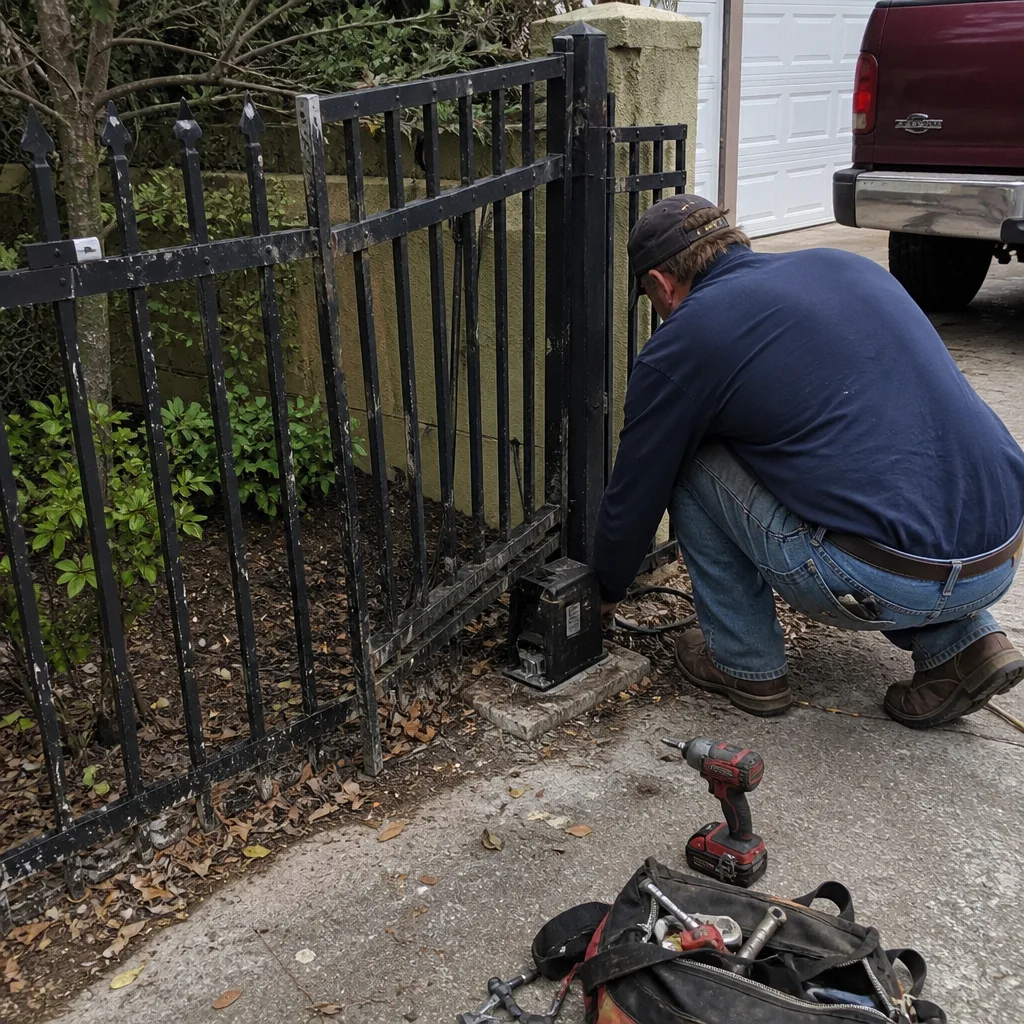 Before
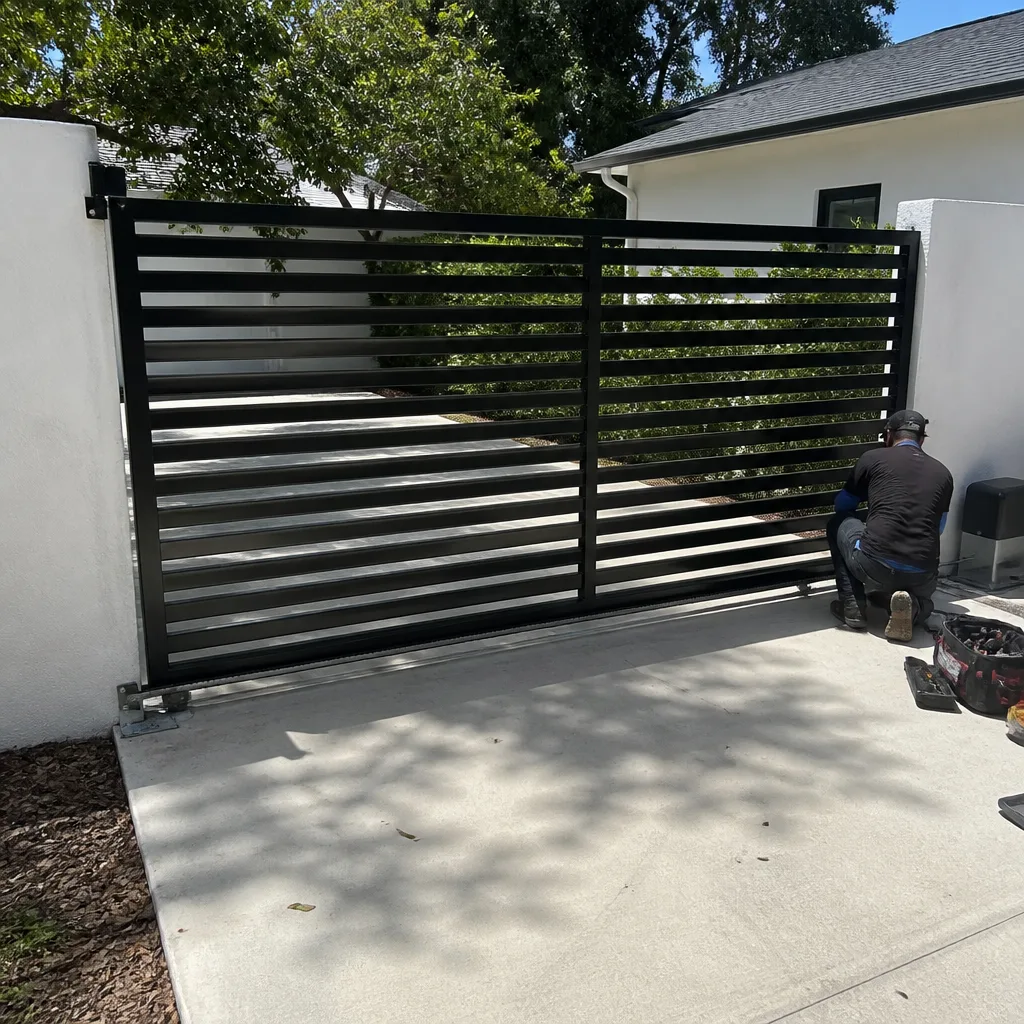 After
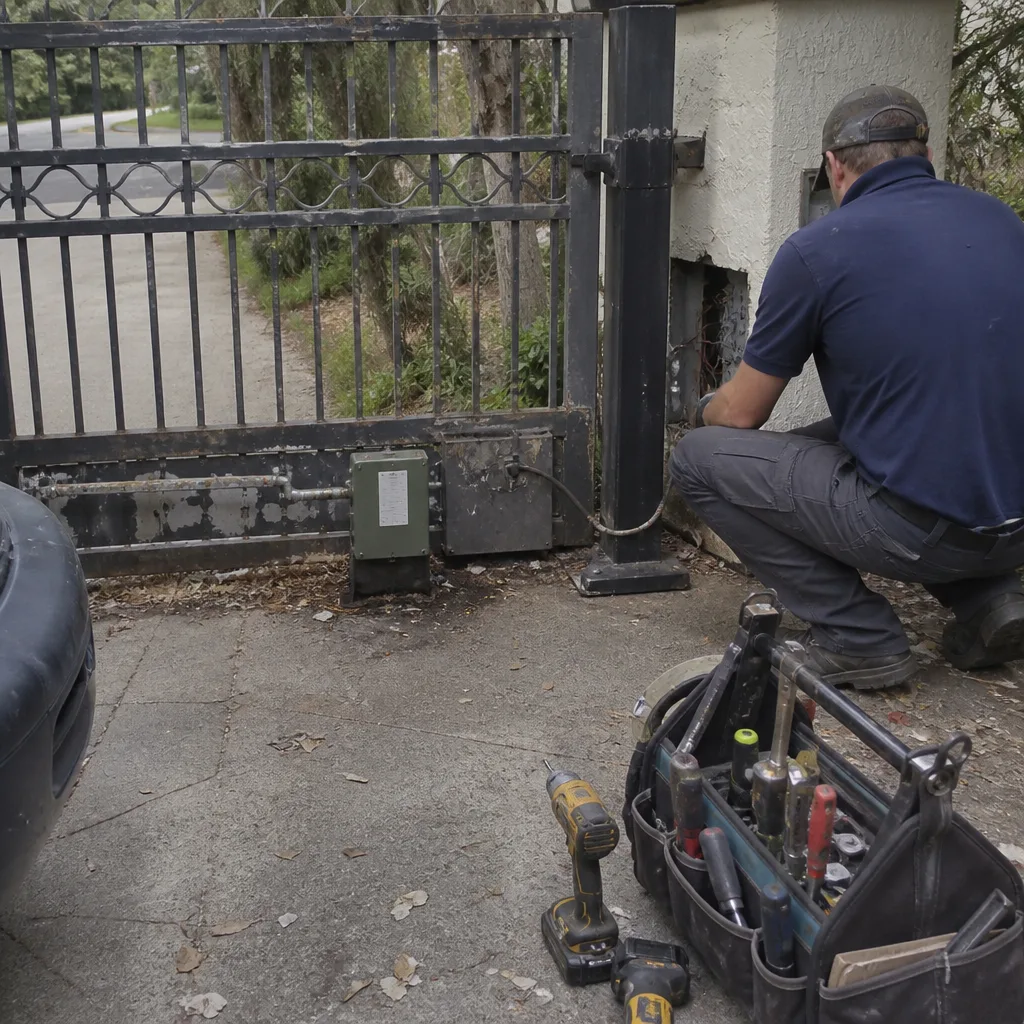 Before
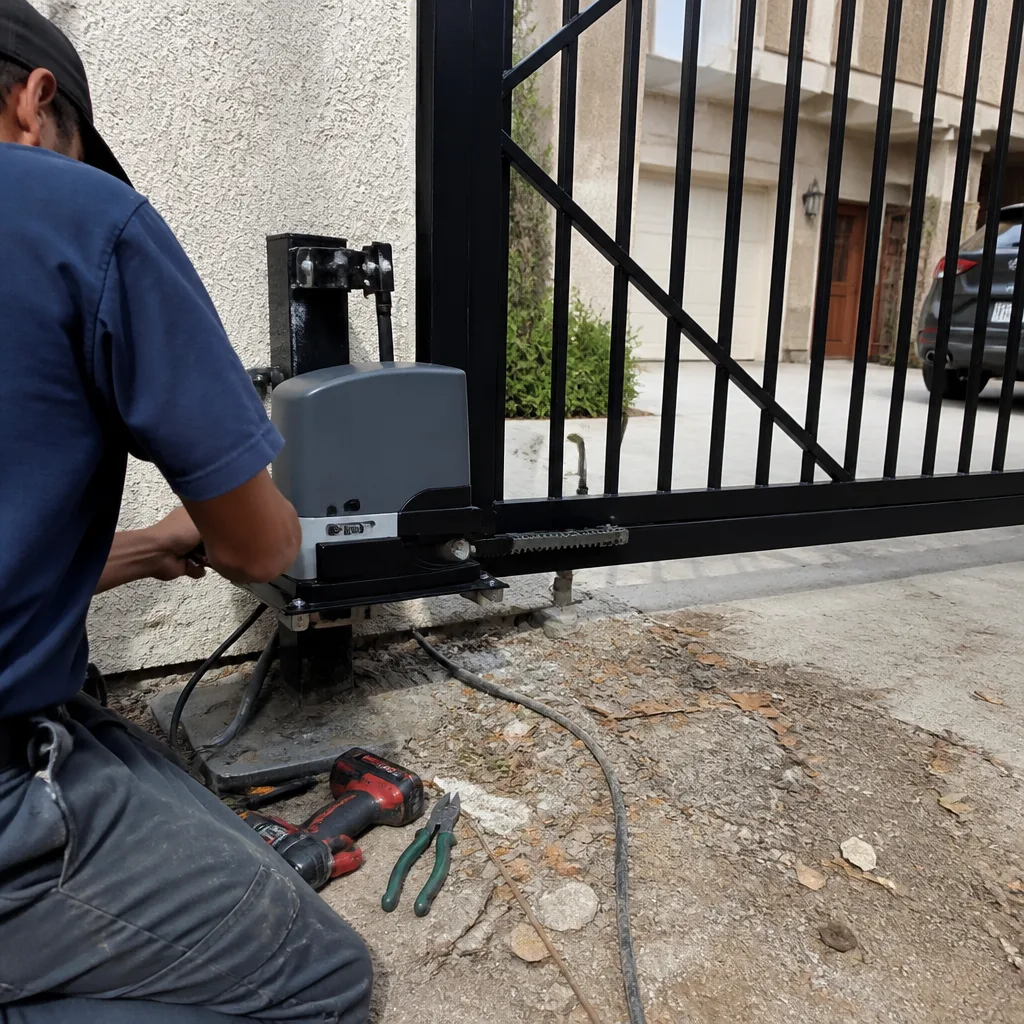 After
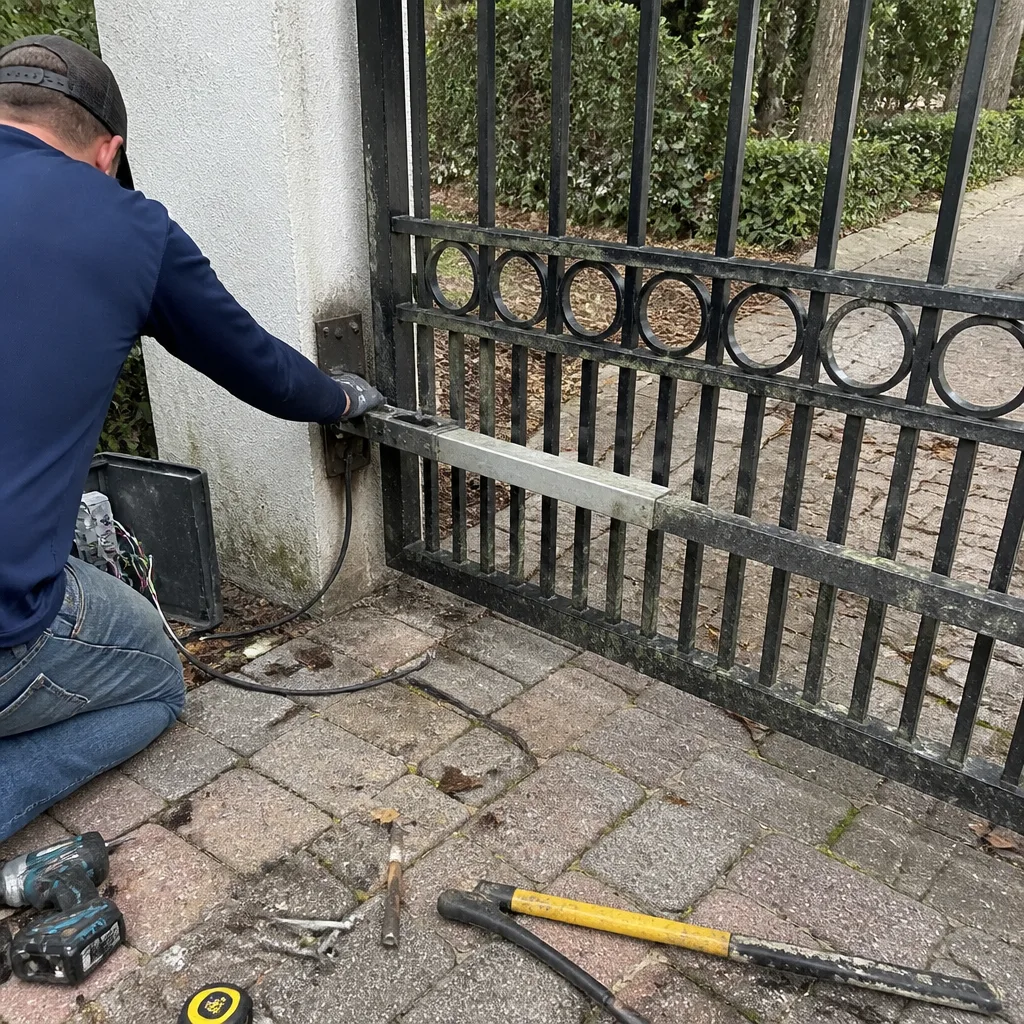 Before
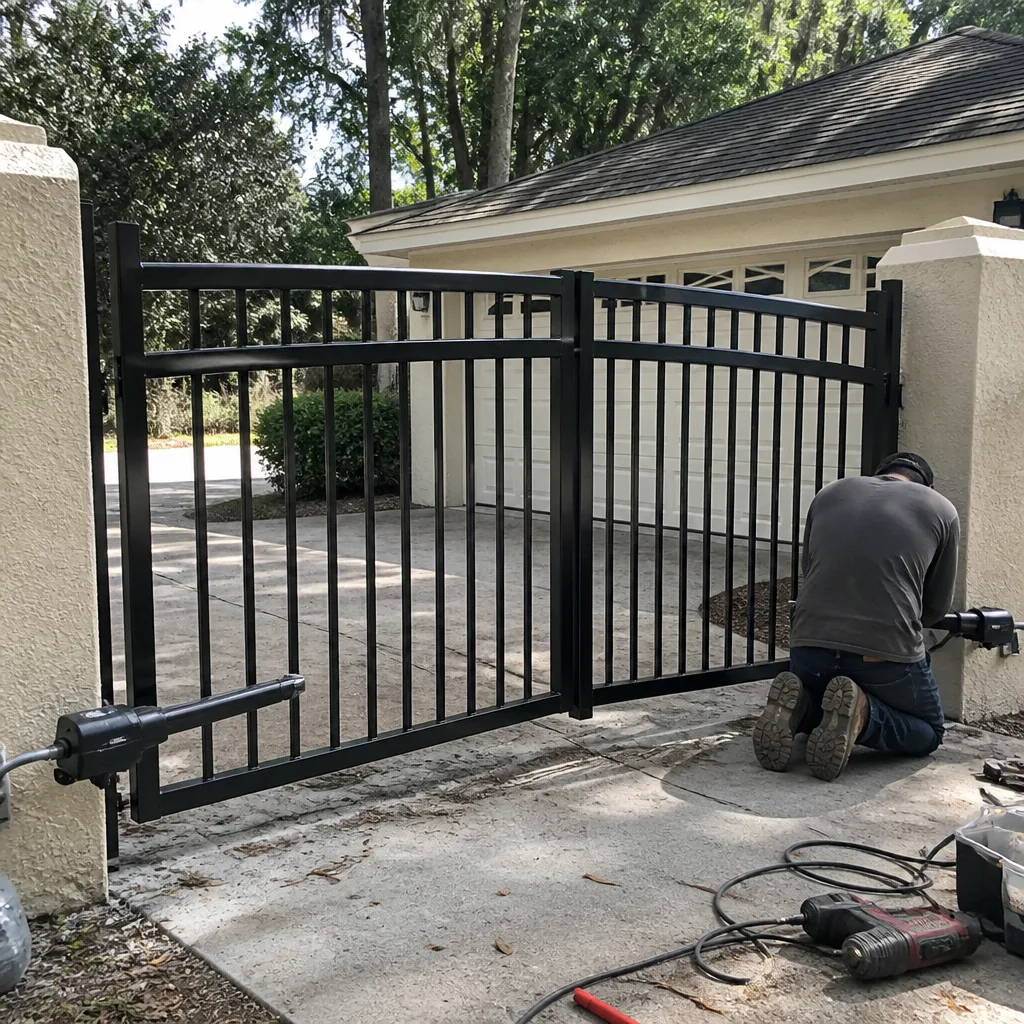 After
Frequently Asked Questions
Gate repair in Jacksonville typically costs between $180 and $1,800, with most common repairs like hinge replacement, sensor realignment, and capacitor swaps falling between $250 and $650. The exact price depends on the brand, the failure point, and how far the mechanical damage has progressed. Call (877) 265-5090 for a free estimate on your specific gate, quoted before any work begins.
For most mechanical repairs and common electric gate issues, yes, we can often schedule same-day or next-day service in Jacksonville. Major board or motor replacements may require 2 to 5 business days for parts, depending on the brand. If your gate is stuck open and you need it secured, call (877) 265-5090 and we’ll prioritize getting it closed and safe first.
A properly installed gate with sealed welds and regular hinge maintenance lasts 10 to 15 years in Jacksonville’s coastal humidity. Poorly sealed steel gates near the beaches can develop structural rust in 5 to 7 years. The motor typically fails before the gate structure, but a well-maintained mechanical system extends motor life significantly.
New gate installation with an electrical connection requires a permit from the City of Jacksonville. Component replacements, like a new motor or new hinges on an existing gate, typically do not. Homes in HOA-governed communities like Nocatee, Palencia, or Deerwood may require architectural committee approval for any change to gate appearance or swing direction.
We service nine major gate brands, including Linear, Viking, Ghost Controls, and DoorKing, along with LiftMaster, FAAC, BFT, Elite, and Mighty Mule. Brand-specific knowledge means we diagnose a DoorKing board fault differently than a Ghost Controls capacitor issue, without the trial-and-error approach that costs homeowners money on repeat visits.
The two most important steps are confirming your gate meets current Florida Building Code wind-load standards and ensuring the posts are set in concrete footings that extend below the organic soil layer. Gates that have already sustained storm damage should be inspected for micro-fractures at weld points before the next hurricane season. A wind-load evaluation is part of our standard gate replacement consultation in Jacksonville.
The Bottom Line
A Jacksonville gate is a system, not a machine. It lives in salt air, sits on shifting sandy soil, and takes wind loads that inland gates never see. When you understand that the failure starts at the hinge, not the motor, you save money by intervening early on the cheap fix before it becomes the expensive one. Watch for the early signs: slow travel, sagging, squeaking, and sensor false-triggers. Service the mechanical points before the electrical system pays the price. And when the repair bill exceeds 60% of replacement cost, or when settlement has compromised the posts, consider a new wind-rated gate rather than patching an old one. Your gate is the first impression of your property and the first line of defense at your driveway. Treat it like infrastructure, not an afterthought.
Written by the team at Villa Gate Repair, serving Jacksonville since 2012.