Last updated October 30, 2026
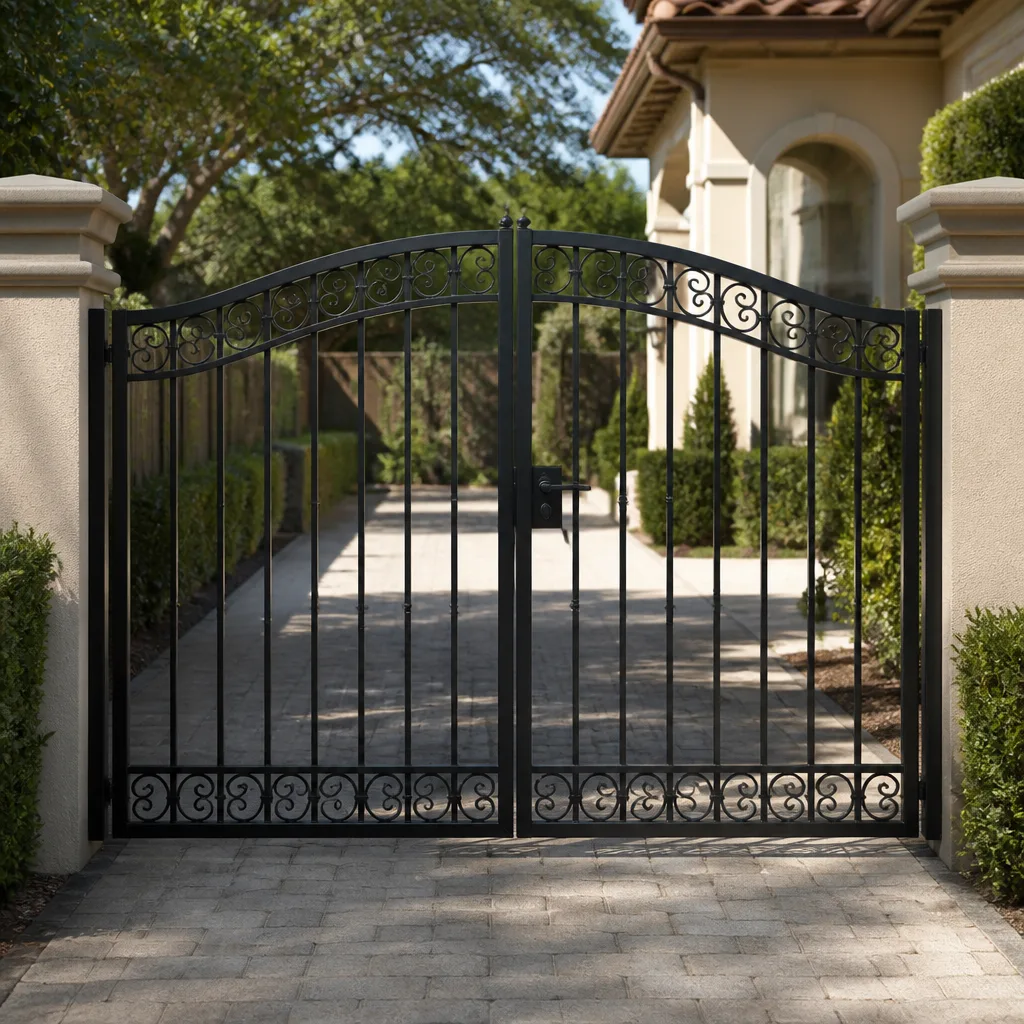 Wrought iron
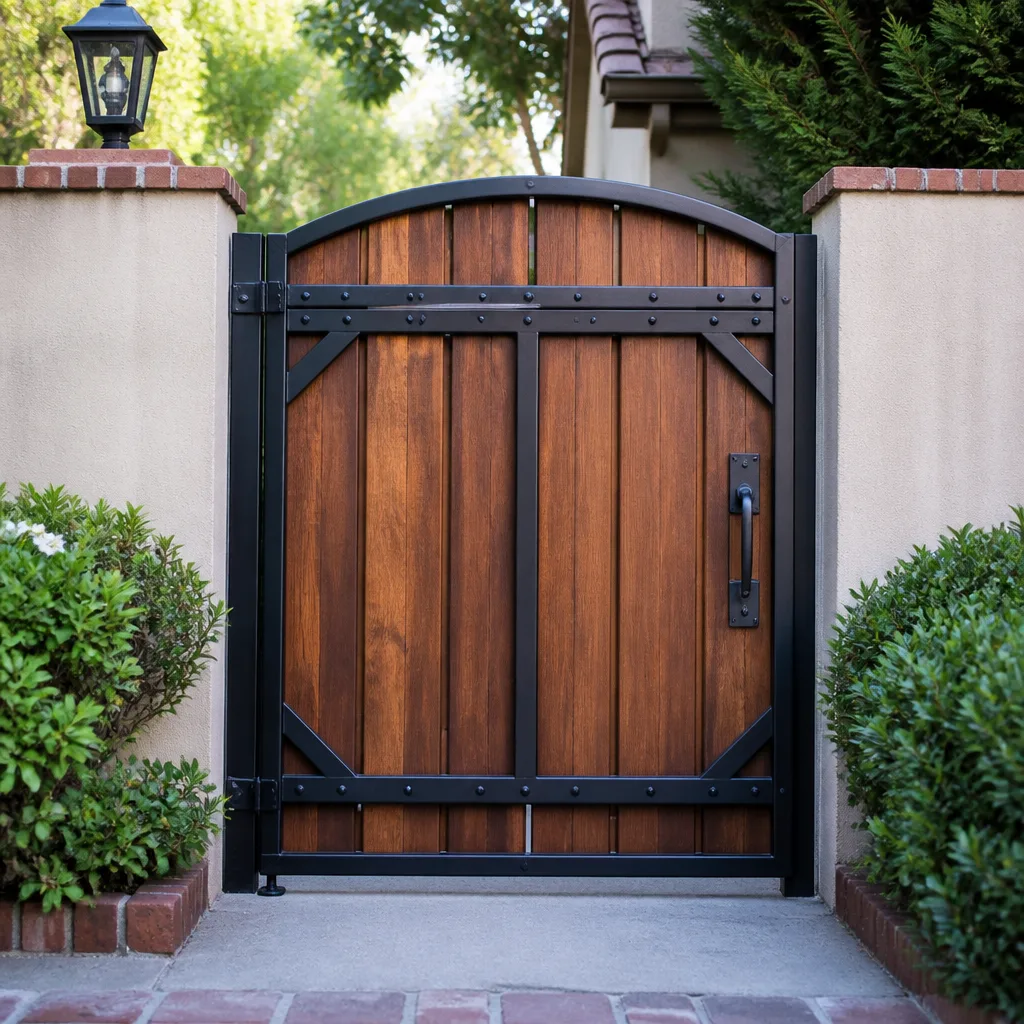 Wood & steel frame
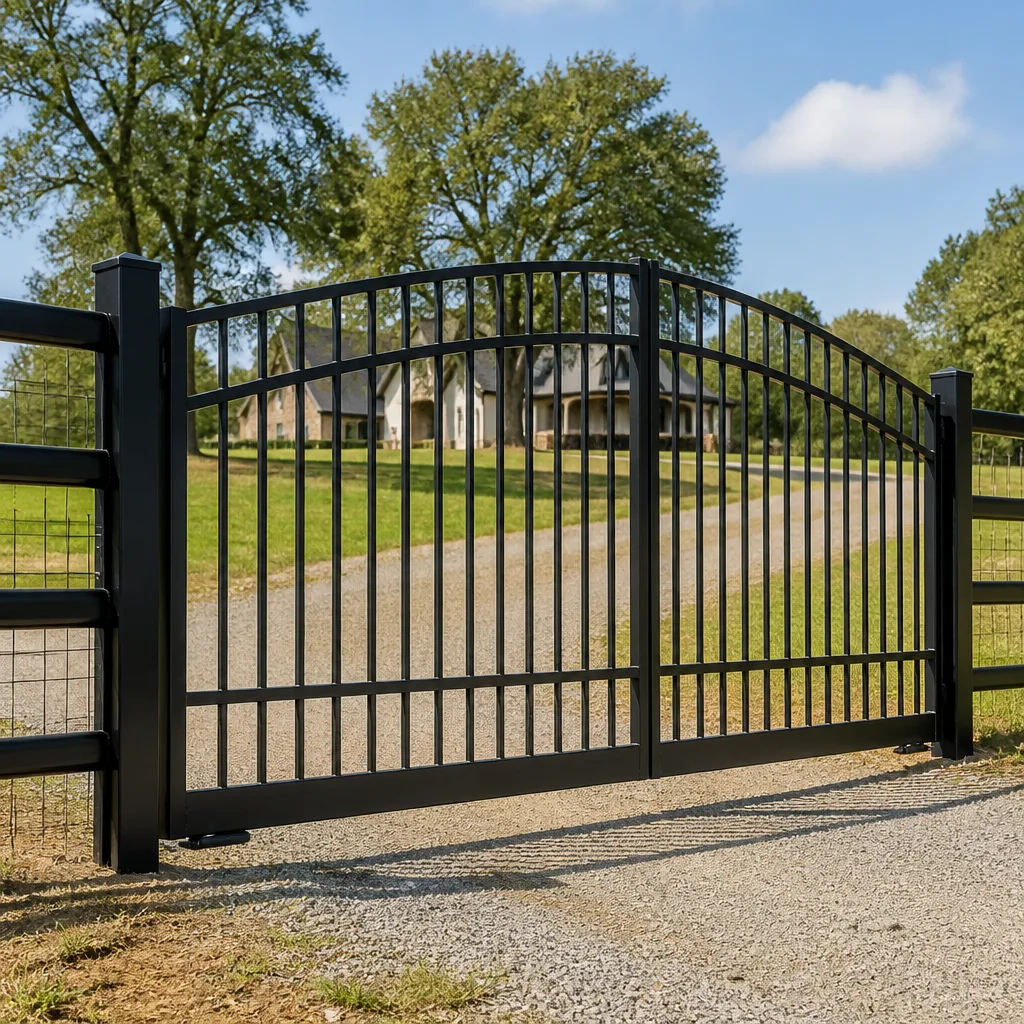 Farm & ranch
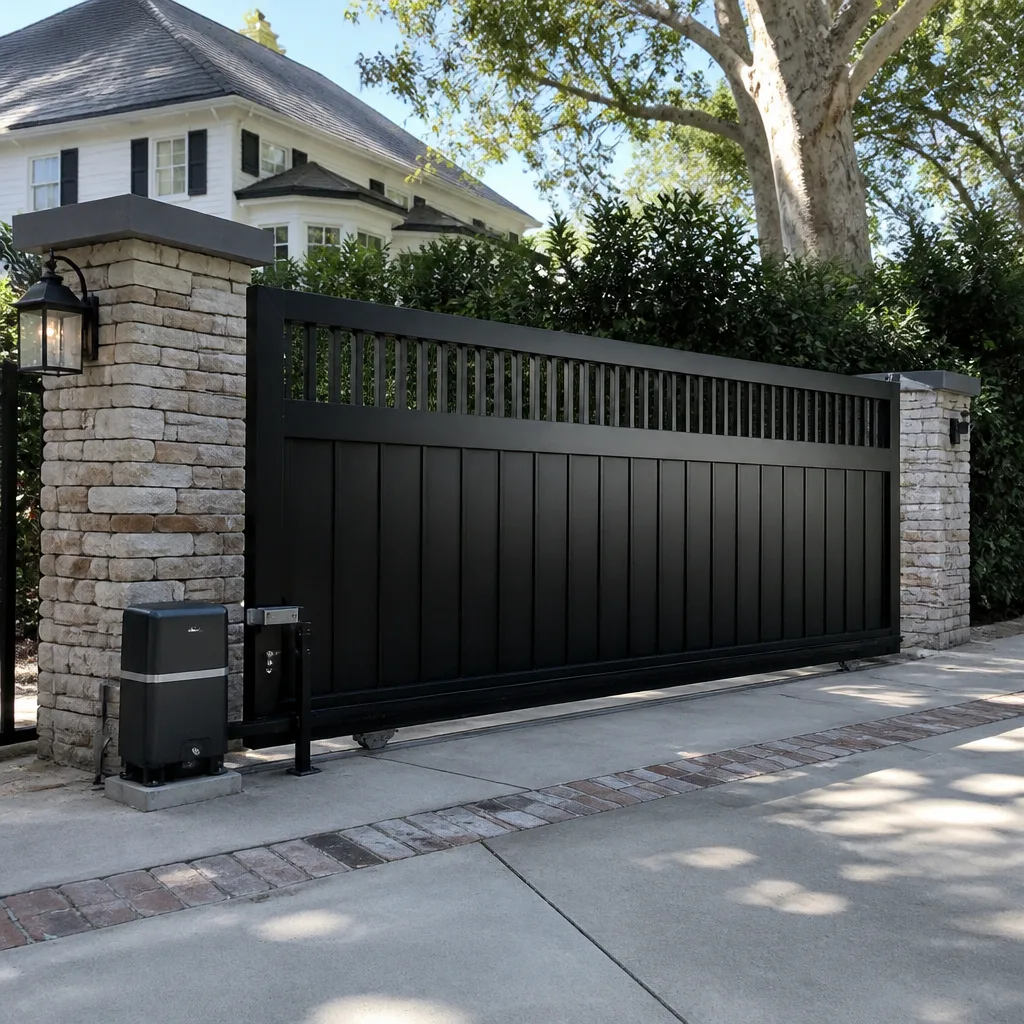 Sliding driveway gates
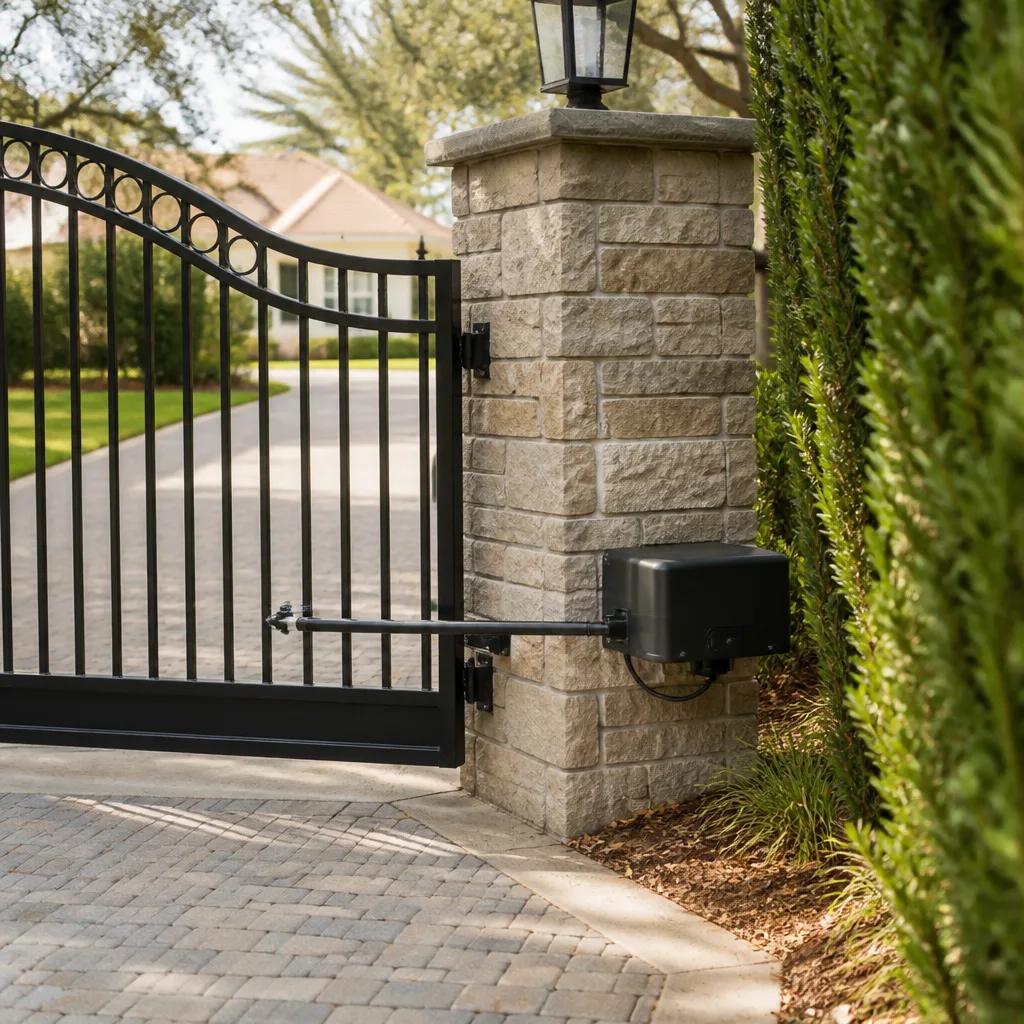 LiftMaster operators
Free on-site gate assessment - hinges, posts, and your LiftMaster or Nice gate operator checked before anything is quoted
The assessment is free and the quote is the invoice.
Get your free estimateChoosing the Right Gate Repair Brand: A Buyer’s Guide for Jacksonville
Most Jacksonville homeowners choose a gate operator the same way they choose a toaster: they read Amazon reviews, pick a four-star option, and wait for delivery. The problem is that a gate operator is closer to a car than a countertop appliance. It has a control board, a motor, safety sensors, and moving parts that fail. When it breaks, the brand you picked determines whether a local technician can fix it today or whether you’re waiting five days for a control board to ship from a warehouse in California. This guide evaluates the gate brands actually installed across Jacksonville through the lens that matters most after the sale: parts availability, serviceability, and how they hold up in our heat and humidity. For a deeper dive, see The Complete Gate Repair Guide for Jacksonville Homeowners. We’ll show you how to pick a brand that won’t leave your driveway swinging open while you wait on a FedEx tracking number.
Quick Answer
The best gate repair brand in Jacksonville is the one with active parts distribution in Northeast Florida and technicians who service it regularly. For homeowners dealing with an existing issue, professional Gate Repair services can diagnose problems quickly when the brand has local support. LiftMaster, FAAC, Mighty Mule, and Elite dominate the Jacksonville market because parts are stocked locally and the failure patterns are well understood. A brand with no authorized service presence in Duval County, no local parts stock, and no technician familiar with its control boards will cost you more in downtime and repeat repairs even if the unit itself is well-reviewed.
Styles & brands we work with
Table of Contents
- Why Parts and Service Matter More Than Features
- Gate Brands You’ll Actually Find in Jacksonville
- How Jacksonville’s Climate Punishes Gate Operators
- Matching Brand to Gate Type and Usage
- The Warranty Reality Check
- When to Stay Loyal and When to Switch Brands
- How to Choose the Right Brand: A 5-Step Process
- Common Mistakes to Avoid
Why Parts and Service Matter More Than Features
Every gate operator sold today has a remote, a keypad option, and some form of safety reverse feature. The differences in marketing copy are minor. The differences in repair reality are massive. When a control board fails on a LiftMaster or FAAC unit installed across Jacksonville, a technician can typically source the part from a local distributor the same day or next morning. When the same board fails on a brand with no Northeast Florida distribution, the part ships from a regional hub in Atlanta or a national warehouse in Texas, and your gate sits inoperative for three to seven business days.
We’ve replaced control boards on units where the entire repair took ninety minutes because the part was on a local shelf. We’ve also quoted the same repair for brands where the board had to ship from across the country, leaving the homeowner with a chained-shut gate and a temporary manual override for a week. That difference is invisible when you’re shopping online and painfully visible when your gate is stuck open at 7 p.m. on a Tuesday.
Beyond parts, there’s the technician familiarity factor. A tech who works on fifty LiftMaster boards a year can diagnose a fault in minutes. A tech who sees a particular brand twice a year will spend more time troubleshooting, may misdiagnose a sensor issue as a board failure, and is more likely to need a follow-up visit. In Jacksonville, the brands with the strongest service infrastructure are LiftMaster, FAAC, Mighty Mule, and Elite. That’s not a marketing list; it’s what’s actually in driveways in San Marco, Ortega, and Mandarin.
Here’s what “parts availability” actually means in practical terms for a Jacksonville homeowner:
- Same-day parts: Control boards, remotes, and sensors stocked by Jacksonville distributors for LiftMaster and FAAC units.
- One-to-two-day parts: Common components for Mighty Mule and Elite, depending on distributor stock and the specific model.
- Three-to-seven-day parts: Boards and arms for brands with no local distribution, shipped from out-of-state warehouses.
The brand you choose today sets the ceiling on how fast your gate can be repaired for the next ten years. That’s the decision most buyer’s guides skip.
Gate Brands You’ll Actually Find in Jacksonville
Walk through Riverside, Ortega, San Marco, or the gated communities off Hodges Boulevard and you’ll see a pattern. Certain brands dominate because builders installed them, gate installers recommended them, and repair companies can service them. Here’s what we see in the Jacksonville market.
LiftMaster is the most common residential gate operator in Jacksonville. It’s sold through the same distributor network that supplies garage door openers, so parts flow into local supply houses constantly. Homeowners with LiftMaster sliding gates in neighborhoods like Julington Creek or Bartram Park benefit from a deep bench of techs who know the control boards, the MyQ connectivity quirks, and the common limit switch failures. The downside is that LiftMaster’s residential gate lineup is narrower than its garage door lineup, so some gate configurations require an adapter or a different brand entirely.
FAAC is the most prevalent brand for higher-end residential gates and light commercial installations. FAAC operators are built in Italy and designed for heavier gates and higher cycle counts. In Jacksonville, FAAC units appear most often on estate properties, gated communities, and commercial entries along Baymeadows Road and Butler Boulevard. FAAC’s distribution network in the Southeast is strong, and their hydraulic and electromechanical operators have a reputation for outlasting the typical residential unit. The tradeoff is cost: FAAC parts are pricier, and a FAAC repair typically runs higher than a comparable LiftMaster repair.
Mighty Mule is the DIY-friendly brand. Homeowners buy Mighty Mule kits at Home Depot or Lowe’s, install them over a weekend, and the units work fine until the control board gets hit by a lightning surge or the battery pack degrades. Mighty Mule is inexpensive to buy and inexpensive to repair, but the build quality reflects the price. For a light residential gate that cycles four or five times a day, a Mighty Mule can last years. For a gate on a busy shared driveway, it’s underbuilt.
Elite sits between Mighty Mule and FAAC in both price and capability. Elite operators are common on commercial and multi-family properties in Jacksonville, but they also appear on residential properties where the installer wanted a step up from the big-box brands without paying FAAC prices. Elite’s parts network in Florida is adequate but thinner than LiftMaster’s, so some components take an extra day or two.
Our team at Villa Gate Repair works on all four of these brands regularly, as well as five others. That brand coverage matters because it means we diagnose from direct field experience rather than generic electrical knowledge. A FAAC hydraulic operator and a LiftMaster chain-driven slider fail differently, and knowing those failure modes speeds up the repair.
How Jacksonville’s Climate Punishes Gate Operators
Jacksonville’s climate is hard on outdoor electronics. The combination of high humidity, salt air near the beaches and Intracoastal, frequent afternoon thunderstorms, and summer heat that bakes control boxes in direct sun creates failure patterns specific to Northeast Florida. A gate operator that works perfectly in Phoenix or Denver may struggle here.
Humidity is the primary killer. Control boards that live inside an enclosed operator housing accumulate moisture. Over time, that moisture causes corrosion on solder points and connector pins, leading to intermittent faults that are difficult to diagnose: the gate works fine for a week, then refuses to open, then works again. We see this failure pattern most often in Jacksonville Beach, Atlantic Beach, Neptune Beach, and other coastal communities where salt air accelerates the corrosion.
The brands that handle Jacksonville’s climate best in our experience:
FAAC builds operator housings with better weather sealing than most residential brands, and their boards are potted or coated in many models. If you live within two miles of salt water, FAAC operators have a measurable longevity advantage over unsealed residential units.
LiftMaster boards are generally well-protected, but the operator housing on lower-cost models can develop gaps over time, especially if the gate post shifts. The fix is usually a control board replacement plus resealing the housing, which is a standard repair in Jacksonville’s coastal neighborhoods.
Mighty Mule units, with their exposed external battery boxes and lighter-duty enclosures, struggle in coastal environments. It’s not uncommon to see a Mighty Mule control board fail within three years at the beach when the same unit might last five or six inland.
Beyond humid air, there’s lightning. Northeast Florida is one of the most lightning-prone regions in the United States, and a nearby strike can induce a surge through gate wiring even if the strike doesn’t hit the gate directly. A surge-damaged control board is a common cause of a gate that either stops responding entirely or opens and closes on its own. Homeowners who install a surge suppressor on their gate’s low-voltage wiring experience measurably fewer board failures, regardless of brand.
Matching Brand to Gate Type and Usage
Most brand comparisons skip the most important question: what kind of gate do you have, and how often does it move? A brand that’s perfect for a commercial gate cycling 200 times a day could be overkill for a residential driveway gate that moves eight times. And the reverse is worse.
Here’s the breakdown by gate type and typical usage frequency:
Residential sliding gates (4 – 15 cycles per day): LiftMaster and Mighty Mule cover most of this market. If the gate is light enough, a Mighty Mule is adequate and cheap to repair. If the gate is heavier, a LiftMaster chain-driven or belt-driven slider offers more torque and better longevity. Elite also competes here for heavier residential sliders.
Residential swing gates (duty cycle under 30%): FAAC swing gate operators, particularly the 390 and 400 series, are the workhorses. Mighty Mule swing openers work on lightweight aluminum or vinyl gates but struggle with solid wood or steel gates common on older Jacksonville properties. LiftMaster swing operators are solid mid-level options.
Commercial or high-traffic gates (30+ cycles per day): This is FAAC and Elite territory. Gated communities with an entry gate cycling 40 or 50 times a day in the morning rush need an operator rated for continuous duty. A residential-grade opener used in that application wears out its gearbox, limit switches, or motor brushes within a year or two.
Cycle count matters more than most homeowners assume. Here’s a simple way to think about it:
- A residential gate that opens four times a day cycles less than 1,500 times per year.
- Most residential operators are rated for roughly 10 to 15 cycles per day.
- A gate at a school, an apartment building, or a busy business park can hit 100+ cycles daily.
- Running a residential-rated operator at commercial cycle counts voids the warranty and accelerates mechanical failure.
If you’re installing a gate on a shared driveway, a rental property, or any situation where the gate will move more than a typical single-family home, spend the extra money for a commercial-rated operator. It’s cheaper than replacing a burned-out residential unit every eighteen months.
For gate types and service specifics, see our Gate Repair in Jacksonville page for a deeper breakdown of what we work on.
The Warranty Reality Check
Every gate operator brand offers a warranty. Almost none of them cover the failure modes Jacksonville homeowners actually experience. Here’s what the fine print typically says and where the gaps are.
LiftMaster residential gate operators typically carry a one-year parts and labor warranty through the installer, with some components covered for longer. The catch: the warranty covers manufacturing defects, not surge damage. Since Jacksonville’s lightning season runs from June to September, a control board fried by an induced surge is not a warranty claim; it’s an out-of-pocket repair. LiftMaster does offer a surge protector as a separate accessory, and installing one is the single most cost-effective warranty-adjacent decision you can make.
FAAC residential operators carry a two-year warranty on most components, which is stronger than the industry standard. The warranty requires that an authorized FAAC dealer installed the unit. If a homeowner bought a FAAC operator online and installed it themselves or hired a non-authorized installer, the warranty is often void or reduced. In Jacksonville, that’s a common situation: the online price looks better, and the warranty disappears in the process.
Mighty Mule offers an 18-month warranty on most kits, but the fine print specifies that the unit must be installed by a licensed professional or the warranty is void. Since Mighty Mule is marketed as a DIY product, many Jacksonville homeowners install the kit themselves and unknowingly void their coverage. When the control board fails, the replacement cost lands squarely on the homeowner.
Elite warranties vary by model, generally one to two years. Elite’s commercial products carry stronger coverage, but the same lightning and surge exclusions apply.
The consistent gap across all brands: weather-related damage. Jacksonville humidity corrosion, lightning-induced surges, and salt air degradation near the coast are all classified as environmental damage, not manufacturing defects. No residential gate operator warranty covers them. That’s why the brand’s local parts availability matters more than the length of its warranty: when the failure isn’t covered, you want the replacement part in town, not in transit. For more guides & resources on maintaining your gate and avoiding common pitfalls, visit our blog.
When to Stay Loyal and When to Switch Brands
There’s a default assumption in the gate repair world that switching brands is complicated and expensive. Sometimes it’s neither. Here’s the honest framework we use when a Jacksonville homeowner asks whether to replace a failed operator with the same brand or switch.
Stay with your current brand when:
- Your gate paired with that brand’s remote and keypad system, and the system still works. Switching brands means reprogramming or replacing every remote, keypad, and sensor.
- The operator failed due to a repairable component, not a design deficiency. A surge-damaged board on a five-year-old LiftMaster is a board replacement, not a reason to swap brands.
- Your gate is a standard residential slider or swing gate with moderate cycle counts. Moving from a working LiftMaster to a FAAC just because FAAC is “better” doesn’t make financial sense for a gate that moves ten times a day.
- You’re in an HOA or gated community where the operator brand is specified by the community’s gate contractor. Switching brands may violate architectural guidelines or complicate shared maintenance.
Switch brands when:
- You live near the coast and your current unit has failed twice in five years from humidity-related corrosion. Upgrading to a FAAC or similarly sealed unit may cost more up front but end the biennial control board replacement cycle.
- Your gate type changed. If you replace a lightweight aluminum gate with a heavier steel or wood gate, the operator that moved the old gate may be undersized for the new one. This is the point to step up in torque rating, which often means a different brand.
- Your usage pattern changed. If a residential gate is now serving two households or a rental unit with more traffic, moving from a residential-rated to a commercial-rated operator is usually a brand switch.
- You installed a DIY kit and discovered the hard way that the brand has no local parts support. Paying to switch to a brand with Jacksonville parts distribution is cheaper than the next three-day repair downtime.
- Your current brand’s installer or service provider left the Jacksonville market. A brand is only as good as whoever can service it in your ZIP code.
For electric or automated gates specifically, our Electric Gate Repair in Jacksonville page covers the motor and control board side of this decision in more detail.
How to Choose the Right Brand: A 5-Step Process
If you’re choosing a gate operator brand for a new installation or deciding whether to replace a failed unit with something different, use this process. You can also explore The Complete Guide to Gate Repair in Jacksonville for additional context. It’s the same thinking we apply when a Jacksonville homeowner asks us which brand to install.
Step 1: Identify your gate type and weight.
Sliding or swing? Aluminum, steel, wood, or vinyl? Gate weight is the single most important factor in operator sizing. A swing gate operator rated for 600 pounds will fail prematurely on an 800-pound gate. Measure the gate’s length, height, and material, and have a rough weight estimate before shopping brands.
Step 2: Count your daily cycles.
How many times does the gate open and close in a day? For a single-family home, it’s probably under ten. For a shared driveway, a rental property, or a commercial entry, it’s more. Match the operator’s duty cycle rating to your actual usage. Under-rating is the fastest route to gearbox failure.
Step 3: Check Jacksonville parts availability for the brands you’re considering.
Call a local gate repair company (a gate-only shop, not a general handyman) and ask two questions: “Do you stock parts for this brand in Jacksonville?” and “How long does it typically take to source a control board for this brand?” If the answer is “we’d have to order that,” cross the brand off your list unless you have no other option. The brands with the strongest local parts networks in Jacksonville are LiftMaster, FAAC, Mighty Mule, and Elite.
Step 4: Match the warranty to your installation situation.
Read the warranty’s installation requirement. If it requires an authorized installer, factor that into your budget; a DIY install voids the warranty on many brands. If it excludes surge or weather damage, plan to install a surge suppressor regardless of brand. In Jacksonville’s lightning environment, this isn’t optional.
Step 5: Pick the brand before you pick the installer.
Brand first, installer second. The reason: different Jacksonville gate companies have different brand certifications and parts access. If you want a FAAC operator, hire a company that services FAAC units daily, not one that mostly installs LiftMaster and “can figure out” a FAAC. The installer’s brand familiarity determines your next ten years of repair speed and accuracy.
If you’re starting from zero and need a full installation, our Gate Installation in Jacksonville page covers the process from initial site measure to final programming.
Common Mistakes to Avoid
- Buying based on Amazon reviews alone. A five-star rating from homeowners in Arizona tells you nothing about how the control board handles Jacksonville thunderstorm season or whether any local tech stocks parts for it. Cross-check local service availability before buying.
- Installing a DIY kit to save a few hundred dollars. Mighty Mule and similar DIY kits work, but a self-install often voids the warranty, skips the surge protection, and leaves you with a brand whose parts aren’t stocked anywhere in Duval County. The savings evaporate on the first repair.
- Running a residential operator at commercial cycle counts. Using a residential gate opener on a gate that cycles 50 times a day burns out motors and gearboxes within a year or two. This is the most expensive mistake we see on Jacksonville rental properties and small business entries.
- Skipping surge protection. In Northeast Florida, lightning-induced surges are a top three cause of gate operator failure. A $75 surge suppressor installed on the low-voltage line prevents hundreds of dollars in control board replacements.
- Choosing a brand because a neighbor recommended it. Your neighbor’s gate is not your gate. Gate weight, type, and usage frequency determine the right brand; their recommendation might work fine for a light aluminum gate and be totally wrong for your steel slider.
- Ignoring coastal corrosion if you live near the beach. Buy any brand you want in Jacksonville Beach or Ponte Vedra, but understand that a lower-cost unit with a less-sealed housing will corrode faster within a mile of salt water. This isn’t brand snobbery; it’s a physical reality of electrolysis on electronic boards.
See the difference
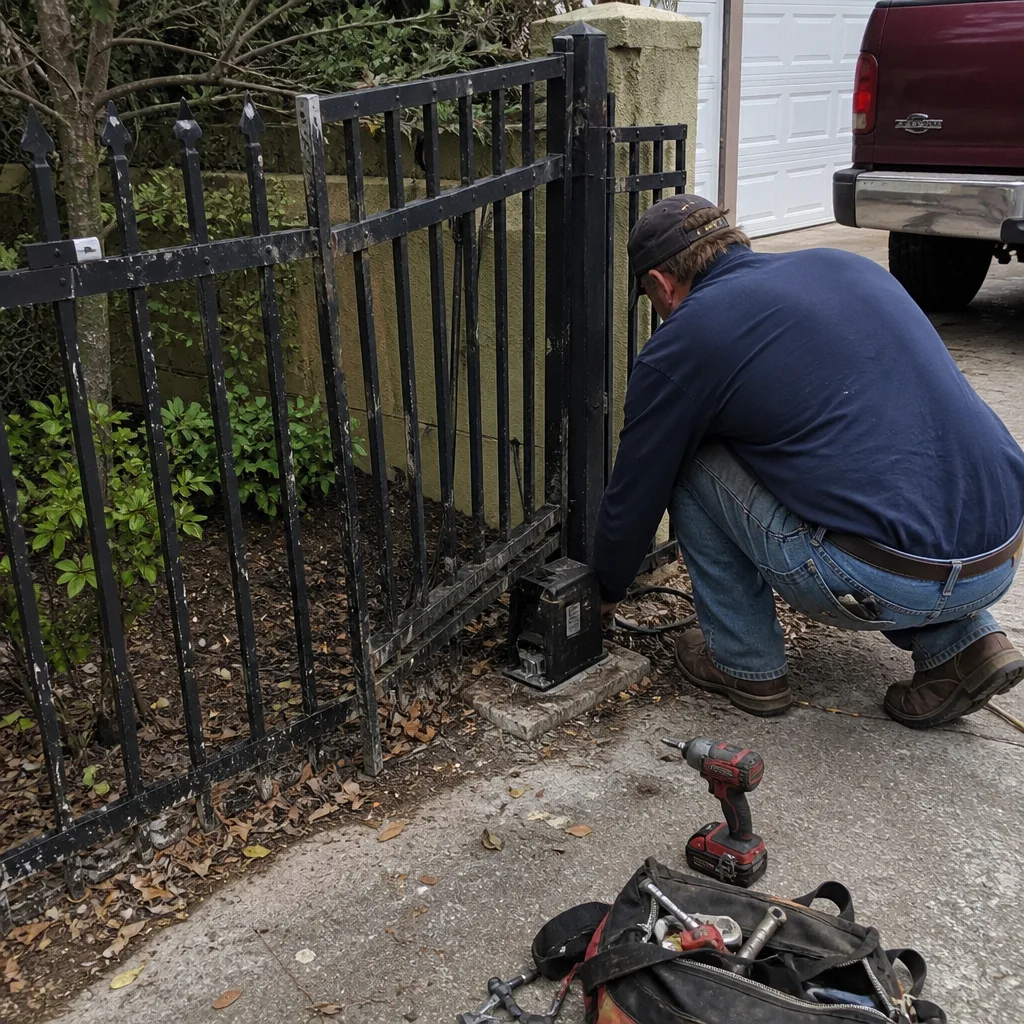 Before
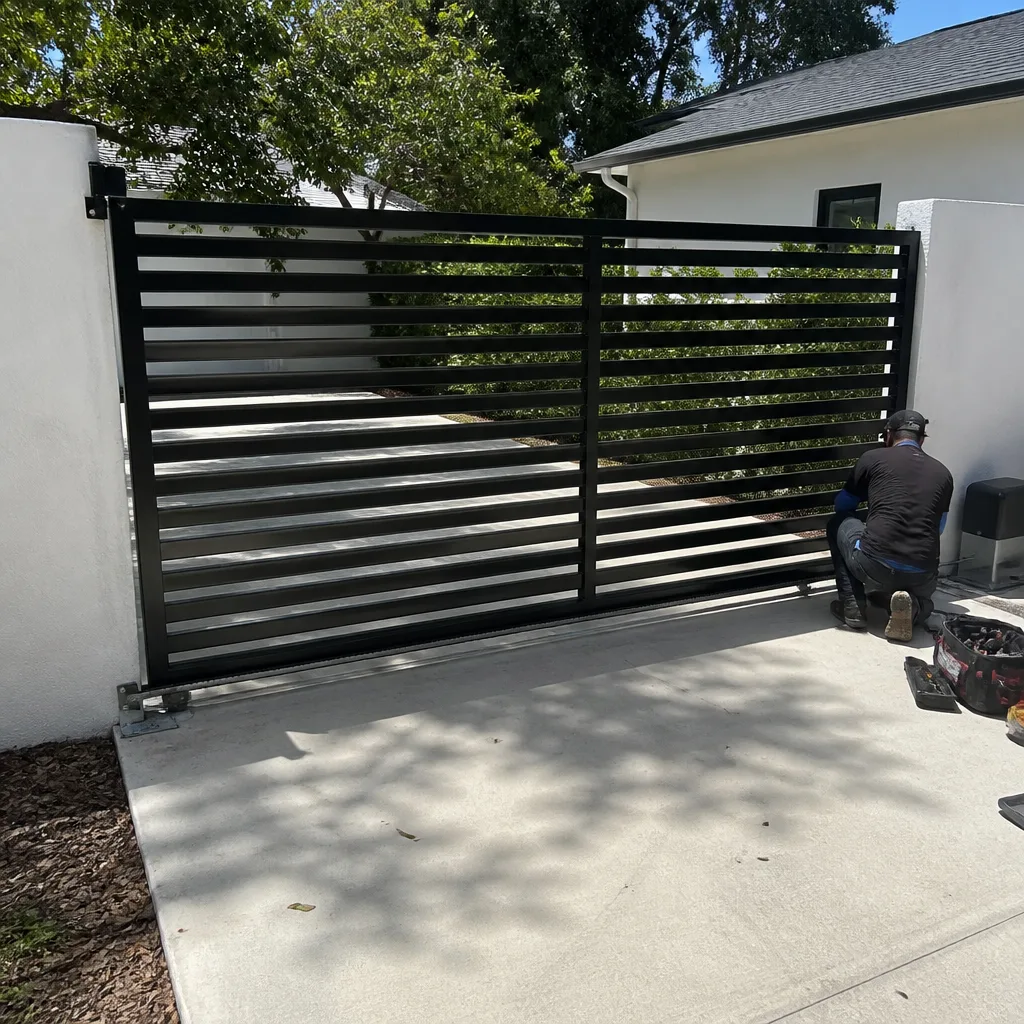 After
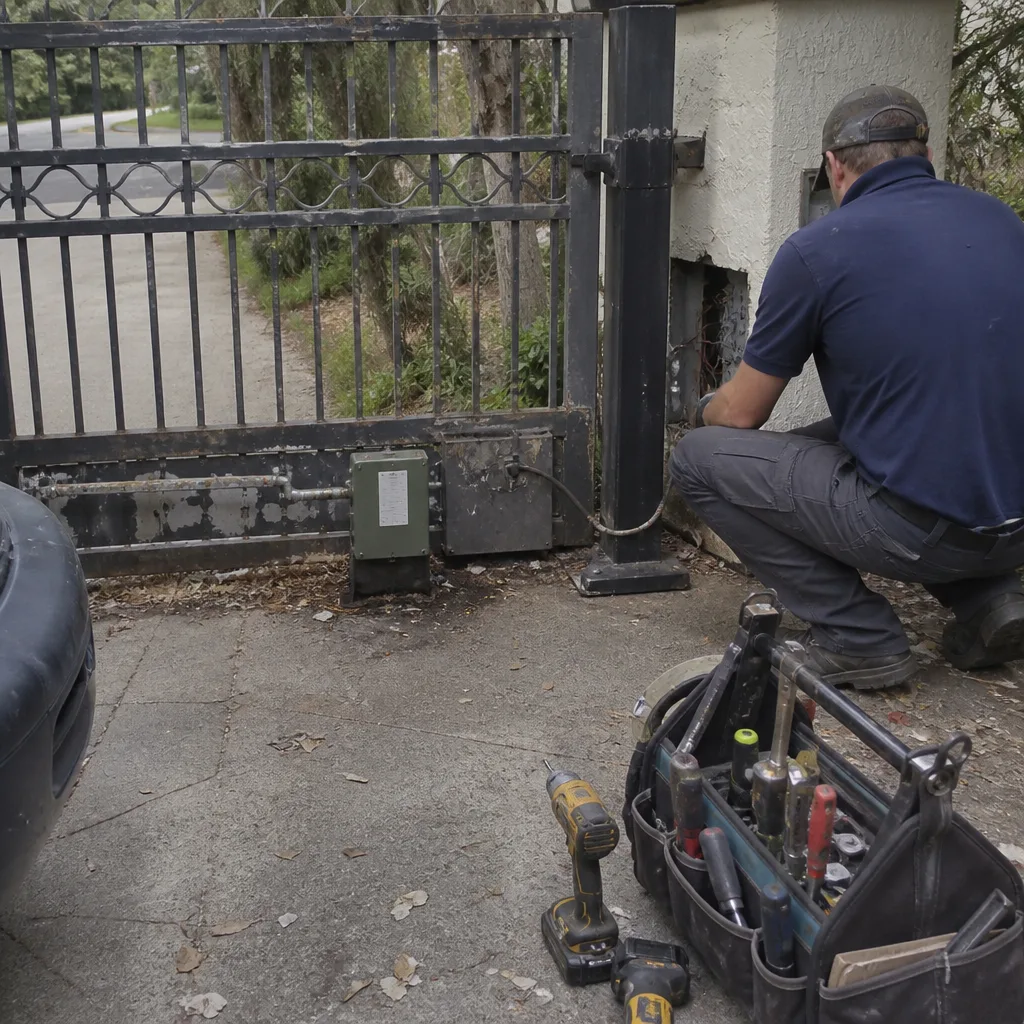 Before
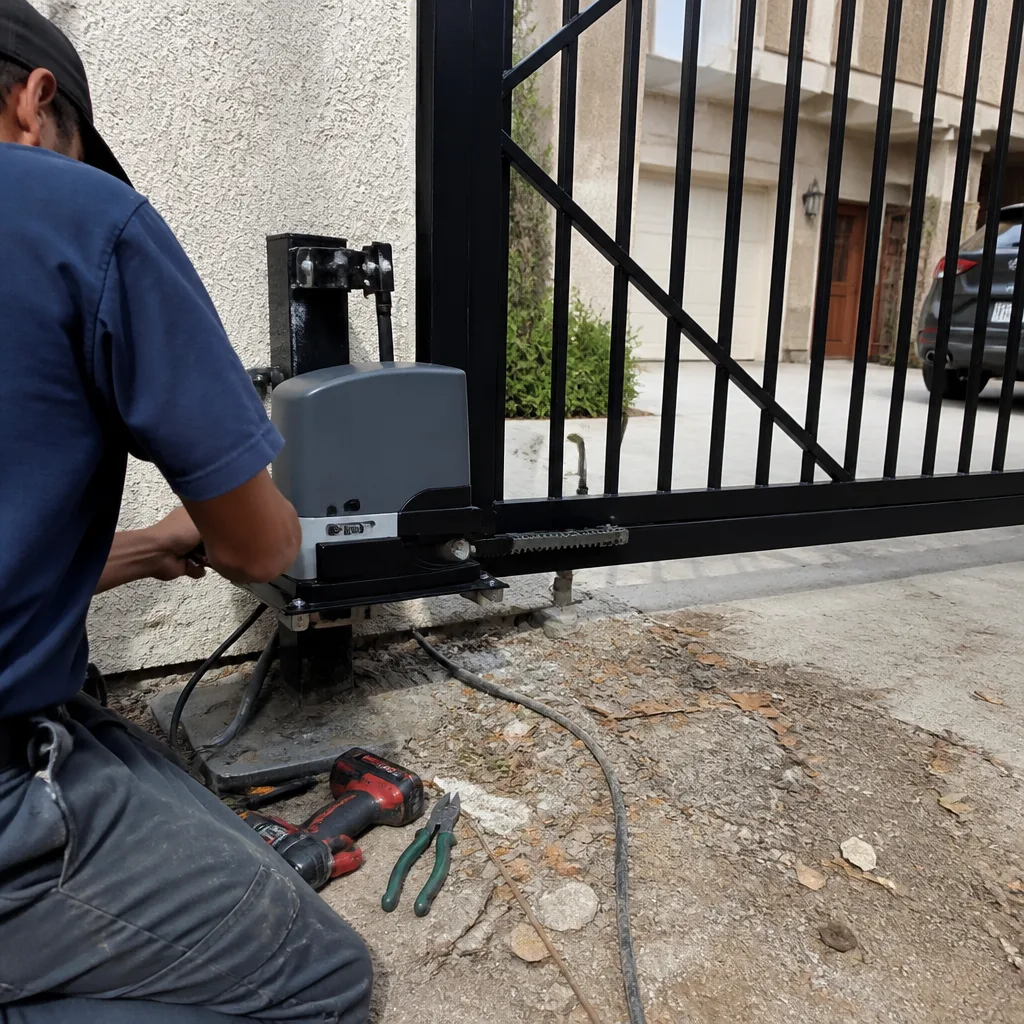 After
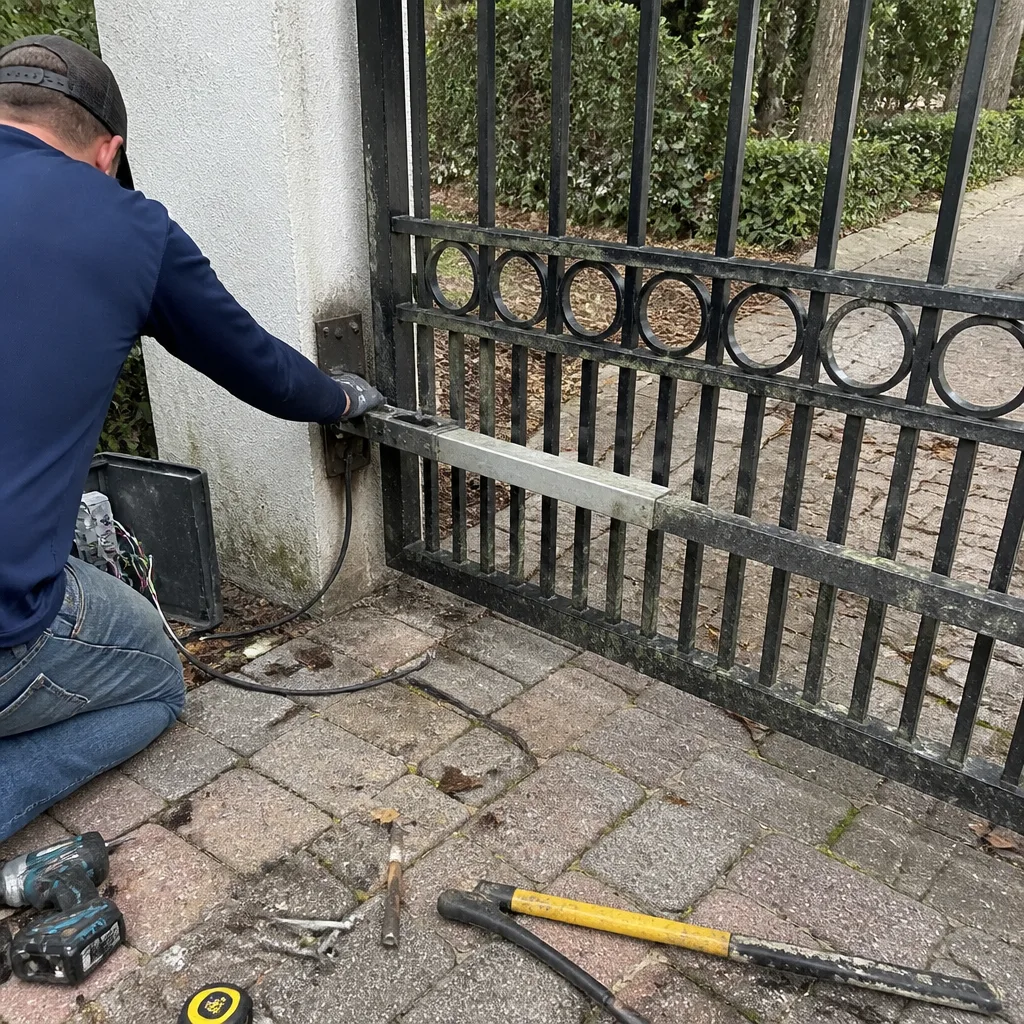 Before
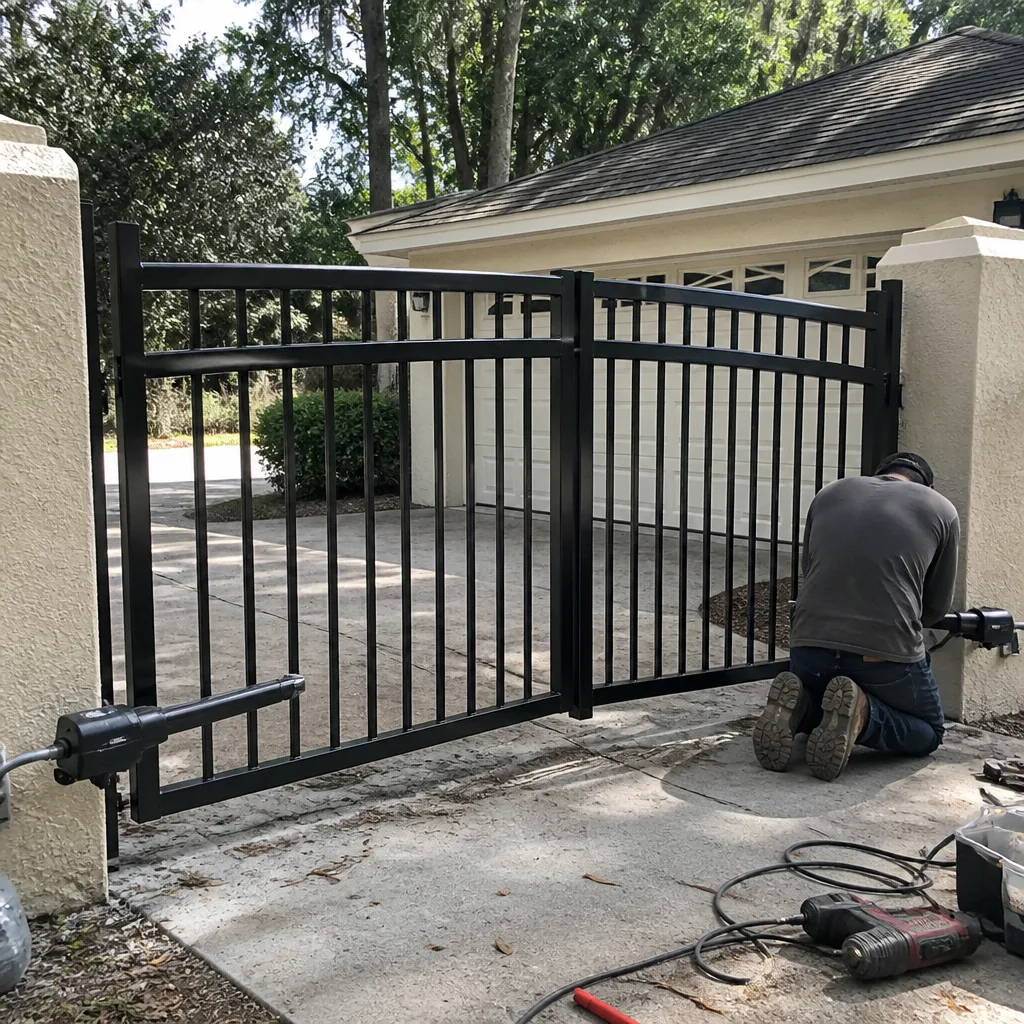 After
When to Call a Professional
Some gate problems are obvious: a broken hinge, a snapped chain, a gate off its track. Other problems are subtle and dangerous to misdiagnose. If your gate is making grinding noises, moving unevenly, or opening partially and reversing, the issue could be a failing capacitor or a misaligned safety sensor rather than a dead motor. Replacing the wrong part wastes money and leaves the actual fault untouched. Automated gate systems also involve low-voltage wiring, capacitor-stored energy, and control boards that can deliver a nasty shock if handled incorrectly. If you’re uncertain what’s failed, or if the repair involves the operator’s internal wiring or board-level components, call a professional. Villa Gate Repair offers free estimates in Jacksonville: call (877) 265-5090 and we’ll diagnose the fault, quote the repair before any work starts, and get your gate back on track.
Frequently Asked Questions
For most Jacksonville residential driveway gates, LiftMaster is the best all-around choice because parts are stocked locally, technicians are widely familiar with its control boards, and the cost of ownership is moderate. For heavier gates, estate properties, or coastal homes, a FAAC operator offers better weather sealing and longer mechanical life at a higher price. The best brand is the one that matches your gate weight, cycle count, and distance from salt water.
A residential gate operator replacement in Jacksonville typically costs between $900 and $2,500 depending on the brand, the gate type, and whether any swing arms, tracks, or wiring upgrades are needed. LiftMaster and Mighty Mule replacements sit at the lower end, FAAC and Elite units at the higher end. Call (877) 265-5090 for an exact quote; estimates are free and we quote the price before any work starts.
A failed control board usually does not require a full operator replacement. On LiftMaster, FAAC, Mighty Mule, and Elite units, the control board is a replaceable component, and a board swap is often a same-day repair in Jacksonville if the part is in local stock. The operator’s motor, gearbox, and housing typically outlast the electronics, especially after a lightning event, so replacing only the board is usually the right call.
No standard residential gate operator warranty covers lightning or surge damage in Jacksonville. Every major brand classifies surge-related board failure as environmental damage, not a manufacturing defect. The only protection is a surge suppressor installed on the gate’s low-voltage wiring, which costs under $100 installed and prevents most of the control board failures we see after summer storms.
A properly sized and maintained residential gate operator in Jacksonville lasts 7 to 12 years. Coastal homes within two miles of salt water tend toward the lower end of that range due to humidity corrosion on control boards and connectors. Units that are undersized for their gate or run at commercial cycle counts may fail within 2 to 3 years.
Stay with the same brand if your existing remotes, keypads, and sensors still work, and the failure was a repairable component like a board or a gearbox rather than a design flaw. Switch brands if you live near the coast and the unit corroded prematurely, if your gate weight or cycle count increased beyond what the operator was rated for, or if your current brand has no local parts support in Jacksonville. Call (877) 265-5090 to talk through your specific gate before you decide.
The Bottom Line
The best gate repair brand in Jacksonville is the one with parts on a local shelf and technicians who see it every week. LiftMaster leads for residential value and parts availability; FAAC leads for heavy gates and coastal durability; Mighty Mule is viable only for light residential use with realistic expectations; Elite fills the commercial and multi-family gap. The decision comes down to gate type, cycle count, distance from salt water, and warranty fine print. Pick the brand that matches how your gate actually lives, not the one with the best Amazon reviews from homeowners a thousand miles away. If you’re unsure, call Villa Gate Repair at (877) 265-5090. We’ll look at your gate, tell you what’s worth fixing and what’s worth replacing, and quote it all before any work begins.
Written by the team at Villa Gate Repair, serving Jacksonville since 2012.